
Plastic butt hinges solve corrosion and noise issues in industrial enclosures while reducing cost and weight. Many buyers overlook their structural limits and material grades, which directly affect torque and fatigue life.
plastic butt hinges offer low cost tooling, strong corrosion resistance, lightweight structure, quiet rotation, and multiple color options. When properly specified with the right polymer grade and pin tolerance, they perform reliably in electrical cabinets, testing chambers, and light duty equipment doors without rust, metal friction noise, or unnecessary mass.
If you source industrial hinges, you need to understand where plastic truly works and where it fails.
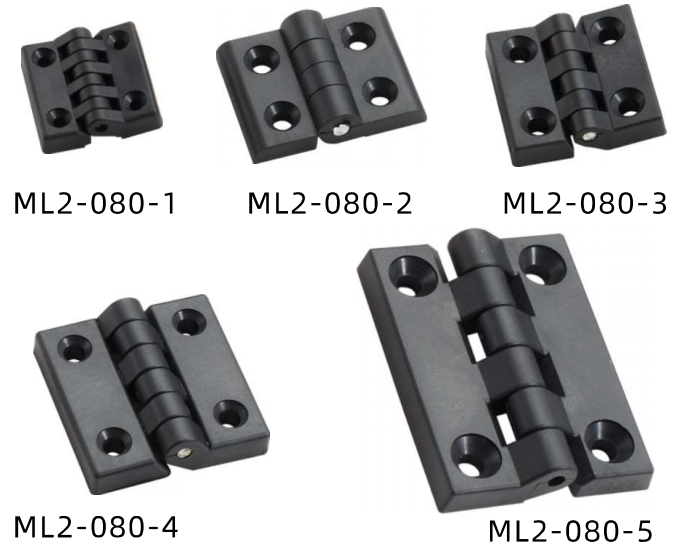
Low Cost
Many buyers choose plastic butt hinges because of price, but the real saving does not come only from raw material. It comes from process simplification and secondary cost reduction.
In metal hinges, you pay for stamping, deburring, surface treatment, and often anti corrosion coating. Each process step adds tolerance stack up. I have found that coating thickness variation alone can change leaf flatness and affect door alignment torque. With engineering plastic molding, the surface is formed directly in the mold. No plating. No post treatment. This reduces dimensional drift.
Tooling and Volume Logic
Injection molding requires mold investment. For small quantity projects, this is a trap. If annual demand is below a few thousand pieces, standard catalog models make more sense. Once volume increases, the cost per unit drops sharply.
Below is a simplified cost comparison logic:
| Factor | Metal Butt Hinge | Plastic Butt Hinge |
|---|---|---|
| Surface treatment | Required | Not required |
| Corrosion protection | External coating | Material inherent |
| Unit weight | Higher | Lower |
| Assembly labor | Higher due to weight | Lower |
My recommendation is to calculate total installed cost rather than unit price. In electrical enclosures, reduced weight means easier door handling during assembly. That saves labor time, which many purchasing managers ignore.
However, do not use plastic in high torque heavy doors. If door mass exceeds design load, creep deformation will appear at the knuckle after long term stress.
Corrosion Resistance
Corrosion destroys metal hinges slowly but predictably. Plastic fails differently. It degrades under UV or chemical exposure if material selection is wrong.
Most plastic butt hinges use nylon, polypropylene, or reinforced engineering polymers. In humid control chambers or mild chemical environments, they outperform coated steel because there is no rust layer growth that increases friction torque.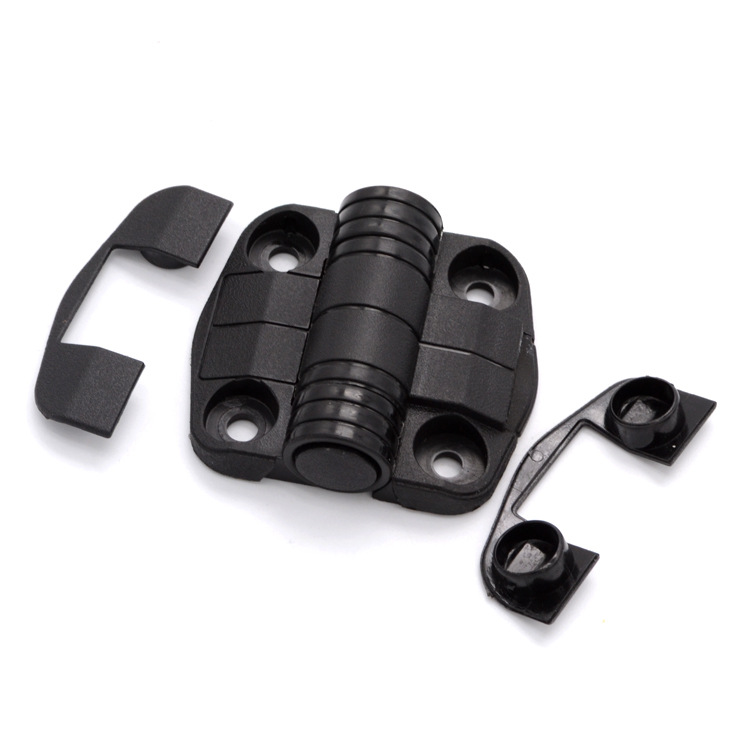
Chemical and Moisture Behavior
I have seen stainless steel hinges seize in alkaline wash down rooms due to surface contamination. At the same time, reinforced nylon hinges continued rotating smoothly because there was no electrochemical reaction.
But pay attention to these points:
| Risk Factor | What Happens |
|---|---|
| Strong acid | Polymer embrittlement |
| High UV exposure | Surface chalking |
| High continuous load in heat | Creep deformation |
Take my advice. Always check working temperature and chemical exposure chart. Some plastics absorb moisture and expand slightly. That can reduce pin clearance and increase opening torque. Good design keeps radial clearance within safe range to avoid binding.
For coastal equipment or humid tropical regions like Singapore, plastic butt hinges often outlast zinc plated steel in medium duty applications.
Lightweight
Weight reduction is not just about shipping. It affects hinge stress and door sag.
In industrial cabinets, heavy hinges add moment load to the mounting screws. Plastic butt hinges reduce dead weight, which reduces shear force on the fasteners. This improves long term alignment stability.
Impact on Torque and Sagging
Door sag usually comes from two causes. One is oversized door mass. The other is hinge barrel deformation.
Plastic has lower density, but also lower modulus. This means it flexes more under load. Engineers must balance these factors.
| Parameter | Metal | Plastic |
|---|---|---|
| Density | High | Low |
| Modulus | High | Lower |
| Vibration damping | Low | Higher |
I have found that in small to medium sized equipment doors, the vibration damping of plastic reduces rattling during transport. This is useful for exported control boxes shipped long distance.
But do not ignore creep. Continuous load at elevated temperature can slowly change hinge geometry. For oven adjacent equipment, verify temperature limit carefully.
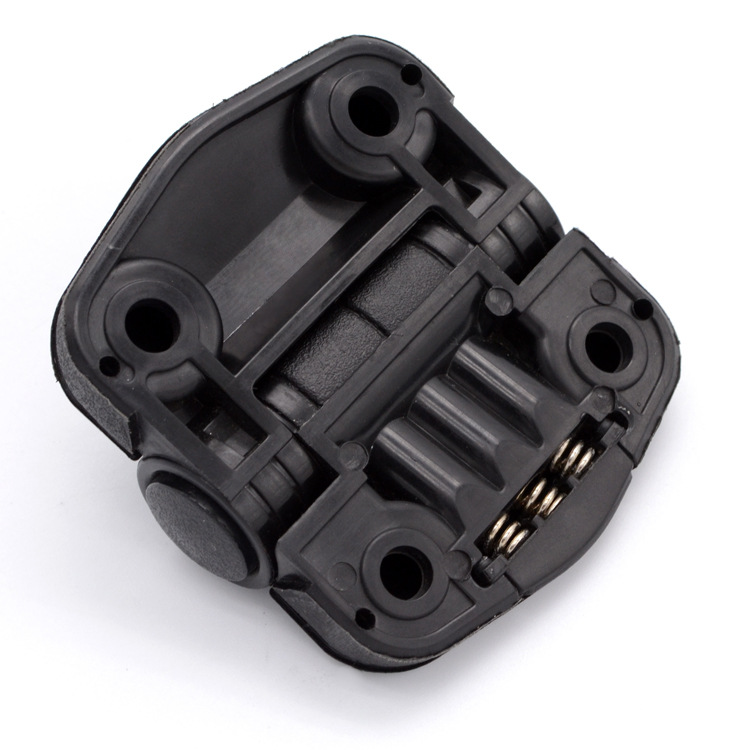
Quiet Operation
Noise often comes from metal to metal contact and insufficient lubrication. Plastic butt hinges naturally reduce friction noise because polymer surfaces have lower friction coefficient.
In laboratory test chambers and measurement equipment, even small clicking sounds during door operation can be unacceptable. Plastic rotation feels smoother when clearances are controlled correctly.
Pin and Clearance Control
Here is where many suppliers cut corners. If pin diameter tolerance is loose, you get wobble. If too tight, you get high opening torque.
Good design keeps axial play minimal while maintaining smooth rotation. In some models, a plastic pin is used. In others, stainless pin with plastic barrel improves wear resistance.
I recommend checking cycle test data. A hinge that feels smooth in the first 100 cycles may develop play after 10000 cycles if wear resistance is poor.
Quiet does not mean weak. It means friction is controlled and contact surfaces are stable.
Multiple Color Options
Color flexibility is not decoration. It serves functional identification in industrial environments.
Plastic butt hinges can be molded in black, white, gray, or custom colors. This helps match equipment panels or safety coding requirements.
Functional Color Strategy
In electrical distribution systems, different door sections sometimes require visual distinction. Instead of painting metal hinges, molded color stays consistent through the material thickness.
| Benefit | Industrial Value |
|---|---|
| Integrated color | No paint peeling |
| Custom color | Brand alignment |
| Surface consistency | No coating defects |
However, pigments can influence UV stability and mechanical strength. Dark colors usually resist UV better than light colors. Always confirm material data sheet.
From my experience, buyers often focus only on appearance and forget that pigment loading changes mechanical performance slightly. Small detail, but important in long term durability.
Conclusion
plastic butt hinges provide real advantages in cost, corrosion resistance, weight, noise control, and color flexibility. They perform well in light to medium duty industrial equipment when load and temperature are correctly evaluated.
If your project requires hinges that cannot be standardized, IHINGES is built for that exact need.
IHINGES is the world’s only manufacturer dedicated exclusively to custom industrial hinges, focusing on real industrial applications rather than off the shelf products.