
Customizing stainless steel cast hinges involves more than sending a drawing—it requires understanding critical technical considerations for industrial-grade results.
Before customizing stainless steel cast hinges, you must understand shrinkage during casting, post-molding deformation, suitable surface treatments, marine-grade material differences, and optimal hinge count. These factors directly impact function and lifespan.
Knowing these key factors helps prevent costly errors and ensures performance in industrial environments.
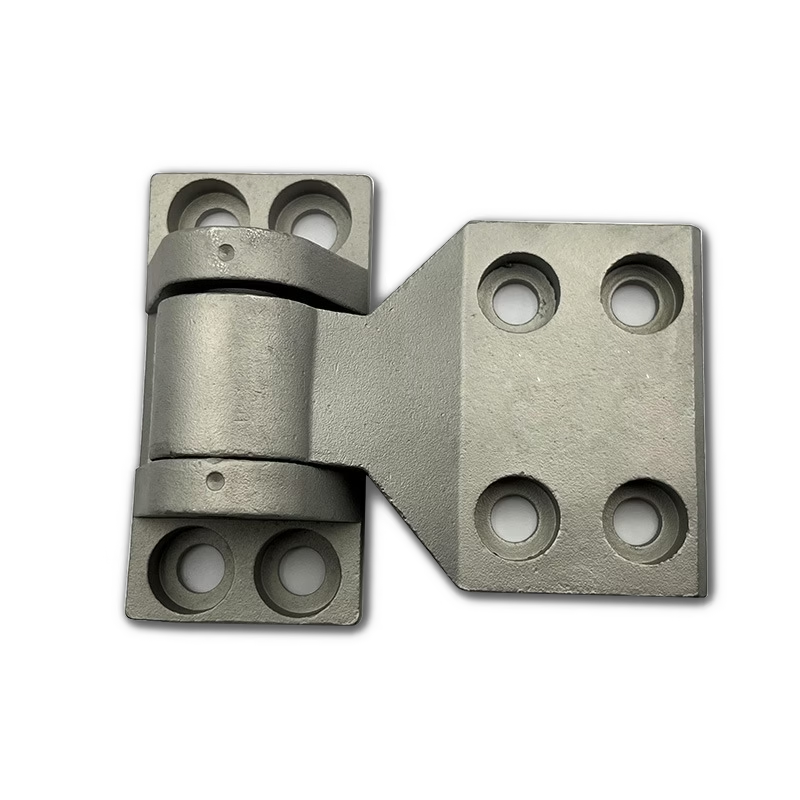
Why Do Stainless Steel Cast Hinges Shrink After Molding?
Stainless steel shrinkage is often underestimated in custom hinge orders. Stainless steel hinges shrink during cooling after casting. Final dimensions differ from drawings, requiring experienced manufacturers to compensate through mold adjustments and post-machining.
Understanding Casting Shrinkage and Dimensional Accuracy
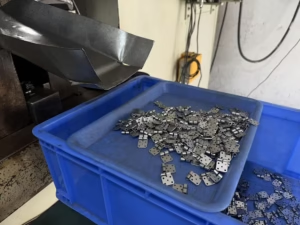
In custom industrial hinge production, final part size is rarely identical to the CAD drawing, especially for cast parts. During cooling, stainless steel contracts by 1.5%–2%, affecting hole spacing, leaf width, and pin diameter. For precision-demanding environments like climatic test chamber hinges, these variances can disrupt door alignment and gasket sealing.
Manufacturers must anticipate shrinkage during mold design. This involves scaling the model slightly larger and factoring in any material lost through surface treatments such as grinding or polishing. In some cases, precision CNC finishing is required to bring the hinge back into spec.
| Component | Potential Impact of Shrinkage | Correction Method |
|---|---|---|
| Mounting Holes | Misalignment with frame/panel | Oversize holes, re-drilling |
| Pin Diameter | Loose or tight rotational fit | Post-machining or reaming |
| Leaf Width | Affects load-bearing contact area | CAD mold compensation |
Accurate tolerances require both experience and post-casting controls. Always request dimensional control reports or samples before bulk production.
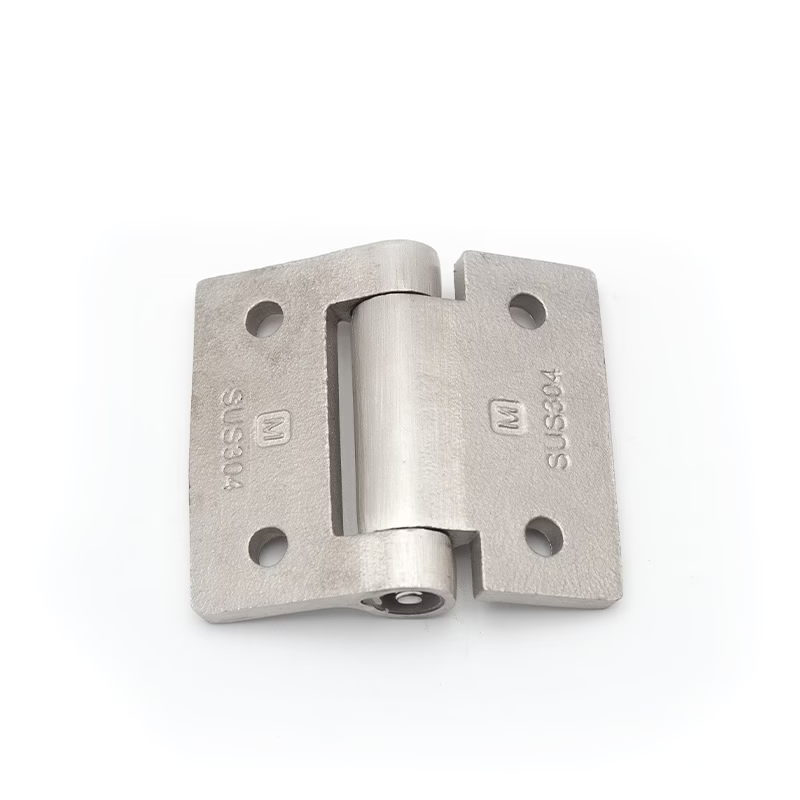
How to Prevent Deformation of Hinge Leaves After Casting?
Casting isn’t the final step—deformation correction is critical for functional hinges. Long hinge leaves often warp after demolding. Skilled hinge makers use specialized tools to flatten or reshape hinge blades before final inspection.
Why Post-Casting Correction Is Non-Negotiable
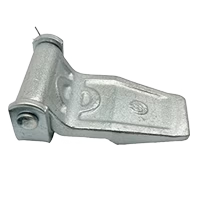
One of the most overlooked stages in stainless steel hinge customization is deformation correction. Long leaf hinges—such as those used in trailer door hinges—are especially prone to warping as they cool. This can lead to friction during operation, compromised structural integrity, or improper door closure.
To counter this, experienced factories create dedicated straightening jigs based on the hinge design. These jigs apply calibrated pressure to restore planarity without overstressing the material. For high-precision components like special hinges used in laboratory enclosures or instrumentation panels, this correction ensures functional integrity.
Overlooking this step often results in high rejection rates during assembly or field use. When sourcing, ask your supplier if they include post-casting correction tools and quality checks in their process flow.
Why Is Polishing the Preferred Surface Treatment for Stainless Steel Hinges?
The right surface treatment isn’t just aesthetic—it’s functional and durable. Polishing methods like brushing or mirror finishing are preferred because they enhance appearance and corrosion resistance without coating failure risks. Stainless steel doesn’t bond well with paints or plating.
Why Stainless Steel Shouldn’t Be Painted or Plated
Unlike mild steel or aluminum, stainless steel is inherently corrosion resistant thanks to its chromium-rich oxide layer. Adding paints or electroplating may seem beneficial, but in reality, these layers often peel or flake due to poor adhesion—especially in high-friction environments.
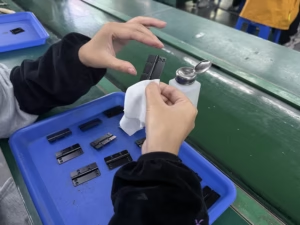
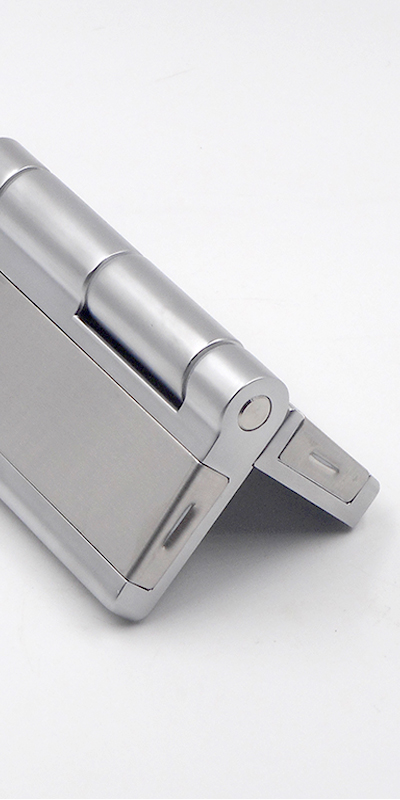
Instead, polishing methods such as brushed (matte) or mirror (high gloss) finishes remove micro-burrs and improve corrosion resistance. These are subtractive processes that maintain the material’s passive surface while enhancing visual appeal.
| Surface Treatment | Process Type | Durability | Industrial Use Cases |
|---|---|---|---|
| Brushed Polishing | Subtractive | High | Control panels, utility enclosures |
| Mirror Polishing | Subtractive | Very High | Medical equipment, clean rooms |
| Spray Painting | Additive | Low | Not recommended for stainless applications |
| Electroplating | Additive | Medium | Risk of peeling in outdoor settings |
When dealing with corrosion resistant hinges in outdoor or humid environments, polishing is the safest and longest-lasting option.
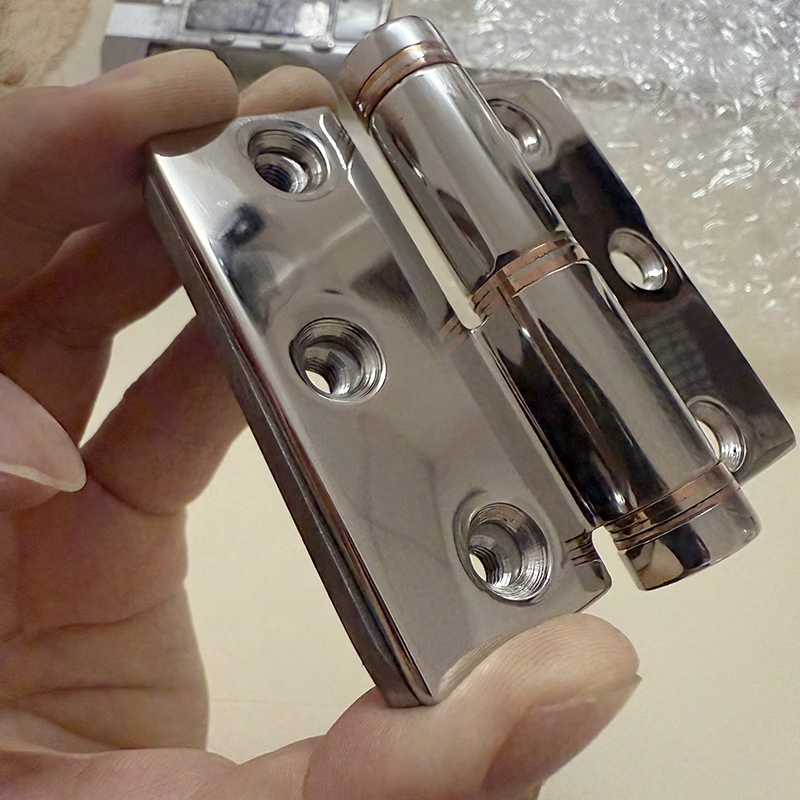
Can All Stainless Steel Hinges Be Used in Marine Environments?
Not all stainless grades are suitable for salt-rich environments. 304 stainless steel is standard, but for marine or coastal applications, 316 stainless steel is required due to superior saltwater corrosion resistance.
304 vs 316: Choose According to Environment
Most buyers assume that “stainless steel” is universally rustproof. However, in environments with high salinity—such as coastal factories or marine equipment—304 stainless will eventually corrode. This is especially true for outdoor cabinets or exposed access panels.
316 stainless steel, however, contains molybdenum, which provides greater resistance to chlorides and salt. This makes it the only suitable option for applications like marine hinges or equipment mounted near shorelines.
| Location Type | Recommended Stainless Grade |
|---|---|
| Indoor Industrial Use | 304 |
| Inland Outdoor Use | 304 |
| Coastal Factory Use | 316 |
| Submerged Marine Use | 316 |
Clarify the usage environment with your supplier to avoid premature corrosion or unexpected maintenance costs.
Do More Hinges Mean Better Load-Bearing?
Hinge quantity isn’t the same as hinge performance. In most industrial applications, two stainless steel hinges are enough. Over-installing hinges doesn’t significantly improve strength and may introduce misalignment risks.
Why Two Well-Placed Hinges Are Usually Sufficient
In industrial applications, especially in enclosures or machinery panels, more hinges don’t always equal better support. Installing more than two hinges may actually distribute force unevenly, especially if installation precision is lacking.
Instead, focus on hinge type and material. For instance, using heavy duty hinges designed with thicker leaf plates and reinforced pins will provide better durability than adding a third or fourth standard hinge. Additionally, overuse can increase friction, reduce opening smoothness, and create unnecessary complexity during assembly.
Consider the weight, size, and expected use cycles of the door or panel. Communicate these parameters to your supplier for a custom hinge layout recommendation.
Conclusion
Understanding casting shrinkage, deformation correction, suitable surface treatments, material selection, and hinge layout is essential when customizing stainless steel hinges for industrial use.