
Installing industrial hinges may look straightforward at first. However, if positioning is inaccurate, small errors can quickly lead to door misalignment, uneven load distribution, and long-term performance issues. This is why you may wonder whether a butt hinge jig is necessary for industrial applications.
In short, industrial hinges rarely rely on a traditional butt hinge jig. Unlike woodworking or furniture assembly, industrial hinge accuracy is primarily achieved through design-defined geometry, machining processes, and fixed production fixtures rather than portable installation jigs.
To understand this difference, you need to look beyond tools and focus on how industrial hinges are designed and manufactured. Once you see where precision actually comes from, it becomes much easier to choose the right hinge solution for your application.
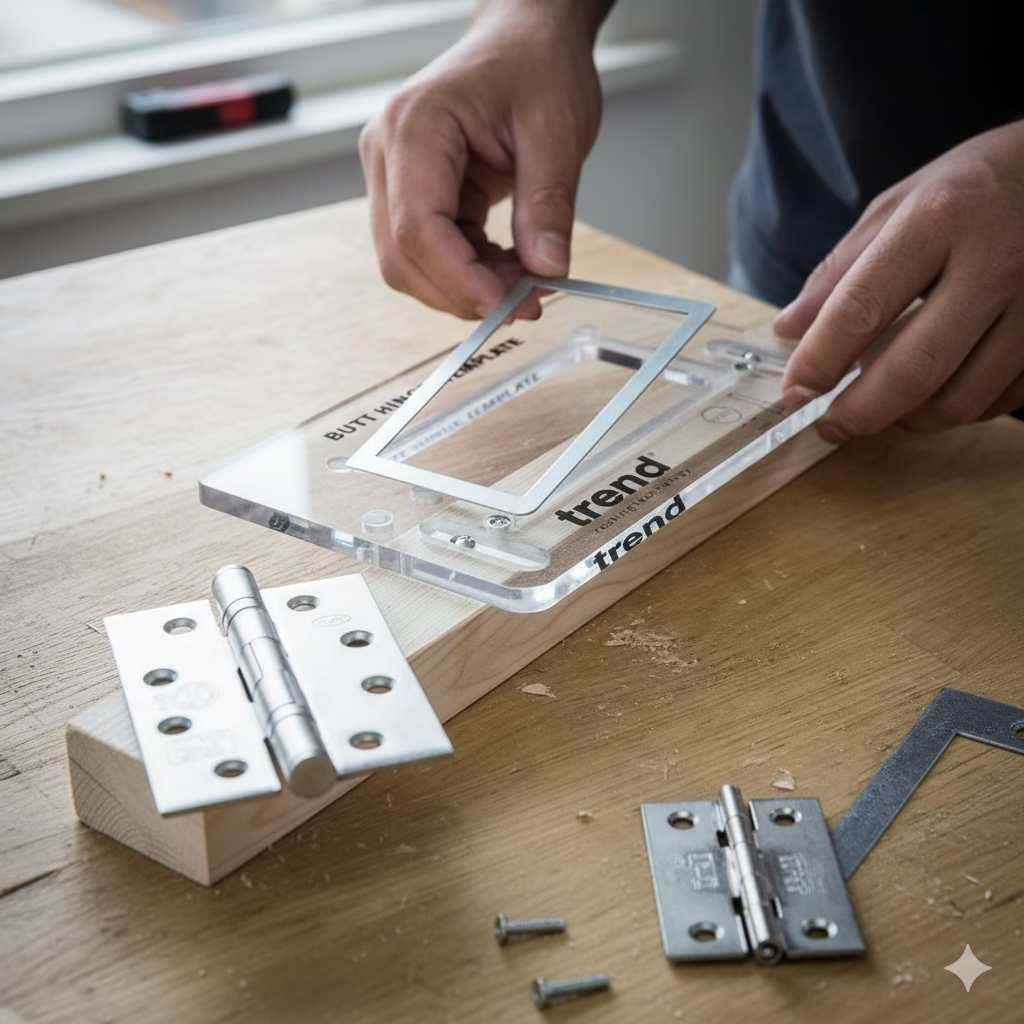
What a Butt Hinge Jig Is Designed to Do
A butt hinge jig is fundamentally a positioning aid. Its purpose is to locate hinge leaves accurately, guide recessing or drilling operations, and ensure repeatable alignment across multiple installations. In most cases, the jig compensates for variability.
It reduces dependence on operator experience and minimizes measurement errors during manual installation. This logic is especially effective when materials vary, surfaces are inconsistent, or installation happens on-site rather than in a controlled factory environment. However, the tool itself does not create precision. It enforces it at the installation stage, after the hinge and door have already been manufactured.
Where Butt Hinge Jigs Are Commonly Discussed
Public discussions around butt hinge jigs overwhelmingly focus on manual installation workflows. Online forums, tool reviews, and trade discussions typically center on door fitting, woodworking accuracy, and repeatable recess cutting.
These conversations rarely address industrial manufacturing. That absence is not accidental. It reflects the fact that industrial hinges are rarely installed using portable, general-purpose jigs. Instead, industrial hinge positioning is usually resolved long before installation begins.
Recessing Requirements and Hinge Design
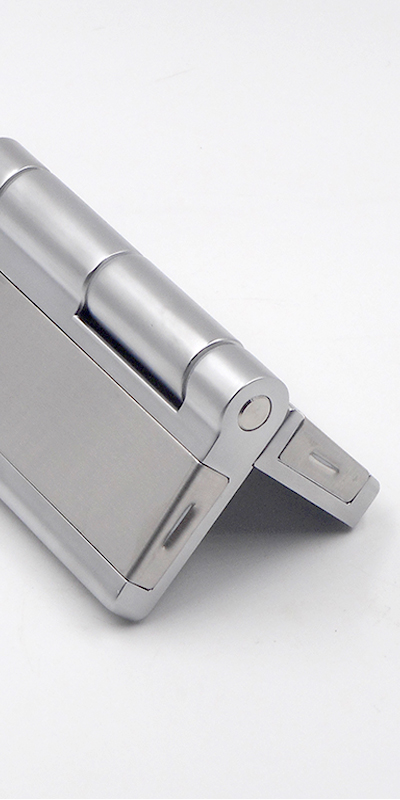
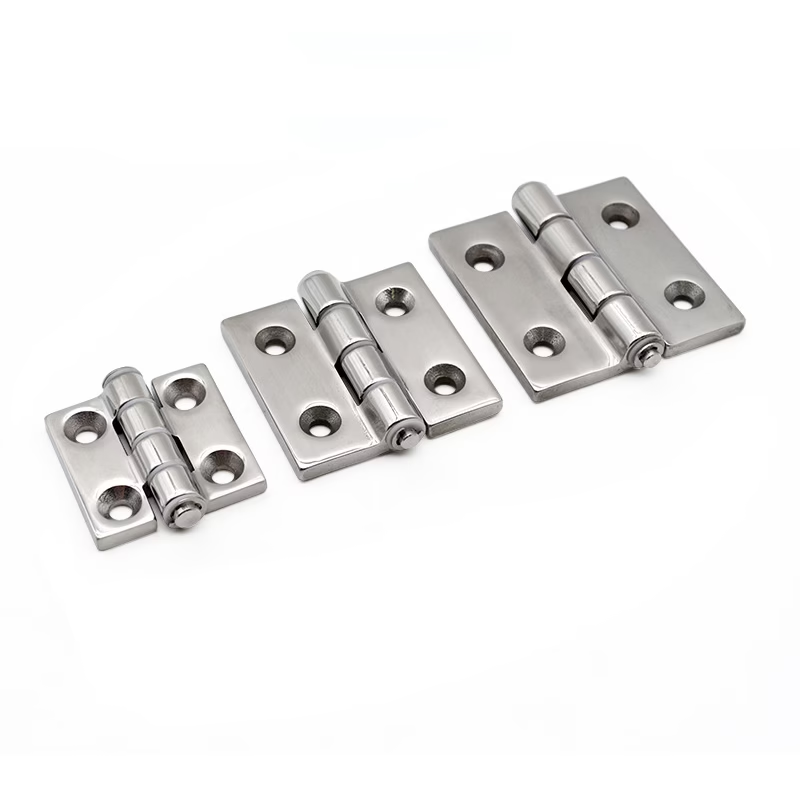
One of the key questions related to hinge jigs is whether a hinge requires recessing. Recessing is a geometric requirement, not a tooling preference. Some hinge designs inherently demand precise material removal. Others are engineered to mount flush without additional recessing, eliminating the need for installation-time correction tools altogether.
In industrial contexts, hinge design decisions are driven by load paths, enclosure sealing, and long-term serviceability. If recessing is required, it is normally integrated into the machining process, not solved later with a jig.
Industrial Hinges and Predefined Mounting Geometry
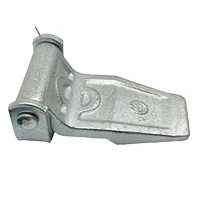
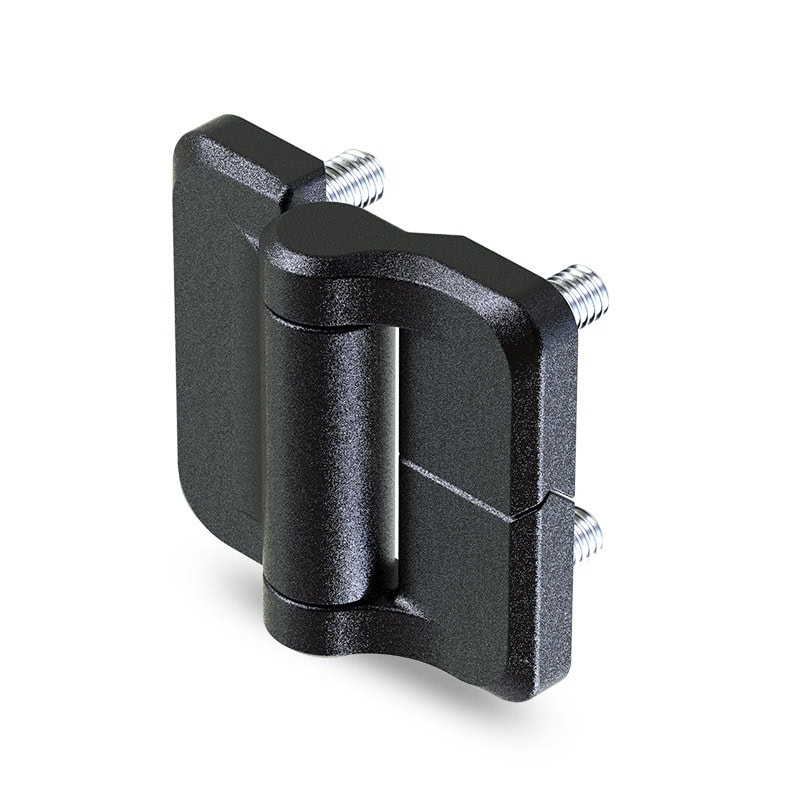
Industrial hinges operate in a fundamentally different system. Mounting geometry is predefined at the design stage and locked into production drawings. Hole patterns, offsets, and mounting faces are determined by engineering constraints such as door weight, vibration, and repeated cycling. As a result, positioning accuracy is built into the component, not adjusted during installation.
This is especially true for applications such as Electrical Panel Hinges, where enclosure integrity and alignment tolerance are non-negotiable. In these cases, relying on a jig at installation would indicate a failure earlier in the design or manufacturing process.
How Industrial Manufacturers Achieve Positioning Accuracy
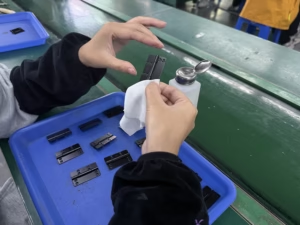
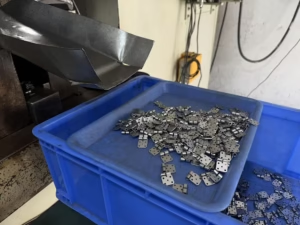
Industrial hinge accuracy is achieved through systems, not tools. CNC machining, laser cutting, punching, and welding fixtures define location with far greater consistency than manual jigs.
Fixed fixtures serve the same conceptual role as a jig but operate upstream. They control geometry before parts ever reach the assembly stage. This approach scales. It allows thousands of identical hinges or doors to be produced with minimal variation, something no portable butt hinge jig could realistically accomplish in an industrial environment.
Fixtures vs Portable Butt Hinge Jigs
The difference between fixtures and jigs is not semantic. It reflects a shift in responsibility for accuracy. Portable butt hinge jigs correct errors at installation. Industrial fixtures prevent those errors from occurring at all.
For applications involving heavy duty hinges, relying on a jig would be structurally inefficient. Load-bearing hinges require alignment integrity at the component level, not adjustment during final assembly.
Heavy Doors and Load-Oriented Hinge Selection
Another common question is which hinge works best for heavy doors. In industrial environments, the answer depends far more on hinge construction than installation aids.
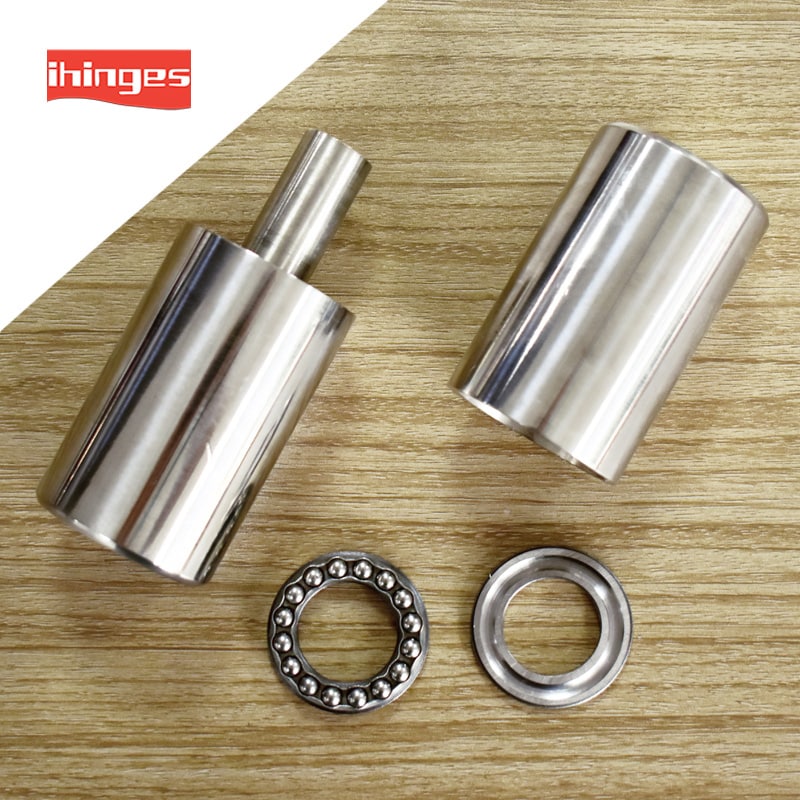
Load capacity, pin diameter, bearing structure, and material selection determine performance. For example, ball bearing butt hinges are often chosen not because they are easier to install, but because they distribute load and reduce wear over long duty cycles. A jig cannot compensate for inadequate hinge selection. Structural suitability must come first.
Compatibility with Commercial Jigs and Templates
Commercial hinge jigs are typically built around standardized dimensions. Industrial hinges often deviate from these standards intentionally. Custom leaf thickness, non-standard hole spacing, or reinforced knuckles make compatibility with off-the-shelf jigs unlikely. This is not a limitation; it is a design choice driven by performance requirements. Industrial hinges are optimized for function, not tool compatibility.
When a Butt Hinge Jig Still Makes Sense in Industrial Contexts
There are limited scenarios where jig-style thinking still applies. Field replacement, retrofit projects, or low-volume custom equipment may benefit from simplified positioning aids. In these cases, the jig serves as a reference, not a production tool. It supports consistency when factory fixtures are unavailable, but it does not replace proper engineering control.
Design Implications for Industrial Hinge Projects
For industrial hinge manufacturers, the takeaway is clear. Installation accuracy should be solved through design clarity, not post-process correction. Clear mounting references, consistent hole geometry, and well-documented installation logic reduce downstream risk. This approach applies equally to standard products and custom hinge projects.
Practical Guidance for Industrial Buyers and Engineers
When evaluating hinges for industrial equipment, focus on fundamentals. Ask how alignment is controlled during manufacturing, not how it is corrected during installation. Consider hinge structure, load capacity, and mounting strategy first. Jigs are secondary tools, useful only when system-level precision is unavailable.
Conclusion
Butt hinge jigs are helpful for manual installations, but industrial hinges rely more on design accuracy and controlled manufacturing than on installation tools. If you need custom industrial hinges or have special mounting requirements, IHINGES can support your project with professional engineering and manufacturing experience—feel free to contact us to discuss your needs.