
Friction hinges look simple, but torque stability and wear control determine whether your equipment holds position or slowly drops under load.
A friction hinge uses controlled internal friction to generate constant torque that holds a panel at any angle. Unlike free swing hinges, it balances applied moment and resistance torque. Correct selection depends on torque value, load arm length, cycle life, friction material stability, and real world environmental exposure. Misjudging torque decay or shaft clearance often leads to sagging, drift, or premature wear in industrial equipment.
If you design industrial enclosures or equipment doors, torque math matters more than appearance.
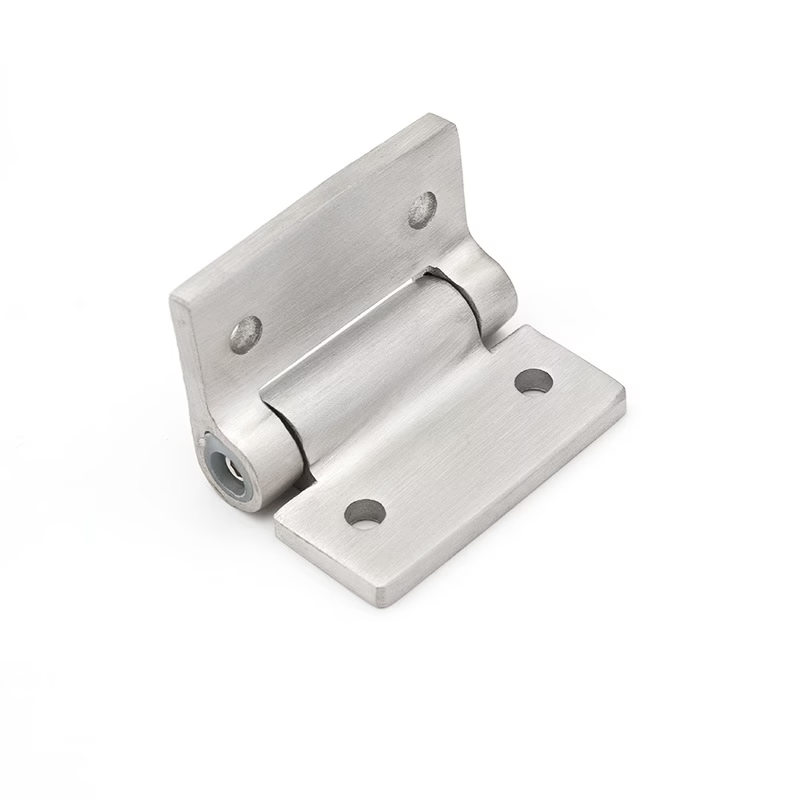
What Are Friction Hinges and Why Torque Control Matters
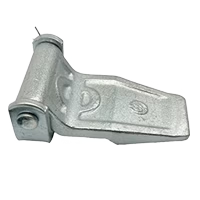
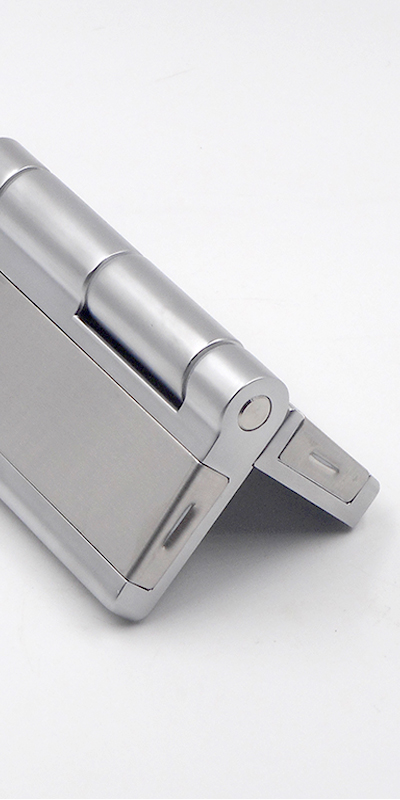
Friction hinges, also called torque hinges or position hinges, are mechanical assemblies that create rotational resistance to hold a panel at a defined angle. They do not rely on gravity or springs. They rely on controlled friction torque generated between internal components.
In industrial environments, I have found that many engineers underestimate how quickly torque drops if the internal friction interface is poorly matched to load. A hinge rated for static holding torque may fail under cyclic vibration because dynamic friction behaves differently from static friction. That difference causes slow drift in control panels, test chamber doors, and equipment lids.
Torque Versus Load Arm Calculation
Holding performance depends on moment balance. The hinge torque must exceed the load moment generated by panel weight and center of gravity offset.
Moment calculation:
Torque required = Panel weight × Distance from hinge center to center of gravity
If a 12 kilogram panel has a center of gravity 180 millimeters from pivot, required holding torque exceeds 21.6 newton meters. Engineers often forget to include cable drag or sealing gasket compression. That omission causes gradual sagging after installation.
| Parameter | Typical Range | Overlooked Risk |
|---|---|---|
| Static torque | 1 to 50 Nm | Not equal to dynamic torque |
| Cycle life | 10000 to 50000 cycles | Torque decay after 30 percent life |
| Shaft clearance | 0.02 to 0.08 mm | Excess clearance causes vibration noise |
| Surface treatment | Zinc plated or stainless | Corrosion increases friction instability |
Internal Friction Structure
Most industrial torque hinges use friction washers, polymer pads, or controlled metal contact surfaces. Material pairing determines torque consistency.
Counter intuitive fact from my experience: expensive stainless steel pairs often gall under high contact pressure. In humid but non corrosive indoor equipment, plated carbon steel with engineered friction pads can maintain torque stability longer than full stainless structures. Engineers who choose stainless blindly often face torque fluctuation after 5000 cycles.
Surface roughness and contact pressure must remain controlled. If friction material creeps under temperature, torque drops. This happens frequently inside thermal test equipment where ambient temperature swings between minus 40 and 120 degrees Celsius.
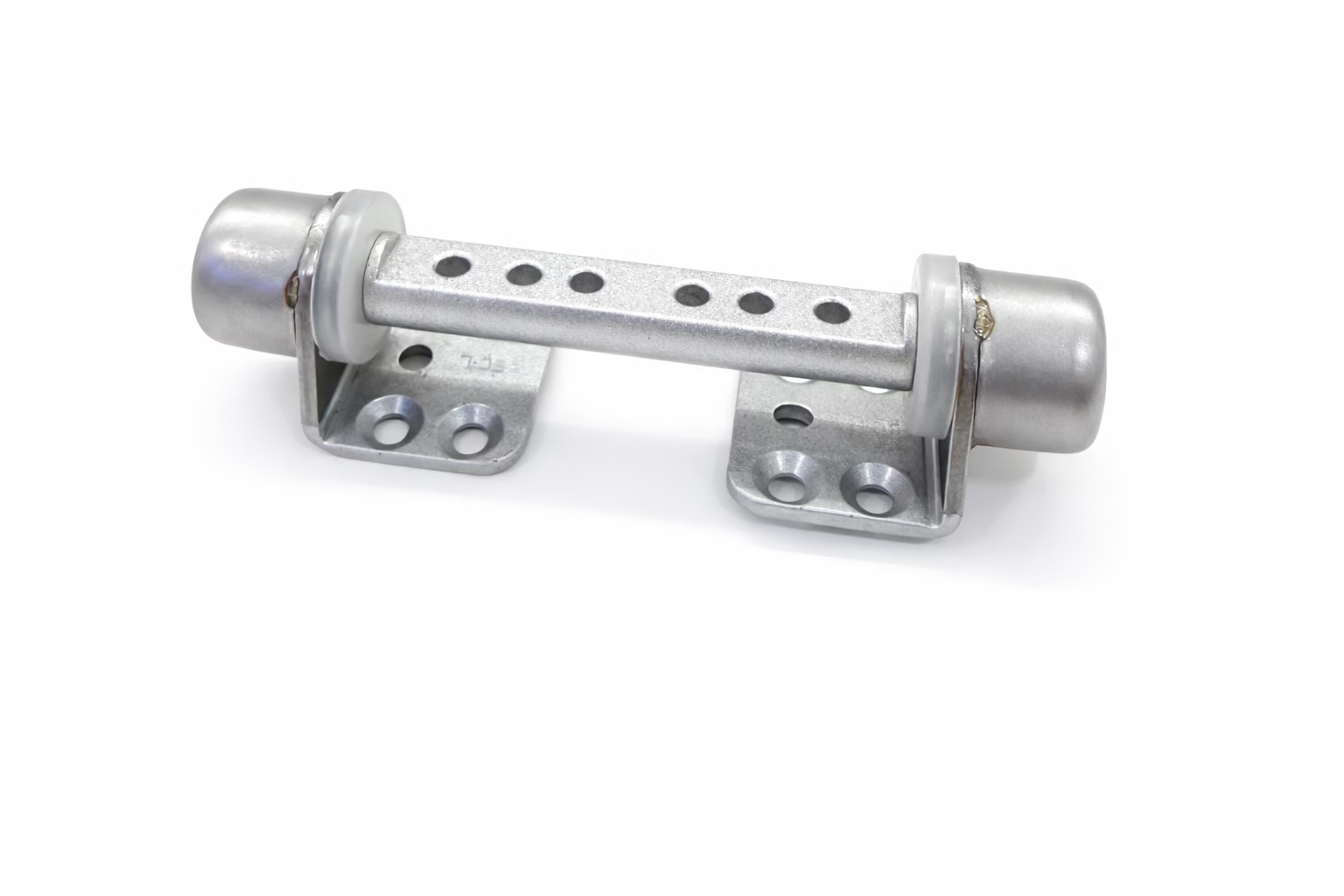
How Friction Hinges Fail in Industrial Equipment
Most catalog articles ignore failure modes. In real factories, hinges fail for very specific mechanical reasons.
I have seen three dominant failure patterns in industrial enclosures and test chambers.
Gradual Door Sagging
This occurs when actual working torque demand exceeds rated torque by even 10 percent. The hinge does not fail suddenly. Instead, micro wear reduces friction surface thickness. Torque declines slowly and the panel begins drifting downward.
Root causes often include:
-
Incorrect gravity center estimation
-
Ignoring insulation weight in cold storage doors
-
Parallel hinge misalignment causing uneven load distribution
Two hinges sharing load must be mounted within tight tolerance. If mounting surfaces are not coplanar within 0.1 millimeter, one hinge absorbs most torque and wears faster.
Abnormal Noise and Stick Slip Motion
Stick slip happens when static friction greatly exceeds dynamic friction. The panel moves in jerks instead of smooth motion. This is common in low precision friction interfaces.
Excessive surface roughness or contaminated friction pads cause this issue. In clean room equipment, microscopic dust increases friction variability. Engineers rarely consider contamination when specifying hinge torque.
Weld Cracking or Mount Fatigue
When friction hinges are welded to steel frames, thermal distortion during welding changes shaft alignment. Even 0.05 millimeter eccentricity increases radial load on the pivot. Over time, fatigue cracks appear near weld toes.
Take my advice: never evaluate hinge performance without considering mounting method. Bolt mounting allows replacement and better alignment control.
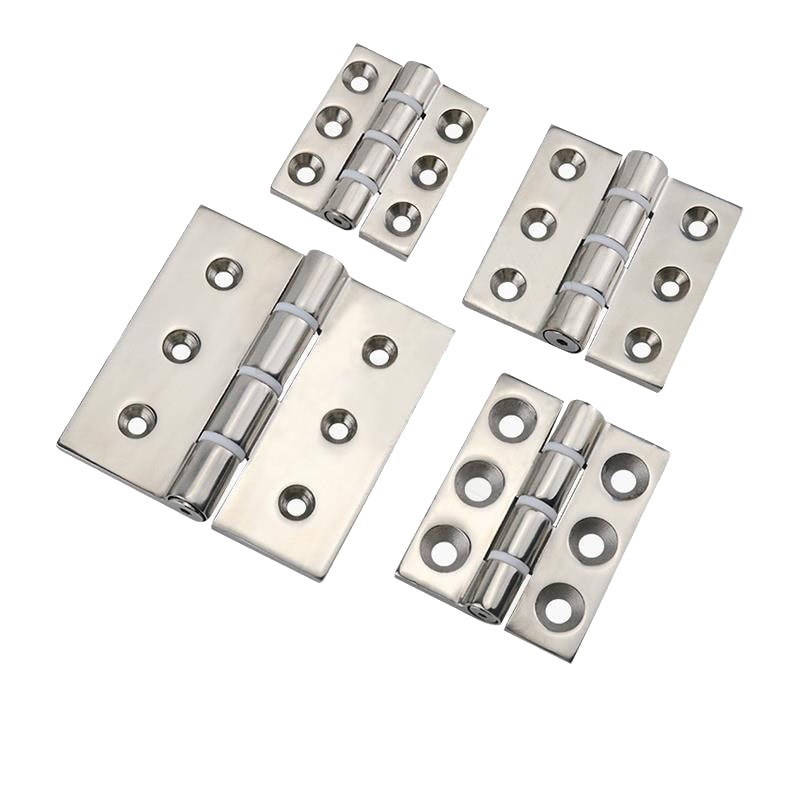
Choosing the Right Friction Hinge for Industrial Applications
Selecting a friction hinge for industrial equipment requires mechanical reasoning, not catalog browsing.
Define Real Torque Window
Do not select hinge torque equal to theoretical load torque. I recommend 20 to 30 percent torque margin to compensate for wear and temperature variation. However, too high torque creates operator fatigue and increases mounting stress.
Torque balance must consider:
-
Panel mass variation
-
Sealing compression force
-
Cable resistance
-
Operational angle range
Evaluate Environmental Exposure
Humidity, salt spray, chemical vapor, and temperature cycling change friction behavior. Stainless steel does not automatically solve corrosion. In acidic environments, certain stainless grades pit and increase friction variability.
Cold storage rooms introduce another challenge. Lubricant viscosity rises at low temperature, increasing opening torque beyond operator comfort. Friction hinges used in minus 20 degree conditions must use stable friction compounds that do not harden.
Confirm Cycle Life with Data
Manufacturers often quote cycle life without specifying torque retention percentage. That number alone is meaningless.
Ask for:
-
Initial torque value
-
Torque after 10000 cycles
-
Torque retention percentage
-
Test temperature conditions
| Selection Factor | What to Verify | Hidden Risk |
|---|---|---|
| Torque rating | Measured at what angle | Torque varies across angle |
| Life test | Under full load or partial | Misleading durability claim |
| Material grade | Specific steel number | Surface treatment mismatch |
| Mounting tolerance | Required flatness | Uneven load distribution |
My recommendation is to request torque curve data rather than single torque value.
Conclusion
Friction hinges are precision torque devices, not simple pivot parts. Correct torque calculation, material pairing, and mounting accuracy determine whether your equipment remains stable or slowly fails under load.
If your project requires hinges that cannot be standardized, IHINGES is built for that exact need.
IHINGES is the world’s only manufacturer dedicated exclusively to custom industrial hinges, focusing on real industrial applications rather than off the shelf products.