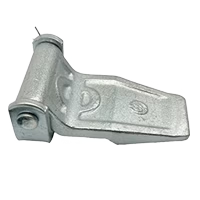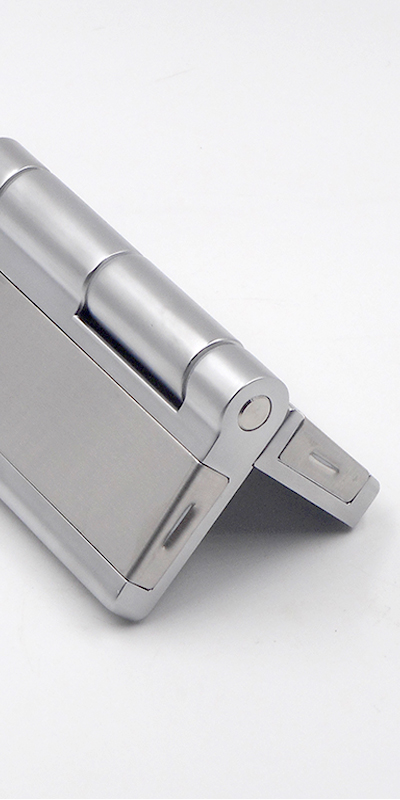

Spring loaded butt hinges offer automatic door closure and are widely used in industrial enclosures and heavy-duty applications.
To choose the right spring loaded butt hinge, consider door weight, spring tension, materials, installation method, and environment. Check if you need adjustable tension, corrosion resistance, or custom mounting options to match specific industrial use.
Learn how to match hinge specifications to your industrial needs with the practical guidance below.
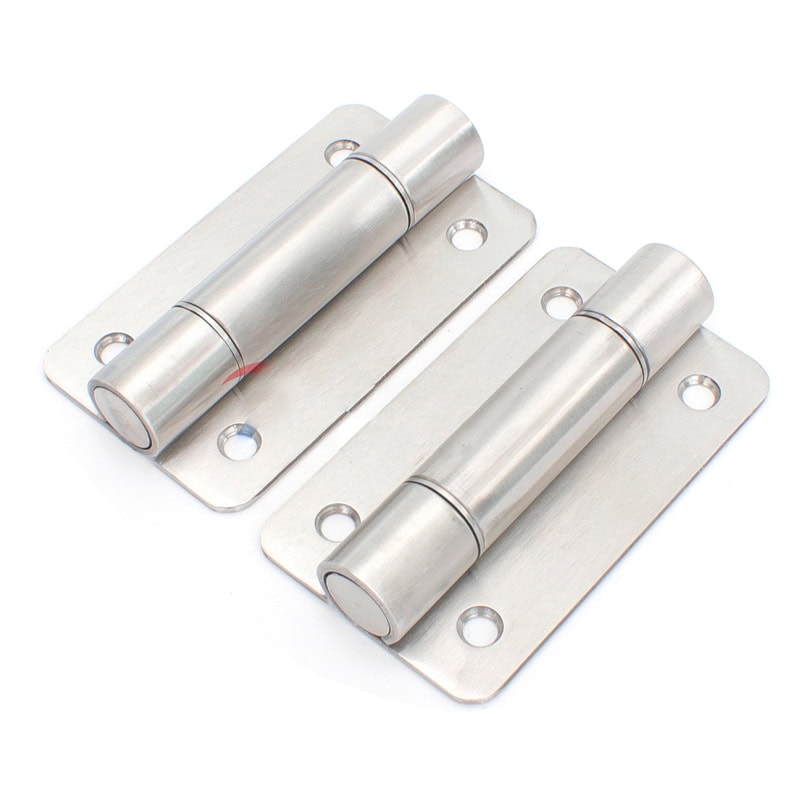
What Are Spring Loaded Butt Hinges?
Spring loaded butt hinges are mechanical components designed to automatically close or return a door or panel to its original position using internal spring tension. They look similar to traditional butt hinges but include a built-in torsion spring that provides self-closing capability.
Spring loaded butt hinges use internal torsion springs to provide automatic door return or closure, eliminating the need for separate door closers.
Understanding Spring-Loaded Functionality
These hinges are ideal for situations where safety, containment, or convenience requires the door or panel to close on its own. Industrial applications such as electrical control boxes, test chambers, and cold storage room doors benefit from spring loaded butt hinges.
Their working principle lies in the internal spring, which stores energy when the door is opened and releases it to return the door to its closed position. Depending on the hinge type, the tension can often be adjusted using a built-in mechanism or tool. Some spring loaded hinges are even bi-directional, allowing doors to swing in both directions and return to center.
Spring Hinges vs Soft Close Hinges
Unlike soft close hinges, which slowly and quietly close doors, spring loaded hinges focus on functionality and speed rather than smoothness. They are preferred where quick closure is essential, such as in climate-controlled environments or machinery covers.
Types of Spring Loaded Butt Hinges
Spring loaded butt hinges are available in various types, each designed to meet different performance requirements and installation needs.
Common types include single action, double action, and adjustable tension spring hinges. Choose based on movement direction, frequency of use, and mounting configuration.
Common Spring Hinge Types
| Type | Description | Application |
|---|---|---|
| Single Action | Returns door to closed position in one direction | Electrical cabinets, enclosures |
| Double Action | Allows door to swing both directions and return to center | Lab equipment, lightweight doors |
| Adjustable Tension | Allows fine-tuning of closing force | Cold storage, heavy panels |
Each type suits different applications. Adjustable tension types are particularly useful in environments where door weight and user frequency vary.
Some hinges may be manufactured with corrosion-resistant coatings or from materials like stainless steel or aluminum hinges, especially for outdoor or marine environments.
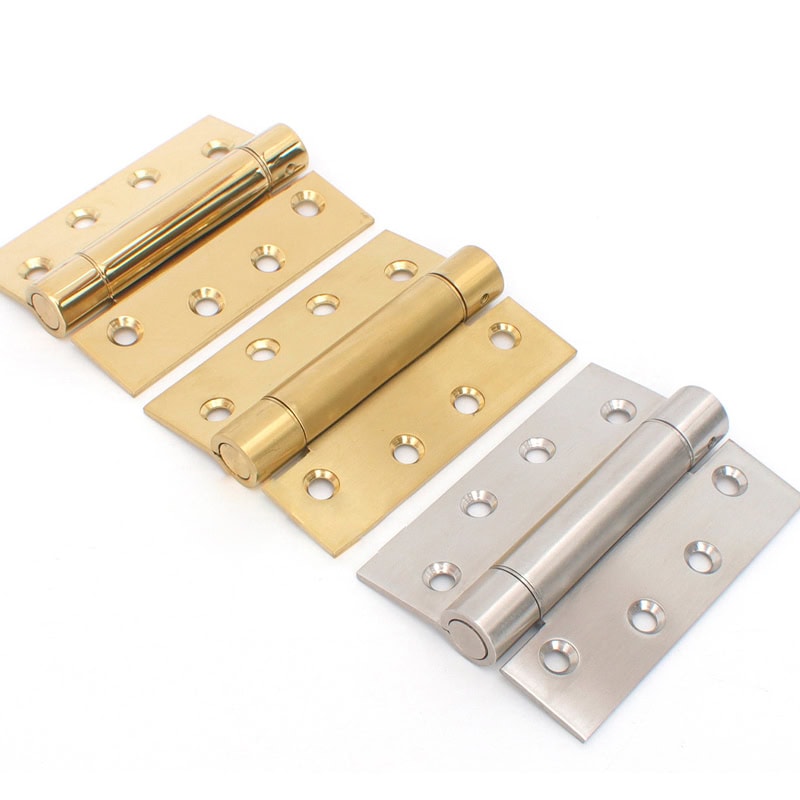
Compare: Spring Loaded Hinges vs Regular Butt Hinges
Choosing between spring loaded and standard butt hinges depends on your application’s needs for automation and door control.
Spring loaded hinges provide automatic door return, while standard butt hinges require manual closing or additional components like door closers.
When to Use Spring Hinges Instead
Spring hinges are ideal when safety or environmental control demands self-closing doors. For instance, in climatic test chamber hinges, ensuring the door is always shut tightly is essential to maintain temperature and humidity levels.
In contrast, regular butt hinges are suited to static, manually controlled applications. They are simple and cost-effective but rely on human interaction or additional parts to close.
Industrial Priorities
For industrial buyers, spring hinges offer fewer moving parts than a hinge plus a closer system. They simplify design and maintenance. Additionally, they can reduce overall project costs and assembly time — both key considerations for OEMs and equipment manufacturers.
Load Capacity and Door Weight Considerations
A critical factor in hinge selection is the total door weight and how much torque the spring hinge must manage. Choose hinges rated for the full door weight and consider dynamic loads. Use manufacturer torque charts or consult engineering support.
Calculating Door Weight & Torque
Most spring hinges are rated by door weight and height. If the hinge’s torque is too low, it won’t close the door reliably. If it’s too strong, it may slam or wear out quickly.
Industrial doors, such as those used on trailer door hinges or steel equipment cabinets, may need heavy-duty spring hinges with higher closing force.
Some suppliers offer engineering tools or charts to help calculate the necessary spring torque based on door size, weight, and frequency of use. Using these aids will prevent failure and ensure safety.
Heavy Duty Applications
For heavy doors in industrial environments, it’s recommended to use heavy duty hinges made with reinforced pins, larger barrels, and thicker leaf material. Spring force should be strong enough to overcome inertia but controlled to avoid abrupt closing.
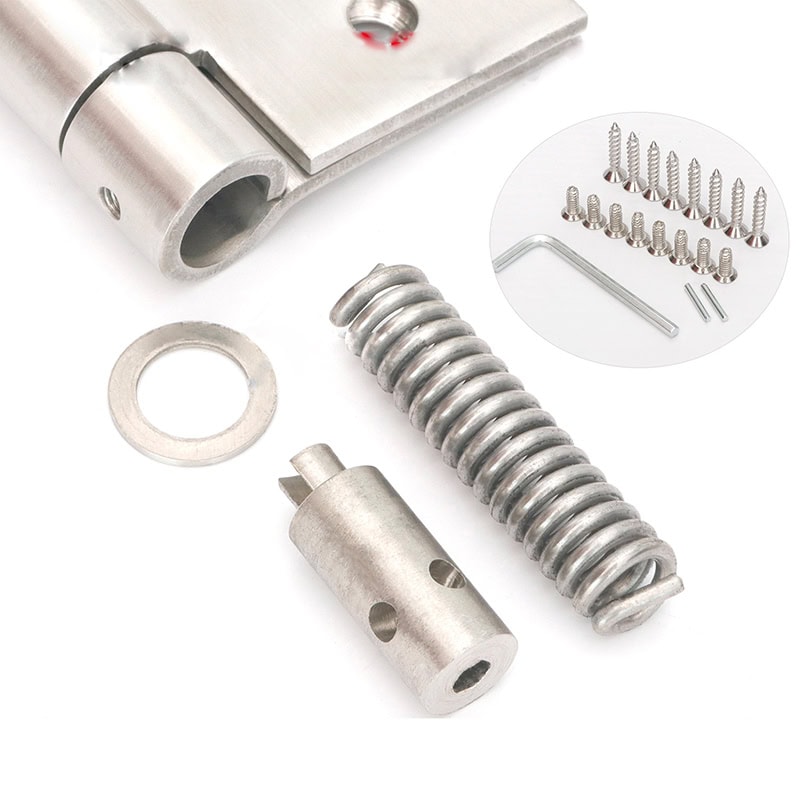
Material Selection for Industrial Use
Material choice greatly influences the hinge’s performance, especially under extreme or corrosive environments. Use stainless steel or aluminum hinges for corrosion resistance in outdoor or marine settings. Mild steel may suit indoor dry environments.
Industrial Environments Demand Durability
Factories, food processing plants, and marine installations all require hinges that resist corrosion, rust, and wear. This makes stainless steel or anodized aluminum ideal choices.
Aluminum also provides a good strength-to-weight ratio, particularly for enclosures where reducing total weight is important. For example, marine hinges must endure salt spray and humidity, making material integrity crucial.
Coatings and Finishes
Powder-coated or zinc-plated finishes can add protection to steel hinges. However, if durability is mission-critical, go for base materials that naturally resist corrosion. This is especially important in cold rooms, where moisture levels are high.
Material also affects price and lead time, so sourcing from an experienced industrial hinge production base like IHINGES ensures consistent quality and availability.
Mounting Options and Installation Requirements
Spring loaded butt hinges come in various mounting styles, each affecting ease of installation and hinge performance. Choose between surface-mounted, concealed, weld-on, or screw-on options based on your equipment design and installation needs.
Mounting Types Explained
| Mount Type | Advantage | Example Use |
|---|---|---|
| Surface Mount | Easy installation | Electrical cabinets |
| Weld-On | Strong, permanent | Machinery doors |
| Concealed | Clean aesthetics | High-end equipment panels |
| Detachable | Easy removal | Modular enclosures |
Weld-on hinges are preferred for steel structures due to strength and resistance to loosening. Weld on hinges ensure permanent fitment in high-vibration or high-impact environments.
In contrast, concealed or detachable hinges provide clean visual lines and allow access for maintenance, making them ideal for test chambers or lab equipment.
Conclusion
Choosing the right spring loaded butt hinge ensures your equipment performs reliably and safely. Always match hinge type, load rating, material, and mounting method to your specific industrial application.