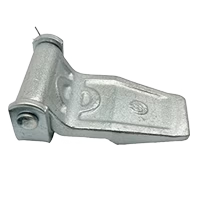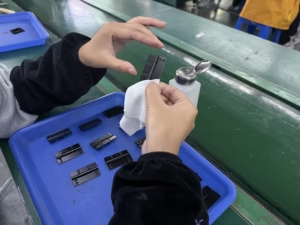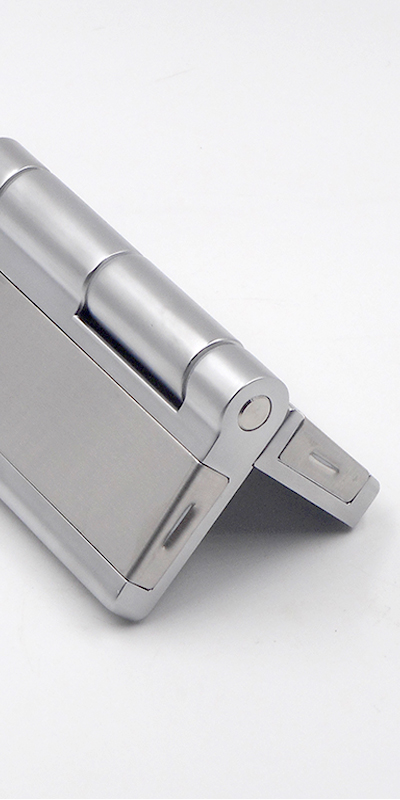

When a door panel sags or creaks under the load, it’s often not the structure—it’s the hinge. Choosing the right one changes everything.
To choose the right heavy duty strap hinges for sheet metal enclosures, assess load capacity, hinge size, material, duty cycle, and installation method. Strap hinges excel in distributing weight across broader areas, making them ideal for large, heavy metal doors.
Understanding this selection process ensures your enclosure stays reliable under stress.
Understanding Heavy Duty Strap Hinges in Industrial Context
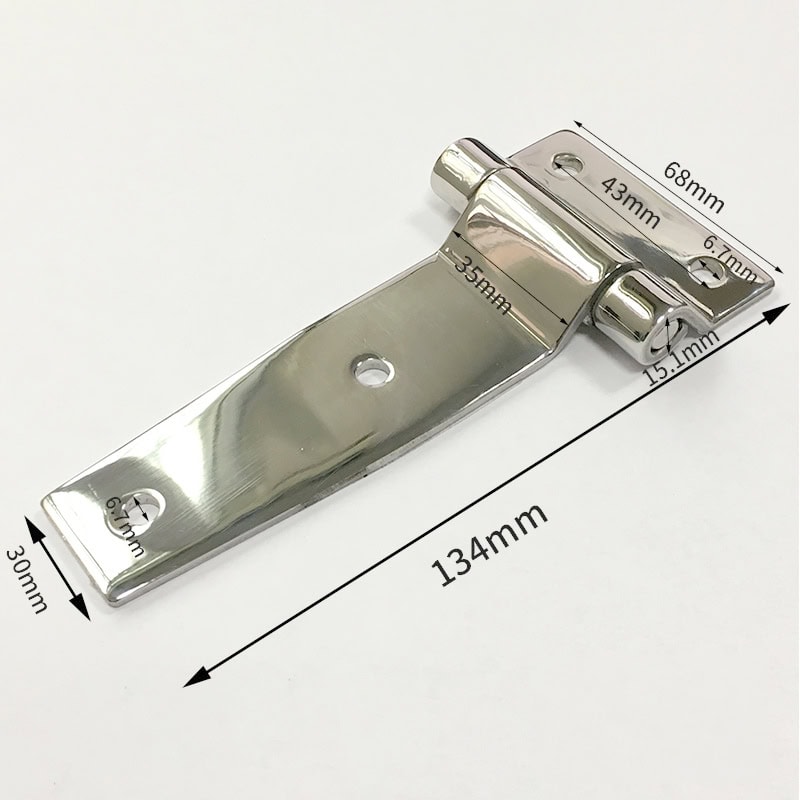
Heavy duty strap hinges are not decorative accessories. They are engineered for torque distribution and load-bearing efficiency in real industrial environments—like electrical control cabinets, metal access panels, and inspection doors. Their long leaf structure allows the weight of heavy steel doors to be distributed evenly over a wider area, preventing door sag, frame deformation, and misalignment under repeated use.
In contrast with chrome butt hinges, which offer compact designs for confined installations, strap hinges offer greater leverage, making them especially beneficial in wide or top-hinged panel applications. Industrial designers favor them in environments where high inertia or shock load is involved—like test chambers or machine enclosures. Heavy duty strap hinges are ideal for wide, heavy access doors in industrial settings due to their superior load distribution and structural reinforcement over extended areas.
Key Selection Factors for Heavy Duty Strap Hinges
Load Capacity & Weight Support
Every metal door has a load, and every hinge has a limit. That mismatch is where most failures begin. A 50kg steel door with tools mounted inside? It behaves like a 70kg door under motion. Take my advice: use the hinge’s Hinge Weight Rating as your minimum spec—then add a 20% safety factor. Especially for tall doors, remember that torque at the top or bottom hinge increases dramatically.
Some Heavy Duty Hinges for Heavy Doors can support over 1,000 lbs, but only if installed with proper anchoring and alignment. For doors over 1.5m tall, consider spreading the weight across three hinges instead of two.
Material & Corrosion Resistance
Materials are not interchangeable. Cold-rolled steel may be economical, but in a corrosive factory setting, rust will shear the pin in months. 304 stainless offers better corrosion resistance, but for offshore platforms or chemical rooms, 316 Stainless Marine Friction Hinges are a smarter choice due to their superior resistance to chloride-induced pitting. I’ve seen clients replace steel hinges every six months due to premature corrosion—until they upgraded to 316 friction hinges and never looked back.
Strap Geometry & Dimension Matching
Strap hinges are long for a reason—load spread. But longer isn’t always better. Match the strap length to your door’s center of gravity. Too short, and you’ll create point load stress near the mounting screws. Too long, and you may interfere with adjacent components. Check pin diameter and leaf thickness as well. A mismatch here leads to play in the door or premature wear in pivot motion.
Duty Cycle and Frequency of Use
In factories with robotic access doors or test chambers with hundreds of cycles per day, the issue isn’t strength—it’s fatigue. That’s when Adjustable Torque Stainless Steel Hinges shine. They allow precise tension adjustment, reducing impact shock on the hinge pin. This extends hinge life dramatically. On low-frequency cabinets, basic pin-in-leaf designs work. On automated equipment? Go adjustable or go home.
Mounting Style and Installation Considerations
Bolt-on or weld-on? It’s not just an aesthetic choice. For large-scale access doors where security and strength matter, heavy duty weld on hinges offer unmatched permanence. However, they require perfect alignment during setup. I’ve worked with shops who laser-guide their hinge mounts to prevent twist under weld heat stress. Weld-on hinges in industrial applications also reduce long-term maintenance, as there’s no bolt to loosen over time.
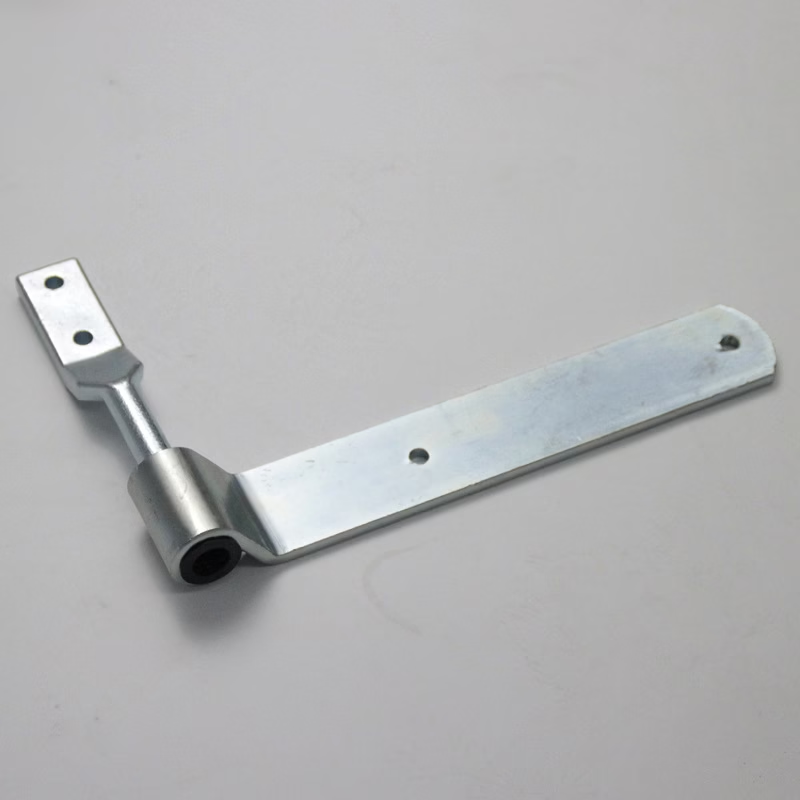
Determining the Right Size and Number of Hinges
Measuring Strap Hinge Size
Strap length is measured from the pin center to the tip of the leaf, and width is across the leaf. Thickness, pin diameter, and knuckle height affect weight handling and movement smoothness. Use a Butt Hinge Diagram or jig to accurately replicate holes across production batches.
How Many Hinges Do You Need?
It’s not just about the door’s height. Doors subjected to vibration, high-speed opening, or offset loads may require more hinges even if they’re small. One of my clients added a fourth hinge on a 1.2m equipment door to solve torsional flex—it worked. Think in terms of motion dynamics, not just static weight.
Weight Ratings and Real-World Load
Always confirm load ratings with the manufacturer. Reputable vendors provide Hinge Weight Rating per hinge, not per pair. Be cautious of marketing claims that lack test reports. IHINGES, for instance, offers technical drawings and load specs verified under simulation—a rare but invaluable feature.
Industrial Use Cases and Application Scenarios
Equipment Enclosures
Heavy electrical panels need hinges that won’t warp after 10,000 cycles. I’ve seen Electrical Panel Hinges fail from pin misalignment under thermal expansion. Strap hinges with thicker pins and floating knuckles perform better in such high-temperature zones.
Maintenance Access Panels
Quick-release designs like Heavy Duty Detachable Barrel Hinges are perfect here. They allow easy panel removal without unfastening bolts. For industries with strict downtime limits—like semiconductor fabs—this is mission-critical.
Corrosive Environments
For coastal factories or chemical processing plants, upgrade to heavy duty exterior hinges or marine-grade options. Material fatigue from salt spray often sets in before users notice visual corrosion. Better to over-spec on material than under-spec on lifespan.
Quality & Supplier Considerations
A hinge is only as good as its manufacturer. Generic catalog numbers won’t save you when your door sags in 3 months. The key is customization.
IHINGES provides 3D design plans, logo customization, and material matching. More importantly, they understand your drawings—fast. If you’ve ever wasted a week emailing back and forth to explain a simple tolerance issue, you know why this matters.
Also, validate their hinge torque rating and fatigue test data. Without this, all weight specs are just guesswork.
Common pitfalls include:
-
Relying solely on door weight without accounting for usage frequency
-
Ignoring pin clearance tolerance, which can introduce rattle or wear
-
Selecting hinges with decorative finishes (like zinc die-cast) for high-load environments
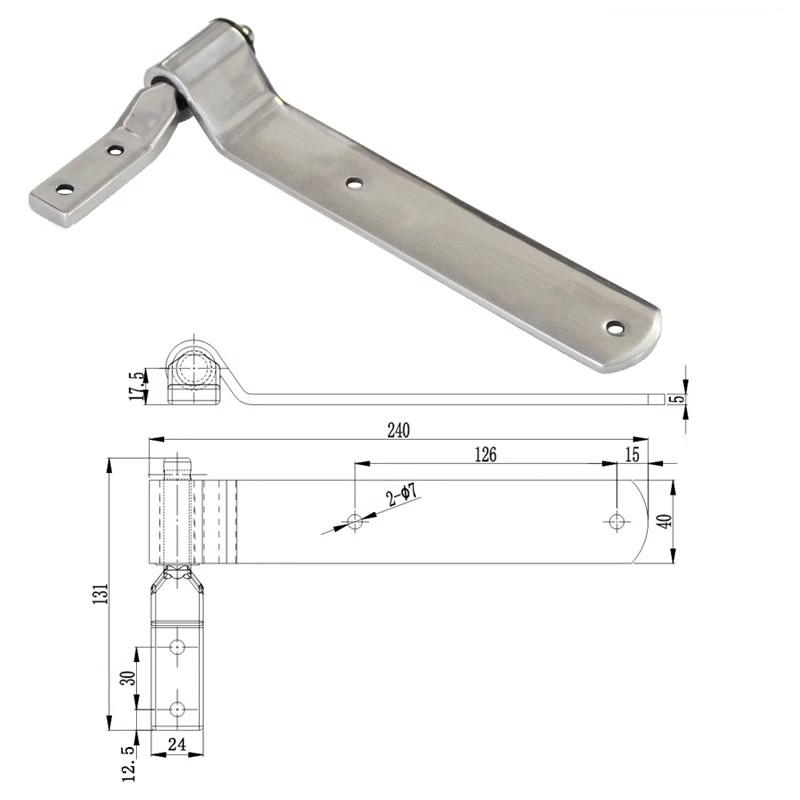
Installation Tips & Maintenance
Strap hinges must be aligned vertically with consistent spacing to avoid skewed doors. Use Spring Loaded Butt Hinges only when assisted closure is needed; otherwise, they increase torque unnecessarily.
Always apply threadlocker on bolts, especially in vibrating environments. Regularly inspect for pin wear, especially in dust-heavy or high-humidity areas. Lubricate based on duty cycle. For low-frequency access panels, once a year is sufficient. For automated systems, monthly checks are smarter.
FAQ Section
What size strap hinge do I need?
Measure your door height and weight. Multiply total weight by 1.2 (safety margin), divide by hinge count, and match it to hinge rating.
How to determine hinge size?
Match leaf length to at least one-third of the door height, pin size to expected torque load, and material to environmental exposure.
How much weight can a strap hinge hold?
Depends on design. Industrial-grade strap hinges range from 200 lbs to over 1,500 lbs. Always consult the datasheet.
Are strap hinges stronger than butt hinges?
Yes, for wide doors. Strap hinges distribute force over a larger area, reducing stress at the mounting point.
What’s the difference between a strap hinge and a butt hinge?
Strap hinges are longer, offering more leverage and load spread. Butt hinges are more compact and typically used in smaller enclosures.
Conclusion
Choosing the right heavy duty strap hinge isn’t about size—it’s about load, frequency, and context. Do it right, and your enclosure will last. Get it wrong, and the door becomes the weak link. At IHINGES, we’ve spent years helping engineers and manufacturers solve real-world hinge challenges with custom solutions. If you’re sourcing industrial hinges or need a custom design that actually fits your specs, reach out—we speak your language and deliver what drawings can’t always explain.