
You might think a hinge is just a hinge, but try swapping a precision part for a standard one and you’ll immediately feel the difference. Regular hinges are fine for basic doors, but when you can’t afford any “slop” or wobble, you need something built for the long haul. Precision hinges are all about tight control and hitting that exact same angle perfectly, thousands of times in a row. It really comes down to whether you just need a simple pivot or legitimate motion control for a heavy-duty job.
Let’s get into the nitty-gritty of what actually sets these two apart.
What Defines a Precision Hinge?
Precision hinges are designed for critical industrial applications that require long-lasting alignment, tight tolerances, and minimal operational play.
A precision hinge is defined by its ability to provide repeatable, accurate movement under load.
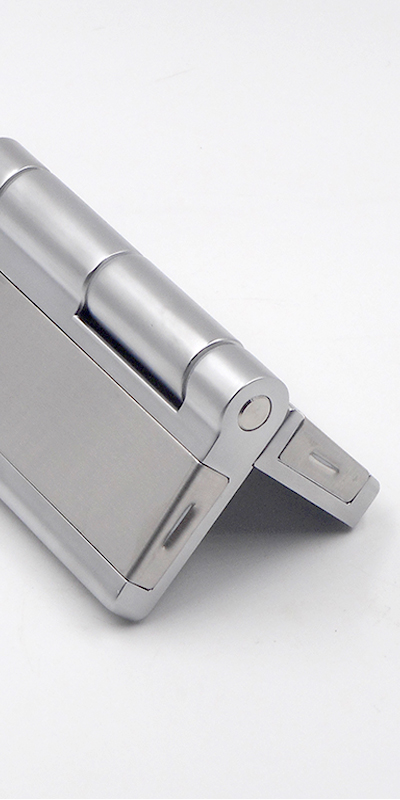
These hinges often include bearing systems, torque control mechanisms, and are made from high-grade materials like stainless steel or hardened aluminum. Their use is common in environmental test chambers, aerospace panels, and advanced electronic enclosures.
Precision hinges such as the Adjustable Torque Stainless Steel Hinge allow controlled motion and resistance adjustment, making them ideal for equipment that must maintain a precise open angle or position over time. They’re also used where vibration or frequent opening/closing could wear down less robust hinges.
These hinges are manufactured with tight tolerances, often ±0.01 mm, ensuring low friction and longer service life. In critical systems, such as electrical panel doors or high-precision enclosures, misalignment caused by hinge failure could lead to serious performance d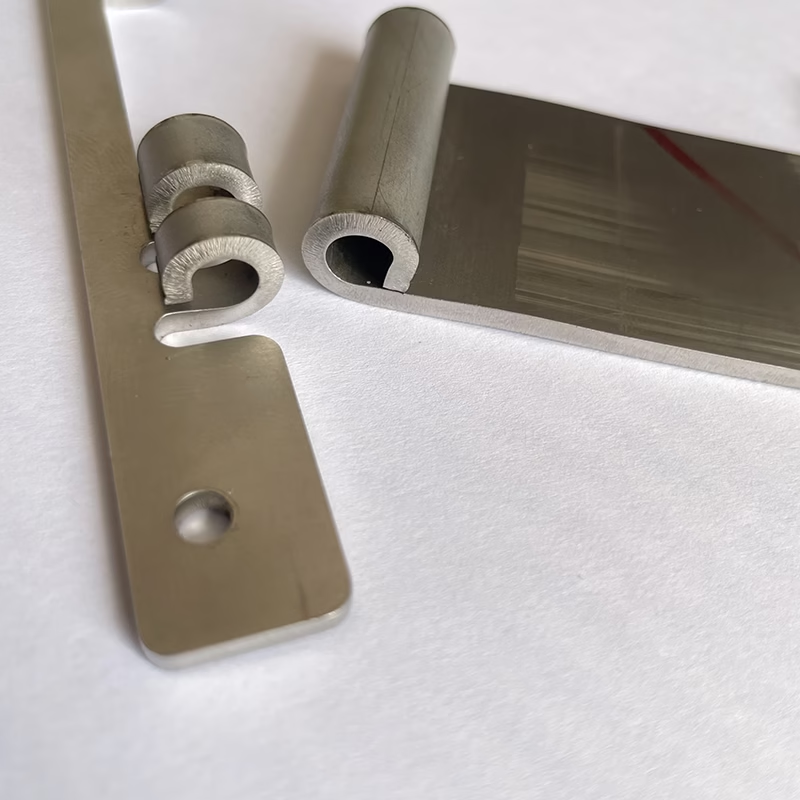 egradation or even equipment damage. That’s why precision hinges are often preferred in these settings over more common models like wide-throw hinges or heavy-duty flush hinges, which may be sufficient for less demanding tasks.
| Feature | Precision Hinge | Regular Hinge |
|---|---|---|
| Tolerance | ±0.01–0.05 mm | ±0.1–0.3 mm |
| Load Handling | High (dynamic and static) | Moderate |
| Motion Control | Smooth, adjustable | Basic, unregulated |
| Lifecycle (cycles) | 50,000+ | 5,000–20,000 |
| Common Material | Stainless steel, alloys | Mild steel, zinc die-cast |
| Application Examples | Lab chambers, defense, marine | Electrical cabinets, storage units |
How Do Regular Hinges Compare?
Regular hinges are used in standard industrial applications where cost, simplicity, and ease of replacement are more important than extreme precision.
Regular hinges offer basic functionality for applications without tight motion or alignment requirements.
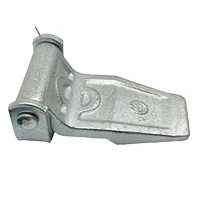
They are generally stamped or welded from mild steel or other cost-effective materials. Their structure is simple—often pin-based without added bearing components—making them easy to mass-produce and install across many product lines.
These hinges include varieties such as chrome butt hinges, weld-on hinges, and heavy duty detachable barrel hinges, each serving specific but relatively straightforward purposes. For example, when you need to replace industrial door hinges on a large access panel or metal cabinet, a standard hinge works well if no precision alignment is needed.
That said, their limitations become apparent in applications with high vibration, frequent use, or where precise positioning is essential. Regular hinges can experience fatigue faster and may develop looseness, which affects door alignment and sealing.
While regular hinges are lower in cost, they lack the sophistication of precision models. In environments like marine or aerospace, using a hinge such as the 316 Stainless Marine Friction Hinge would ensure corrosion resistance and tight performance under pressure, something regular hinges cannot guarantee.
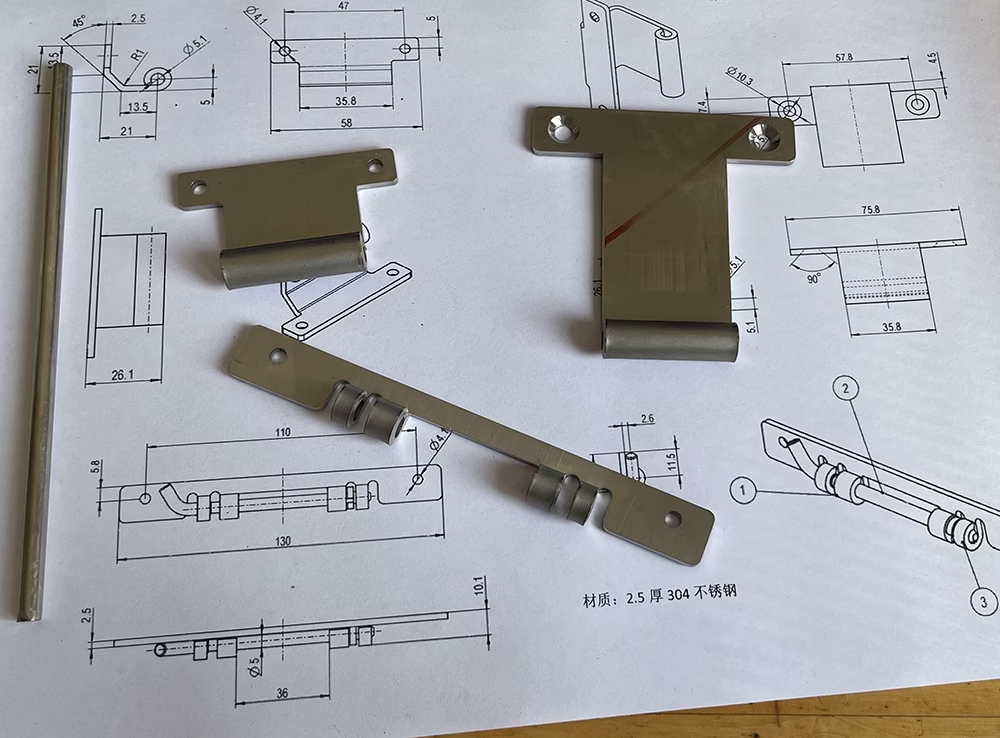
Key Differences Between Precision and Regular Hinges
Understanding the performance differences helps engineers and procurement teams make smarter hinge selections for their specific industrial needs.
Precision hinges offer better alignment, repeatability, and motion control; regular hinges focus on affordability and general function.
Precision hinges are engineered for high-value applications where hinge performance directly impacts equipment reliability. These include test environments, sealed enclosures, and systems with mechanical sensitivity. Regular hinges, on the other hand, are suitable for use cases like storage compartments, non-sealed cabinets, or access panels.
| Comparison Factor | Precision Hinge | Regular Hinge |
|---|---|---|
| Cost | Higher | Lower |
| Application Environment | Critical systems, sealed enclosures | General enclosures, access panels |
| Maintenance Frequency | Low, high durability | May require adjustment or replacement |
| Motion Quality | Smooth, precise | Functional, basic |
| Advanced Features | Torque control, dampening | None |
For example, if you’re working on heavy-duty enclosures and want enhanced movement control, friction hinges in industrial applications can provide reliable resistance. Similarly, heavy duty continuous hinges are ideal for evenly distributing weight across long doors but may lack the precision features needed for sensitive applications.
The takeaway is clear: Use precision hinges when performance matters, and use regular hinges when cost and simplicity are key.
Conclusion
Precision hinges deliver controlled motion and long-term reliability, while regular hinges serve general industrial needs. Choose based on your project’s precision, durability, and cost priorities.