
Some doors just won’t open right. You install the hinge, close the panel, swing it open—and bang—it hits the frame. Or worse, it only opens halfway. That’s when projection hinges come into play.
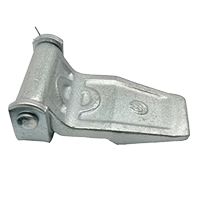
Projection hinges shift the whole game. Literally. They throw the pivot point out and away from the frame. Why? So your thick, sealed, insulated, over-engineered door can actually open all the way without slamming into nearby hardware or enclosures.
Seen it too many times. Beautiful electrical enclosure. Great welding. Expensive panel door with a triple seal. But someone slapped on a basic butt hinge. Now the door won’t open past 90°. Useless.
Let’s break it down.
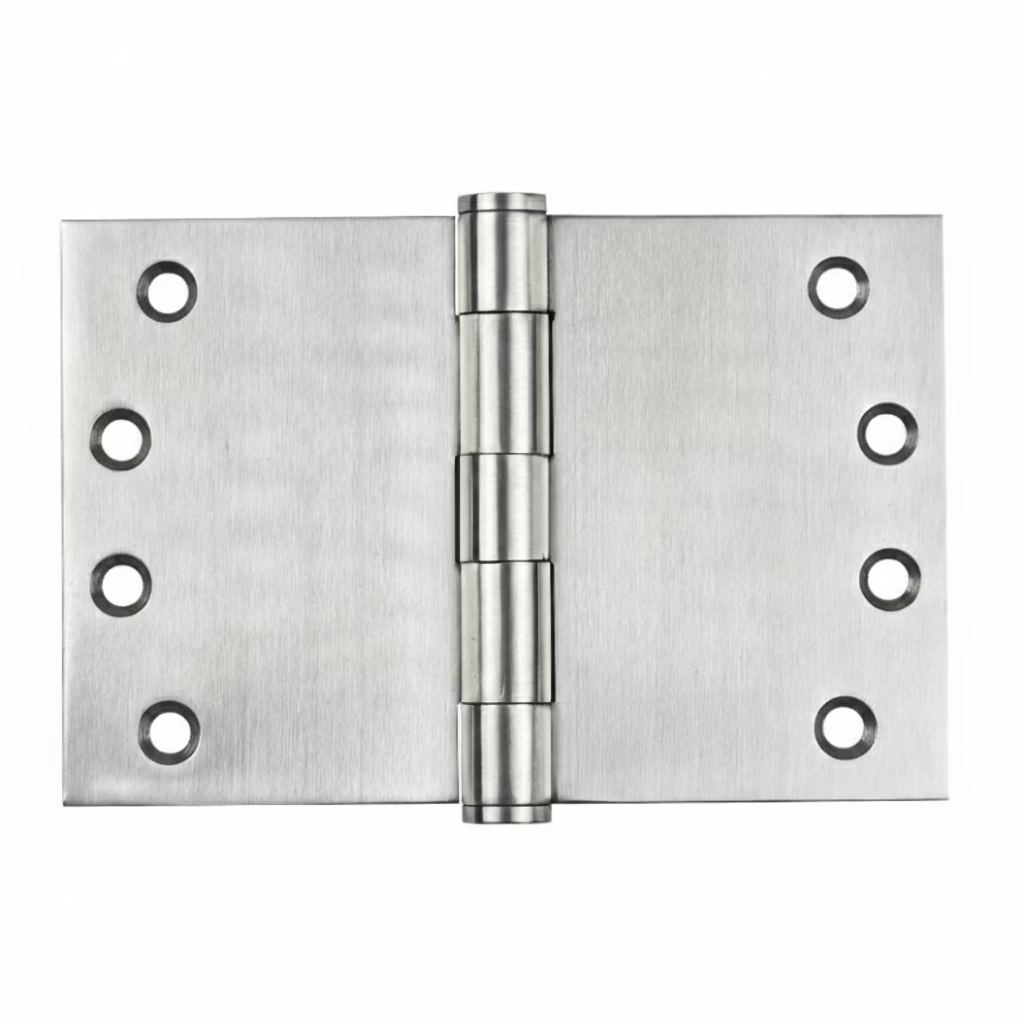
What defines a projection hinge in industrial applications
If you’re dealing with real machinery—not furniture, not architecture, I mean real industrial metal—you don’t have the luxury of decorative space. A projection hinge is made to solve a very specific, very annoying problem: clearance. You’ve got a flange? A rubber seal that bulges 6mm past the frame? A door that overlaps the cabinet?
A projection hinge deals with that by pushing the rotation point out. It’s geometry, not magic. It lets your door swing wide without scraping, jamming, or binding.
How projection hinges operate: offset pivot for door clearance
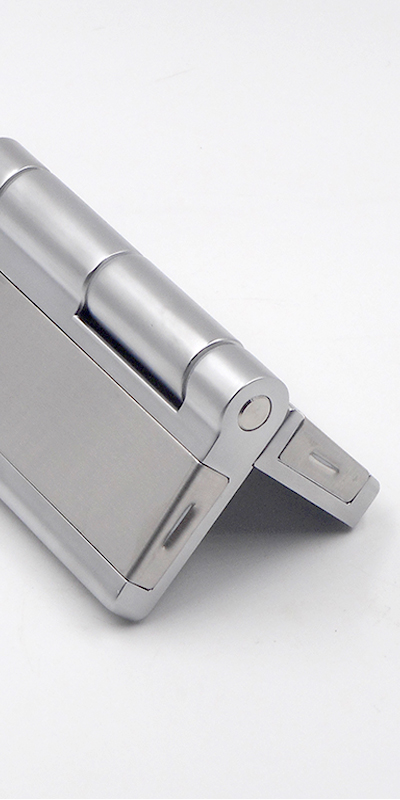
Forget the pin-in-the-middle design. These hinges push the knuckle far off to the side. You get clean movement, no conflict with the frame or surrounding gear.
I’ve fitted these on enclosures so tight there’s only 2mm between them and the next unit. But with a proper 200mm projection hinge? The door clears everything. Opens like nothing’s in the way. That offset isn’t decorative—it’s functional.
Want 180° swing on a 70mm thick test chamber door? Regular hinges won’t cut it. Don’t even try. You need projection. Simple as that.
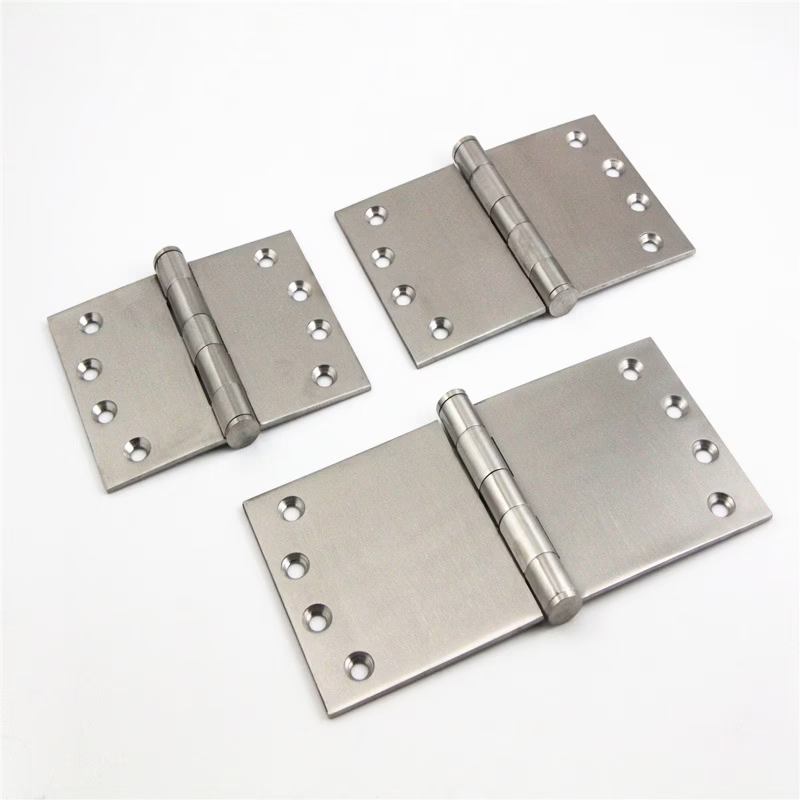
Projection hinges vs. parliament hinges: what’s the difference
People mix these up all the time. Parliament hinges look fancy. Long arms. Used in buildings, usually. But in industry? Too bulky. Too weak. And frankly? Too pretty.
Projection hinges are the ones doing real work. Thicker knuckles. Tighter tolerances. Built for daily abuse in dirty, hot, corrosive environments. Not drawing rooms. Not French doors. I don’t care how “black” or “ornate” your parliament hinge is—it won’t hold a 40kg steel door.
How to measure and specify projection hinges correctly
This part? Critical.
You don’t measure the leaf. You measure from the frame edge to the pivot centerline. That’s your real projection. Get it wrong and you’re in for a world of rework. I’ve seen buyers order projection hinges 75mm when they really needed 200mm—door hits the enclosure, can’t swing past 120°. Total waste.
Also, mind the knuckle. Don’t assume it’ll fit just because the plate does. Clearance means everything in these builds.
Standard sizes like 75mm and 200mm: which one to choose
Simple rule. Smaller projection = tighter setup. Larger projection = more clearance, but more torque on fasteners.
A projection hinge 75mm works great for compact panels. Say, a 400x300mm steel door. Light. No gasket. Clean.
Need to swing a double-sealed chamber door? Use projection hinges 200mm or more. Anything less and your door’s gonna catch or crush the gasket.
I tell clients: if you’re unsure, mock it up with cardboard. Trace the door. Simulate the swing. You’ll see the projection you actually need—before blowing money on the wrong hinge.
Best projection hinge materials for corrosion and heat resistance
Mild steel? Maybe for indoor dry cabinets. Maybe. But in reality, most industrial gear lives in hell. Heat, humidity, corrosive fumes, vibration.
You go cheap on material—hinge dies. That’s a fact.
I’ve had best results with 316 stainless steel when dealing with washdown or marine setups. Want middle ground? Coated zinc die hinges can work if the cycles are low and the air’s clean.
Buyers always ask: “Is black better?” No. It’s not about color. It’s about coating, tolerance, and load spec. Want black? Fine. But make sure the guts are up to spec.
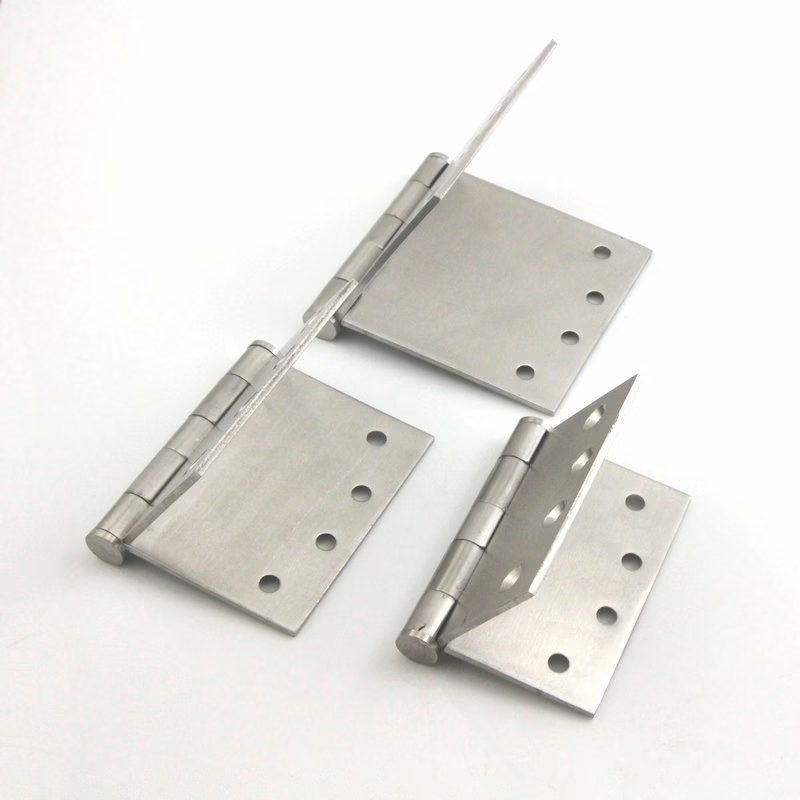
Mounting projection hinges on industrial sheet metal doors
Most critical, most ignored. This is where good hinges go to die.
Here’s the deal: projection adds leverage. That leverage multiplies any mistake in mounting. Misalign the holes? The door binds. Use weak fasteners? The hinge rips off under load.
If your door’s heavy, use backing plates. Don’t just tap into sheet metal and pray. And for god’s sake, don’t assume you can weld a butt hinge for doors and expect it to behave like a projection hinge. That’s like mounting a motorcycle engine on a lawnmower frame.
Common failures: hinge warping, door sag, and misalignment
You’ll see it right away. Door edge grinds against the frame. Knuckle looks bent. Screws sheared. You think it’s the door’s fault. Nope. Wrong hinge. Or wrong install.
Had a client once who used projection hinges on an environmental chamber. Looked perfect. Two weeks in, temps hit 80°C. Seal swelled. Hinge misaligned. Screws tore loose. That’s not a manufacturing defect. That’s poor planning. Hinge weight rating exists for a reason. Respect it.
When should you use projection hinges in thermal or test chambers
Thermal chambers, vibration cabinets, sealed enclosures—all have the same enemy: thickness and interference.
Regular hinges can’t handle the mass. Or the gasket swell. Or the door thickness.
Projection hinges don’t care. They throw the door wide. Clear the seal. Maintain full access. No stress on the gasket, no warping at the hinge line. I’ve put these on constant humidity boxes running 24/7 for three years straight—zero failure.
It’s not a luxury. It’s the only solution.
Projection hinges vs. butt hinges vs. pivot hinges: selection guide
Let me break it down with no fluff:
| Type | What It Does Best | Where It Belongs |
|---|---|---|
| Projection Hinge | Solves clearance problems | Test chambers, sealed enclosures |
| Butt Hinge | Cheap, compact, no offset | Lightweight cabinets, indoor use |
| Pivot Hinge | Floor or top-mount swing | Heavy access doors, special geometry |
Still think one hinge fits all? It doesn’t. If you’re still trying to jam a precision hinge into a corner-mounted gasket door just to save on cost, you’re not cutting cost—you’re setting up a failure.
Final Words
Projection hinges aren’t just accessories. They’re problem solvers. Quiet, mechanical heroes in every cleanroom, test lab, and sheet metal plant that demands full swing access with zero compromise.
And if you need something nobody stocks? We build it. IHINGES was built for the projects that don’t fit the catalog. Not residential. Not decorative. Just pure industrial, custom-fit, real-world hinges for the people who actually build things.