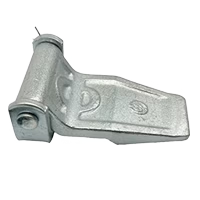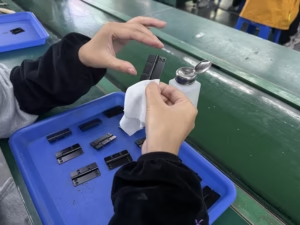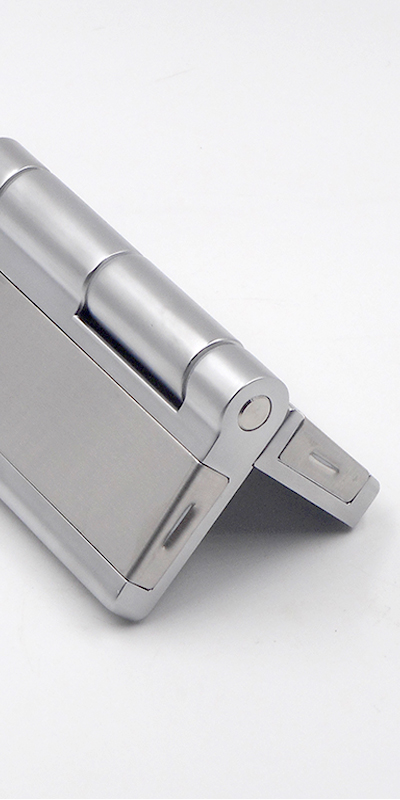

A standard hinge looks fine until the door starts to sag after 30,000 cycles. I want you to know when heavy duty flush mount hinges need customization.
Heavy duty flush mount hinges are low profile industrial hinges that sit flush to reduce snagging and maintain panel alignment under load. You should customize them when a standard size cannot hold alignment through your real duty cycle, including high door weight, off center center of gravity, vibration, thin sheet metal mounting, harsh corrosion, or tamper requirements. I have seen standard hinges pass a bench fit check and still fail in service because the mounting points and pin clearances do not match the real stress path.
Specs on paper miss real strain paths. The sections below show the tripwires I watch before I cut custom tooling.
Scope and decision question
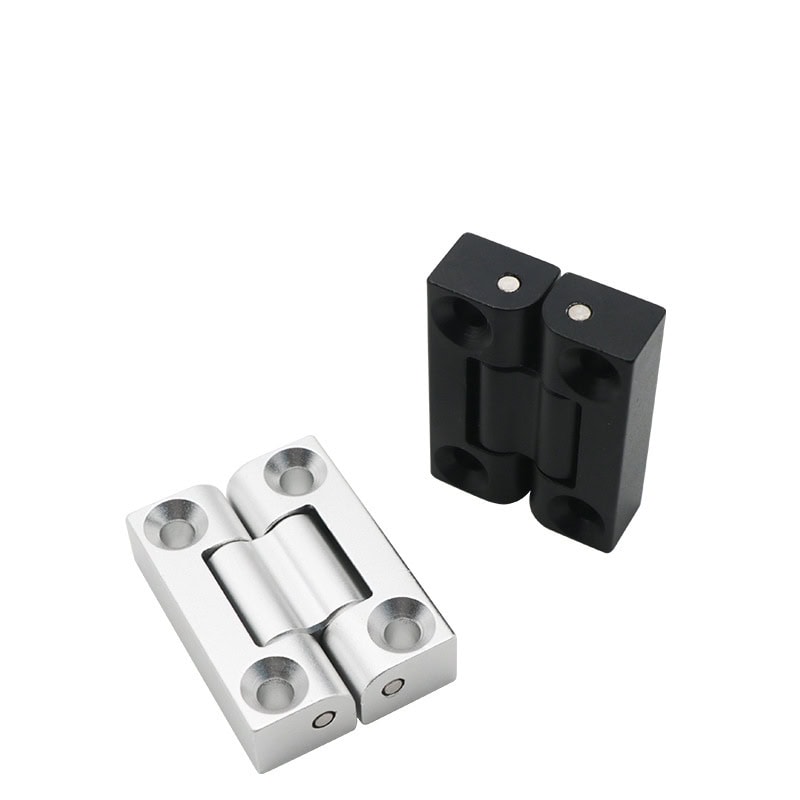
Heavy duty flush mount hinges show up on industrial enclosures, equipment access doors, test chambers, vehicle compartments, and machine guarding where you need a smooth exterior surface and repeatable alignment. I recommend you treat “flush mount” as a packaging constraint, not a strength promise, because I have watched buyers assume flush automatically means heavy duty and then chase door sag for months after launch.
The customization decision starts with one hard question: can you tolerate alignment drift over time. If your latch needs a tight engagement window, or your gasket compression needs a narrow band, you cannot accept a hinge that “mostly holds” and you should plan for a custom geometry, pin system, or mounting interface. Heavy duty hinges often justify their cost when they spread load better, resist fatigue at mounting points, and hold reliable motion for a longer cycle life under frequent use and vibration.
What I measure before I talk about size
I ask for door mass, door width, hinge line offset from center of gravity, opening angle target, and expected cycles per day. My rule is simple: if you cannot describe the load path, you will end up over buying material while under building the mounting, and the hinge will still loosen.
| Input you must define | What it controls in the hinge | Field failure if you guess |
|---|---|---|
| Door mass and center of gravity | pin shear and leaf bending | door sag, latch scrape |
| Duty cycle and vibration | wear rate and clearance growth | rattle, fretting dust |
| Door thickness and edge distance | fastener pull out margin | hole elongation |
| Opening angle and interference | knuckle and leaf geometry | binding, gasket tearing |
When standard sizes fail in the field
Standard sizes fail when the real assembly behaves like a spring. I have seen a door that “fits” on day one, then a week later the latch needs a slam because the sheet metal around the fasteners yields and the hinge axis tilts. That is not a hinge problem alone, but the hinge design decides whether that tilt grows into a permanent misalignment.
Wear shows up faster when you combine high use with vibration and a door that swings past 120 degrees. In those conditions, the pin and knuckle interface sees micro motion that turns into clearance growth, and clearance growth turns into impact loads at the end of travel. Weber Knapp calls out vibration, constant use, and mounting point fatigue as reasons heavy duty hinges earn their keep, and that matches what I see on equipment doors that operators open all day.
The failure signatures I trust more than any spec sheet
Door sag, hinge side rub marks, and latch misalignment tell you the hinge axis moved. A squeak that turns into a knock usually means the pin clearance grew and the door now lands with momentum instead of sliding smoothly. When you see red brown dust near fasteners, you likely have fretting at the joint and your mounting stack needs attention, not just a thicker leaf.
| Symptom | Likely root cause | Custom fix that actually works |
|---|---|---|
| Door drops over time | leaf flex plus thin mounting | larger leaf footprint, reinforcement plate |
| Rattle at mid swing | clearance growth at pin | tighter pin fit, different bearing style |
| Fasteners loosen | joint micro slip | captive hardware, revised hole pattern |
| Binding near full open | geometry mismatch | offset axis or different knuckle stack |
Load and duty triggers for customization
Load triggers start with torque, not weight alone. A heavy door with the center of gravity far from the hinge line can overload a hinge faster than a heavier door with a tight hinge line, because the moment arm drives leaf bending and pin shear. I have found that teams who only quote door weight often under size the pin and then blame “bad steel” when the real issue is torque.
Your duty cycle matters as much as peak load. If operators open an access door hundreds of times per shift, I steer you toward bearing designs that control wear and keep motion consistent, because friction changes over time and that changes operator behavior. This is where ball bearing butt hinges can beat a plain bearing in high cycle service when you need smoother motion and lower wear sensitivity, provided you control contamination and lubrication.
Hinge quantity and placement without folk rules
Rules of thumb float around, but I prefer a quick deflection check. When door height grows, the top hinge sees more moment and the lower hinge sees more prying. If your hinge spacing cannot change because of cutouts or internal components, that alone can justify a custom leaf length or custom hole pattern to spread load into stronger zones.
What I ask you to specify
You should give me a target Hinge Weight Rating with a safety margin that matches your risk, plus cycles, and vibration environment. If you cannot quantify those, you will end up paying for thickness while still losing alignment at the mounting interface.
Geometry and clearance triggers
Geometry decides whether “flush mount” works in the real assembly. I have seen a flush hinge that looks perfect in CAD, then on the production line the door binds because the gasket, handle, and hinge barrel fight for the same envelope. When that happens, people grind the door edge, and then the corrosion protection fails right where the stress concentrates.
Sizing needs to consider door thickness, leaf width, edge distance, and the swing path. Guides that discuss hinge sizing focus on matching hinge size to door dimensions, but for industrial equipment you must also include gasket compression, cable clearance, and internal harness routing that changes with swing angle.
Clearance stack up that causes field rework
Pin clearance, knuckle length, and leaf flatness stack together. If you allow too much clearance, the door will rattle and the latch will hunt. If you allow too little clearance, paint thickness or coating buildup will seize the hinge after the first washdown. My recommendation is to define a clearance budget per interface and then assign tolerance to hinge parts versus the enclosure parts, because enclosure sheet metal variation often dominates.
| Clearance item | What it affects | What I usually see ignored |
|---|---|---|
| Pin to knuckle fit | rattle and wear | coating thickness change |
| Leaf to door gap | gasket crush | door warp after welding |
| Screw head clearance | flush requirement | countersink mismatch |
| Swing interference | opening angle | handle and cable chain hit |
Mounting and structure triggers
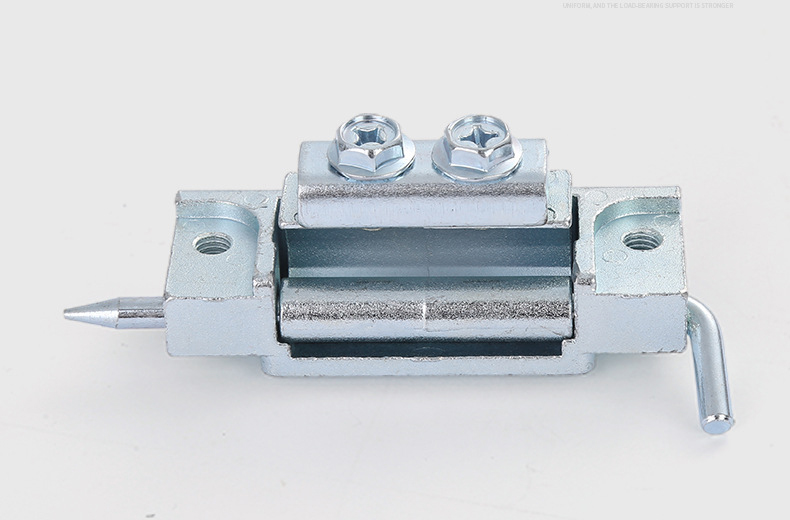
Most hinge “failures” start in the structure. Thin sheet metal behaves like a spring, and every open and close cycle pumps the fasteners. I have watched a hinge rated for high load still loosen because the mounting holes ovalize and the leaf starts to walk. When that happens, a thicker hinge does not fix the joint, it just transfers more stress into the weak substrate.
Customization helps when you need a footprint that matches your reinforcement strategy. You may need a longer leaf to reach a formed flange, a different hole pattern to avoid a cutout, or a leaf thickness that matches a weld sequence without pulling the hinge out of plane. Weber Knapp highlights that heavy duty hinges distribute weight more evenly and reduce fatigue at mounting points, and you can only realize that benefit if your mounting design supports it.
Welded brackets and when I push for a welded hinge
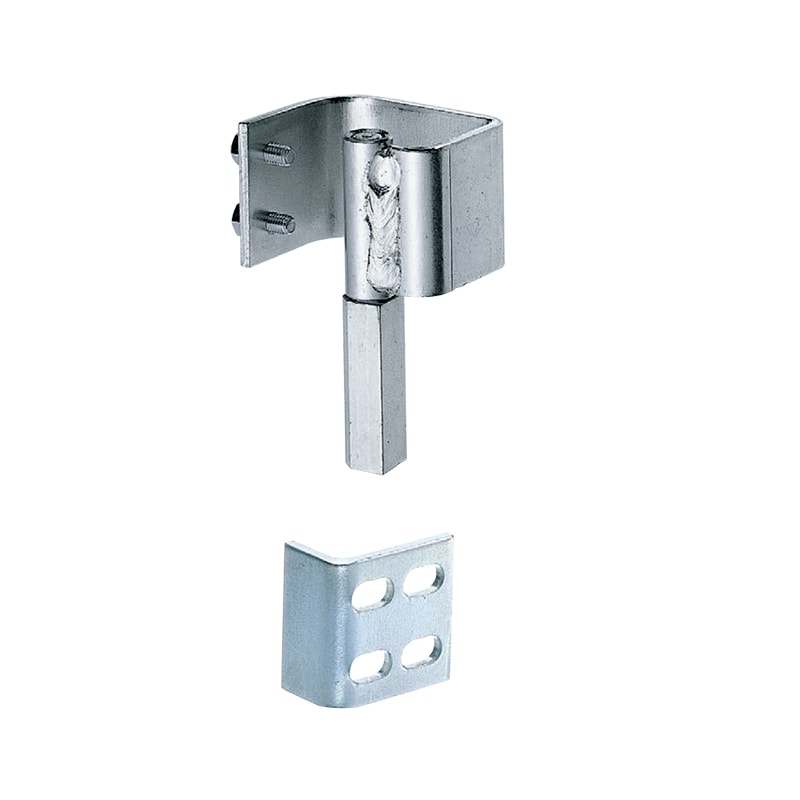
If you use welded hinge brackets, distortion controls everything. This is where Weld On Bullet Hinges can make sense on rugged equipment, but only if you control weld heat input and keep the hinge axis straight. I have seen weld toe cracking around hinge brackets when a shop runs a hot fillet and leaves a sharp transition, so I often specify a smoother toe profile and a reinforcement pad rather than chasing exotic hinge materials.
| Mounting method | What it does well | Common mistake I see |
|---|---|---|
| Bolt on with reinforcement | serviceable and repeatable | no backing plate on thin sheet |
| Rivnut or pem nut | fast assembly | pull out under torque |
| Welded bracket | high strength | distortion tilts hinge axis |
| Direct weld hinge | rugged | no fixture to hold axis straight |
Environment and reliability triggers
Environment drives material and finish choices, but the counterintuitive part is that “better metal” can still lose. I have found that stainless in a gritty environment can gall and seize if you do not manage lubrication and surface pairing, while coated carbon steel can run smoother if the coating resists wear and you keep water out of the pin interface. Weber Knapp notes that moisture, vibration, and demanding environments shorten hinge life, and that lines up with the failure reports I get from washdown equipment and outdoor machines.
Corrosion and contamination realities
Salt fog, alkaline cleaners, and fine dust each attack a different interface. Salt drives crevice corrosion at the knuckle gaps. Alkaline wash can strip marginal coatings, then rust blooms under the leaf and pushes alignment. Fine dust turns into grinding paste if you grease the hinge without seals. My recommendation is to map your environment to the dominant wear mode, then select finish and lubrication strategy around that mode, not around what sounds premium.
Temperature and thermal cycling
Thermal cycling moves the door and the frame at different rates. That shifts hinge preload and changes how the latch engages. In test chambers and industrial ovens, I prefer a hinge design that tolerates thermal growth without binding, which often means a custom clearance plan and a mounting that does not over constrain the axis.
| Environment | Dominant risk | Customization lever |
|---|---|---|
| Washdown | coating breakdown, rust under leaf | finish selection and drainage |
| Dusty plant | abrasive wear | shields, dry lube approach |
| Coastal air | crevice corrosion | material pairing and sealing |
| Thermal cycling | binding and drift | clearance budget, slot strategy |
Security and safety triggers
If unauthorized access matters, hinge choice becomes part of your security design. I have seen equipment doors pried open by attacking exposed hinge pins, and the fix was not a thicker hinge but a different pin retention strategy and tamper resistant fasteners. If you need controlled access, you may need non removable pins, concealed fasteners, or a hinge that mounts from the protected side.
Safety triggers show up when the door mass and motion can injure someone or damage internal components. A door that drops or swings uncontrolled can pinch hands or strike sensors. Heavy duty hinges can improve safety by controlling alignment and motion reliability over time, but you still need to consider stops, dampers, and operator behavior. Weber Knapp points to improved safety and controlled movement as benefits when you upgrade, and I agree, but I only trust it after a real cycle test on the actual door assembly.
The safety checklist I use
I check pinch points at full open and full close, and I check whether the door accelerates under gravity. If the operator must catch the door, you have a safety issue that hinge customization alone may not solve, but hinge customization can remove binding that causes jerky motion.
| Requirement | What to specify | What failure looks like |
|---|---|---|
| Tamper resistance | pin retention method | pin drift, forced removal |
| Controlled access | protected fasteners | hinge side prying |
| Operator safety | stable alignment | sudden drop, slam |
| Equipment safety | consistent closing path | sensor hit, cable damage |
Compare alternative hinge architectures before you customize
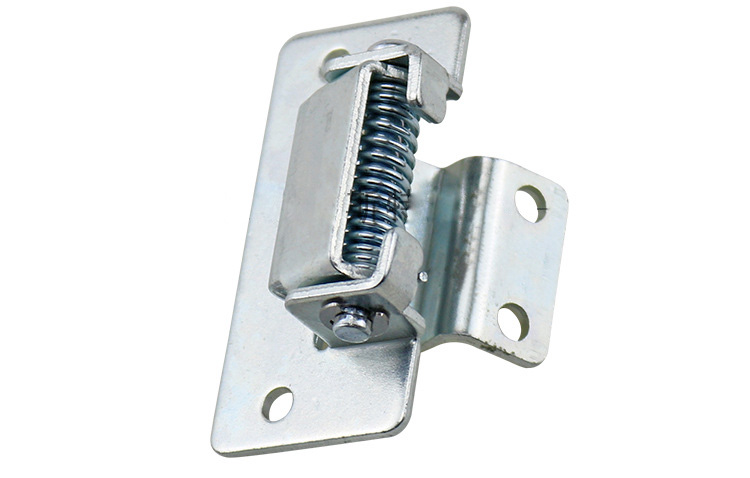
Sometimes customization means changing the hinge type, not just changing dimensions. I have watched teams spend weeks customizing a flush hinge when a different architecture would remove the load from the hinge line entirely. If the door weight and geometry create chronic sag, pivot systems can move load to the floor or a base bracket, and that can stabilize alignment when the frame flexes.
You should compare a flush hinge design to other heavy duty industrial hinge options and choose the architecture that matches your load path. Guides that describe hinge categories and selection factors can help you structure the comparison, even if they target broad audiences, because the same fundamentals apply: load, frequency, and material choice.
When I push you away from flush
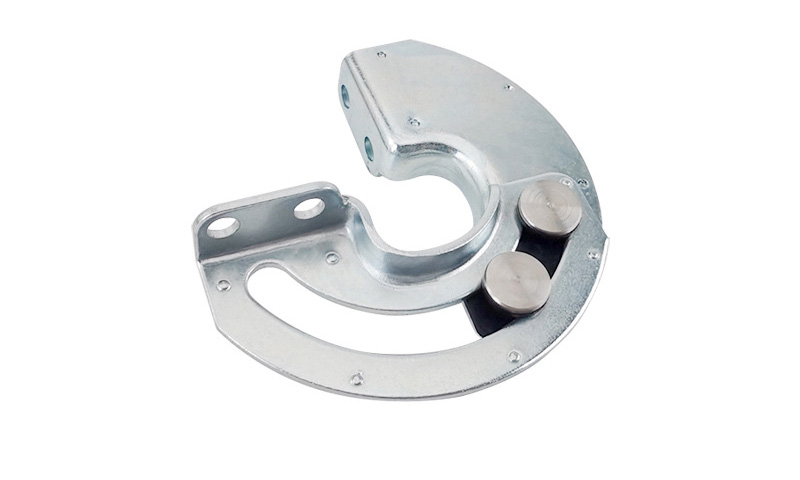
If you need a wide opening angle with zero interference and high load, flush geometry can corner you into compromises. If you cannot increase leaf footprint because of packaging, then customization can only go so far. In those cases, I recommend you consider continuous hinges for load distribution, or a pivot concept when you need the axis repositioned to reduce moment. The key insight is that hinge style changes the stress path, and stress path decides whether you chase sag forever.
| Architecture option | Why it wins | Why it fails |
|---|---|---|
| Flush butt style | clean exterior, simple | limited footprint |
| Continuous hinge | spreads load | long cutout requirements |
| Pivot concept | reduces sag | more parts, base loads |
| Welded barrel concept | rugged | alignment depends on weld |
Custom specification checklist
Customization only works when the spec tells the truth. I have seen buyers request “heavy duty” with no cycle life target, then reject prototypes because motion feels different after coating. My recommendation is to lock the acceptance criteria early, including how you measure alignment drift and torque.
Start with a load model that includes door mass and center of gravity, then define allowable deflection at the latch edge. Next, define cycles and environment. Then choose bearing type, pin diameter, knuckle length, and clearance. Hinge sizing references emphasize matching hinge size to door demands, and that becomes far more important when you require long term alignment in industrial enclosures.
The checklist I send to purchasing
-
Target load and torque at the hinge line, plus safety margin
-
Cycle life target and test method
-
Allowable door sag at latch edge after testing
-
Mounting method, hole pattern, fastener grade, reinforcement plan
-
Material and finish, plus coating thickness range
-
Lubrication plan and contamination control
Where Electrical Panel Hinges often go wrong
Panel doors often run on thin sheet with a latch that demands tight alignment. I often specify a custom leaf footprint and a hole pattern that lands on formed features, because the hinge itself cannot compensate for a weak mounting plane. That small change prevents elongated holes and reduces service calls.
| Spec item | Define it like this | Why it matters |
|---|---|---|
| Sag limit | mm at latch edge | protects latch alignment |
| Torque feel | N m at handle | operator safety and fatigue |
| Coating range | min and max thickness | prevents seizure or rattle |
| Axis straightness | max runout | prevents binding |
Cost, lead time, and lifecycle logic
Standard sizes win on unit price and availability, but they can lose badly on downtime. I have seen a low cost hinge cause repeated field adjustments, and each adjustment costs more than a custom hinge that holds alignment. Weber Knapp frames the tradeoff as higher upfront cost for durability, reliability, and longer cycle life, and that is the correct way to think about it if your equipment uptime drives revenue.
The ROI math I actually use
I estimate replacements per year, labor time per replacement, and downtime cost per event. I also include the hidden cost of operator workarounds, because operators will slam a door that binds, and that accelerates failure in latches, handles, and sheet metal.
Prototype and validation plan
I insist on a fit check with the real gasket and coating, then a cycle test that matches your use pattern. If vibration exists, I add vibration exposure because vibration grows clearance faster than people expect. You should not approve a hinge on day one feel alone, because early smoothness can hide a clearance plan that will rattle after wear.
| Validation step | What to measure | What I look for |
|---|---|---|
| Fit build | interference and flushness | no binding at full swing |
| Torque check | opening torque trend | stable feel after cycles |
| Cycle test | sag and alignment drift | latch stays centered |
| Vibration exposure | fastener retention | no fretting and no loosen |
Practical FAQ mapping
Heavy duty flush mount hinges raise the same questions every time, and I answer them in the language of failure modes because that prevents expensive surprises.
When should you use heavy weight hinges?
You should use them when your door load and duty cycle create mounting point fatigue or alignment drift. I have found that repeated use and vibration reveal weakness faster than static weight tests, so I treat duty cycle as a primary trigger.
How do you choose the right size flush hinge and does hinge size matter?
Size matters because leaf footprint and pin geometry control deflection and wear. I recommend you size for torque and allowable sag at the latch edge, then verify clearance after coating thickness, because coating often changes the fit.
How much weight can a flush hinge hold and what hinge is best for heavy doors?
The honest answer depends on moment arm, hinge count, and mounting stiffness, not on a single number. I have seen a “high rating” hinge fail early on thin sheet metal, so I always pair hinge selection with a reinforcement plan.
What is the rule for hinges and when to use different hinges?
Rules of thumb help, but I prefer a quick load path review and a simple deflection target. If the load path forces the top hinge to take a large moment, customization of leaf length and hole pattern often beats adding a third hinge that lands on weak sheet.
Conclusion
Customize heavy duty flush mount hinges when you need alignment that stays put through load, cycles, vibration, and real mounting stiffness. Take my advice and treat the mounting and tolerance plan as the hinge, because that is where most failures start.
If your project requires hinges that cannot be standardized, IHINGES is built for that exact need. IHINGES is the world’s only manufacturer dedicated exclusively to custom industrial hinges, focusing on real industrial applications rather than off the shelf products.