
When you start a custom industrial hinge project, communication problems often show up very early. You explain your needs carefully, but the first sample still misses the mark because both sides imagine the hinge differently.
A butt hinge diagram plays a critical role in preventing these problems. It gives you a clear, visual way to express your custom intent, turning abstract descriptions into concrete engineering information that both sides can understand and execute accurately.
Once you use a diagram from the beginning, conversations become much easier. You spend less time clarifying details and more time moving the project forward with confidence.
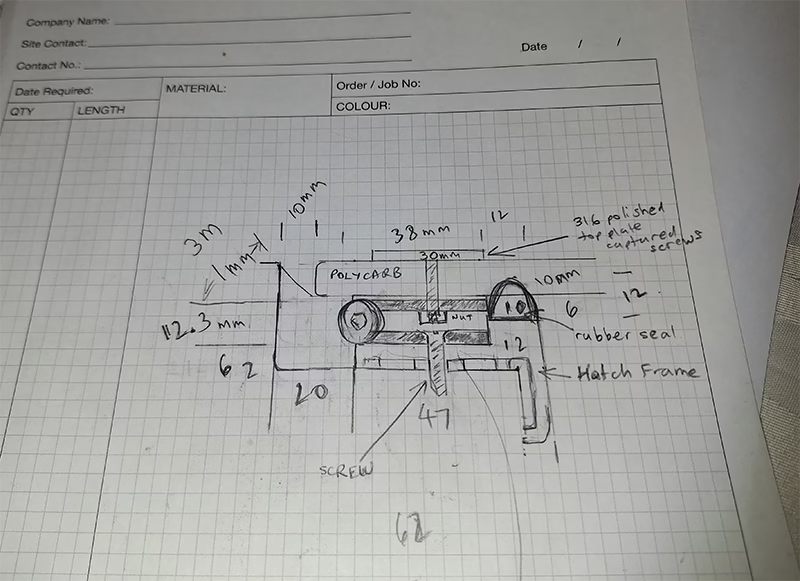
What “Butt Hinge Diagram” Means in an Industrial Context
In industrial equipment manufacturing, a butt hinge diagram represents more than a basic outline of a hinge shape. You use it to define how the hinge interacts with the equipment, not just how it looks. The diagram communicates mounting surfaces, rotation axes, opening limits, and load paths that text alone cannot express clearly.
When you specify Butt Hinges for Doors used on industrial enclosures, machine housings, or control cabinets, the diagram shows exactly how the hinge integrates with metal panels and frames. You establish reference edges, alignment requirements, and installation orientation in a single visual format that engineers immediately understand.
This clarity becomes essential when the hinge must work under vibration, frequent cycling, or heavy loads. A diagram allows you to align functional expectations with manufacturing reality before production begins.
Why Words Alone Fail in Custom Industrial Hinge Projects
Written descriptions rely heavily on interpretation. When you describe a hinge as “heavy duty,” different manufacturers may picture different structures, materials, or load ratings. Even experienced engineers can interpret the same sentence in different ways based on their background and product range.
This gap becomes especially visible when dealing with heavy duty hinges for industrial equipment. You may focus on load capacity, while the manufacturer focuses on thickness or pin diameter. Without a diagram, both assumptions remain invisible until the sample arrives.
A butt hinge diagram removes ambiguity. It anchors the discussion around geometry and function, not language. Once the diagram exists, conversations shift from interpretation to confirmation.
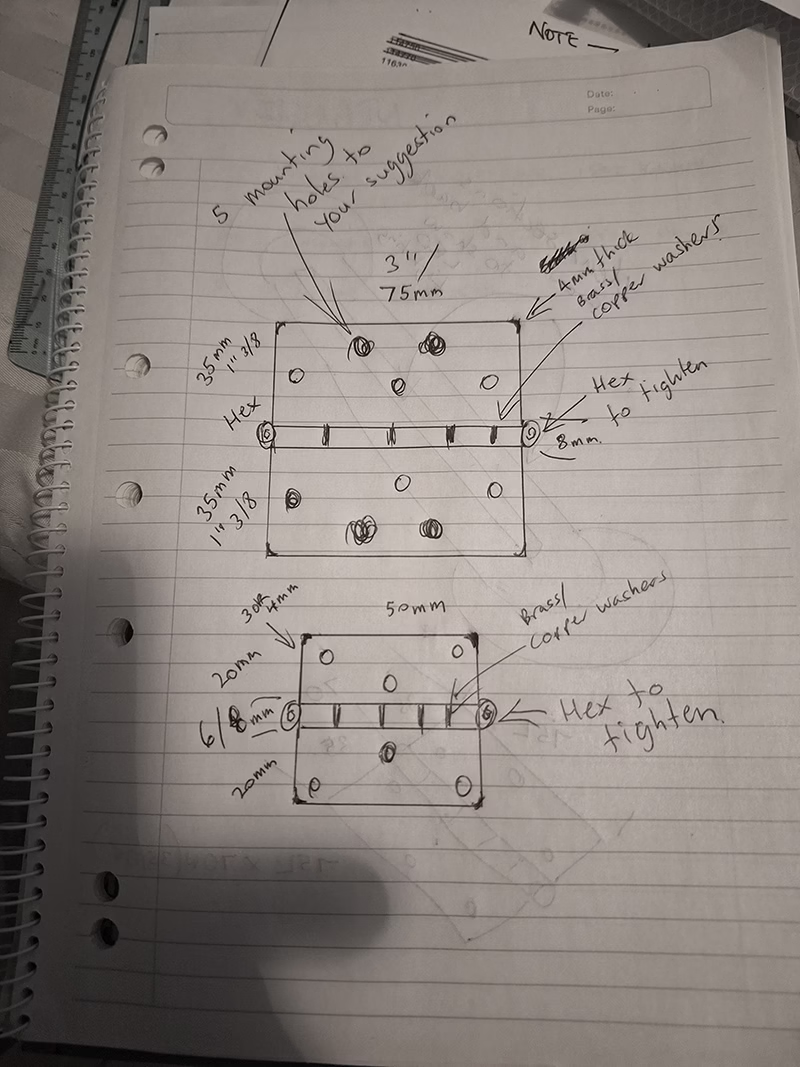
How a Butt Hinge Diagram Turns Ideas into Engineering Data
You often start with an application requirement rather than a hinge specification. You know how the door should move, how much weight it carries, and how often it cycles. A diagram helps you translate these functional needs into dimensions, tolerances, and structural features.
For example, when you design hinges for Electrical Panel Hinges, the diagram clearly shows panel thickness, clearance gaps, and opening angles. Engineers can immediately assess whether the hinge design supports cable routing, grounding, or sealing requirements. This process reduces trial and error. The diagram gives the manufacturer a precise target, allowing them to evaluate feasibility and propose improvements early.
What You Should Always Show in a Butt Hinge Diagram
A useful diagram focuses on critical information, not artistic detail. You should clearly indicate hinge leaf length, thickness, pin position, and hole layout. These elements directly affect strength, alignment, and installation accuracy.
You also need to show how the hinge mounts to the equipment. Installation surfaces, reference edges, and opening direction prevent costly mistakes during assembly. This is particularly important when working with adjustable systems such as adjustable friction hinges, where torque direction and mounting orientation define performance.
When your diagram highlights what matters most, it becomes a practical engineering document rather than a decorative sketch.
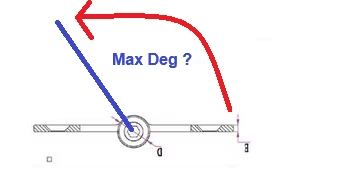
Reducing Errors and Rework Through Visual Precision
Production errors often originate from early misunderstandings. A missing dimension or unclear orientation can result in a hinge that technically meets specifications but fails in real use. Rework then consumes time, budget, and engineering resources.
A butt hinge diagram allows you to eliminate these risks before cutting metal. For long or reinforced designs such as heavy-duty long hinges, even minor dimensional errors can magnify across the length of the hinge. Visual confirmation ensures alignment and load distribution remain correct. By addressing potential issues at the diagram stage, you protect both schedule and cost.
Faster Lead Times Begin with Better Diagrams
When you provide a clear diagram, the manufacturer spends less time asking clarifying questions. Engineering review becomes more efficient, and production planning starts sooner. This directly shortens lead time.
In industrial projects, time savings compound quickly. One fewer revision cycle can mean days or weeks saved. Clear diagrams keep momentum moving forward instead of looping back through clarification emails. You gain speed not by rushing decisions, but by making them clearer from the beginning.
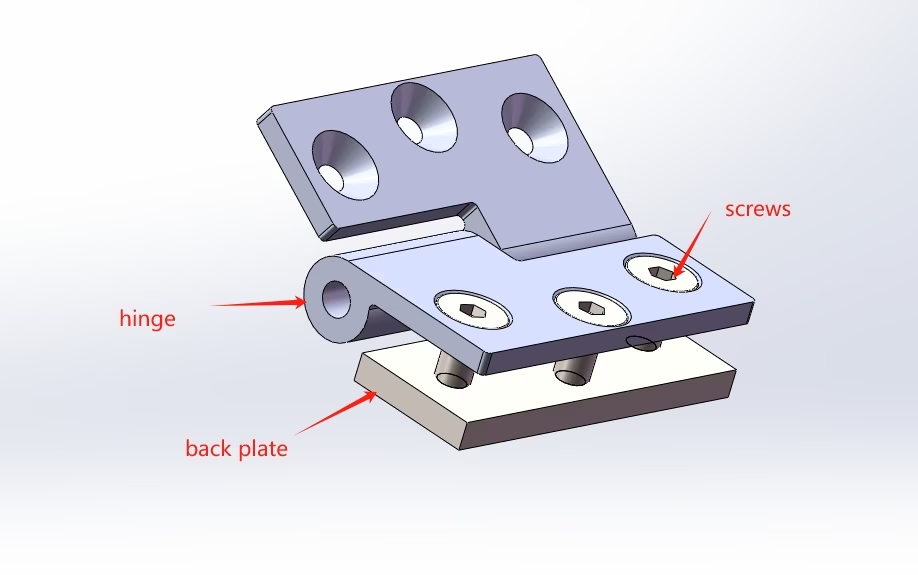
Common Problems Caused by Missing or Vague Diagrams
Without a diagram, assumptions fill the gaps. You may receive hinges with correct materials but incorrect mounting orientation. Hole spacing may conflict with your panel design. Opening angles may interfere with adjacent components.
These issues frequently appear in equipment doors and panels where space is limited. Hinges intended for Electrical Panel Hinges must fit precisely within predefined layouts. A diagram prevents late-stage surprises that are expensive to fix. Most of these problems are avoidable with early visual communication.
Practical Tips for Sharing a Butt Hinge Diagram with Your Supplier
You do not need advanced CAD software to communicate effectively. A simple hand-drawn sketch with clear dimensions often works better than a complex file with unnecessary detail. Focus on function, interfaces, and constraints.
Mark the parameters that matter most to you. Load direction, cycle frequency, installation limitations, and adjustment needs deserve attention. If you are developing specialized designs or planning to Replace Industrial Door Hinges, a clear diagram helps suppliers propose compatible solutions quickly. The goal is clarity, not perfection. A practical diagram accelerates understanding on both sides.
Conclusion
When you customize industrial hinges, a butt hinge diagram becomes the foundation of accurate communication. It aligns expectations, reduces risk, and improves efficiency from concept to production. By using diagrams early, you give your project the clarity it needs to succeed.