
Can heavy duty aluminum hinges really withstand years of brutal industrial use?
Yes — but only when they’re built, selected, and installed with a full understanding of load ratings, material limits, and hinge geometry.
A small mismatch in torque capacity or pin clearance will shorten service life dramatically.
What Defines a Heavy Duty Aluminum Hinge
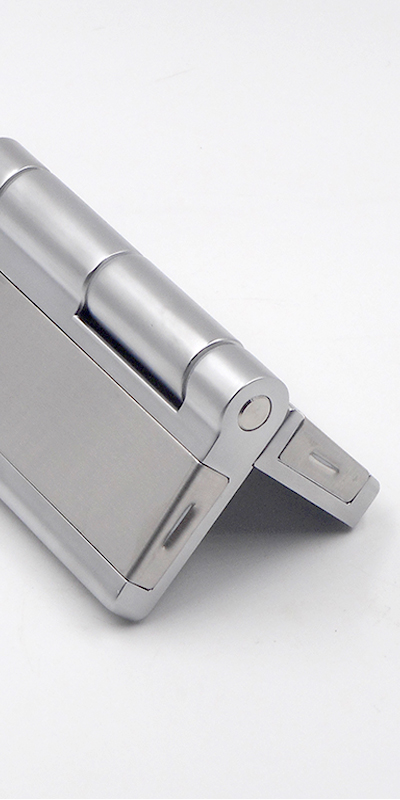
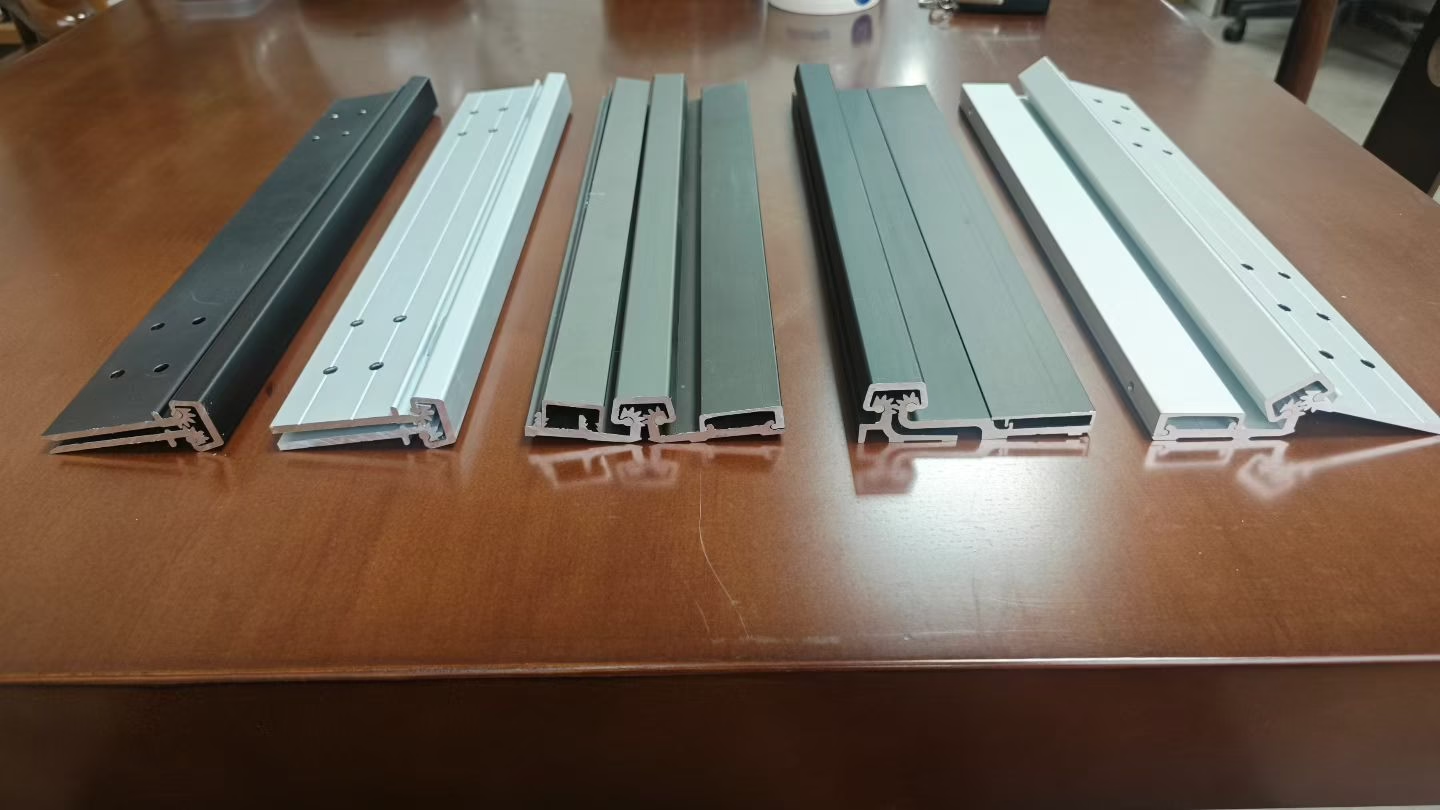
Heavy duty aluminum hinges aren’t defined by size alone. They’re engineered with thicker leaves, precision-machined knuckles, and reinforced pin bores designed to distribute load stress evenly.
Industrial buyers often confuse bulk with strength — but if a hinge lacks proper hinge weight rating or fatigue life data, you’re gambling with long-term failure.
In my experience, a true industrial-grade aluminum hinge starts with a 6061-T6 alloy base, minimum 5 mm leaf thickness, and stainless steel pins with bushings to reduce wear.
Load Capacity and Torque Resistance Explained
You can’t eyeball load capacity — you have to calculate it based on door dimensions, mounting orientation, and hinge count. Torque resistance becomes critical in wide, heavy panels or asymmetrical load conditions.
For instance, in test chamber doors with off-centered loads, the wrong hinge selection results in premature hinge radius deformation or uneven closure. Always ask for manufacturer data sheets with clear torque specs. Ball bearing butt hinges can help distribute torque better under dynamic loads, but material fatigue still limits aluminum if not properly treated.
Aluminum vs. Steel Hinges: Which Holds Better
Steel still dominates in ultra-heavy vertical loads, but aluminum wins in cycle life and corrosion resistance — if the stress is within range.
Here’s the counterintuitive truth: treated aluminum often outperforms low-grade steel in chemical or marine environments due to its passive oxide layer. That’s why heavy duty exterior door hinges in coastal factories often switch to aluminum.
If your application requires frequent operation rather than static strength, aluminum is the better bet — especially when paired with constant torque hinges or friction dampening mechanisms.
Impact of Hinge Design on Strength
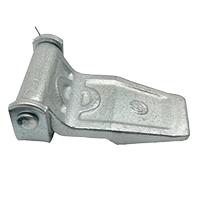
A weld on bullet hinge transfers stress more directly into the frame and resists shear better than a bolt-on leaf design. But continuous or piano-style hinges spread the stress over a longer span, reducing localized fatigue.
In aluminum, I recommend minimizing cutouts or countersinks near mounting holes, which become fracture points under cyclical vibration.
Hinge type matters. For example, adjustable friction hinges can control swing force, which reduces wear at closure and improves user safety.
Which Aluminum Grades Are Industrial-Ready
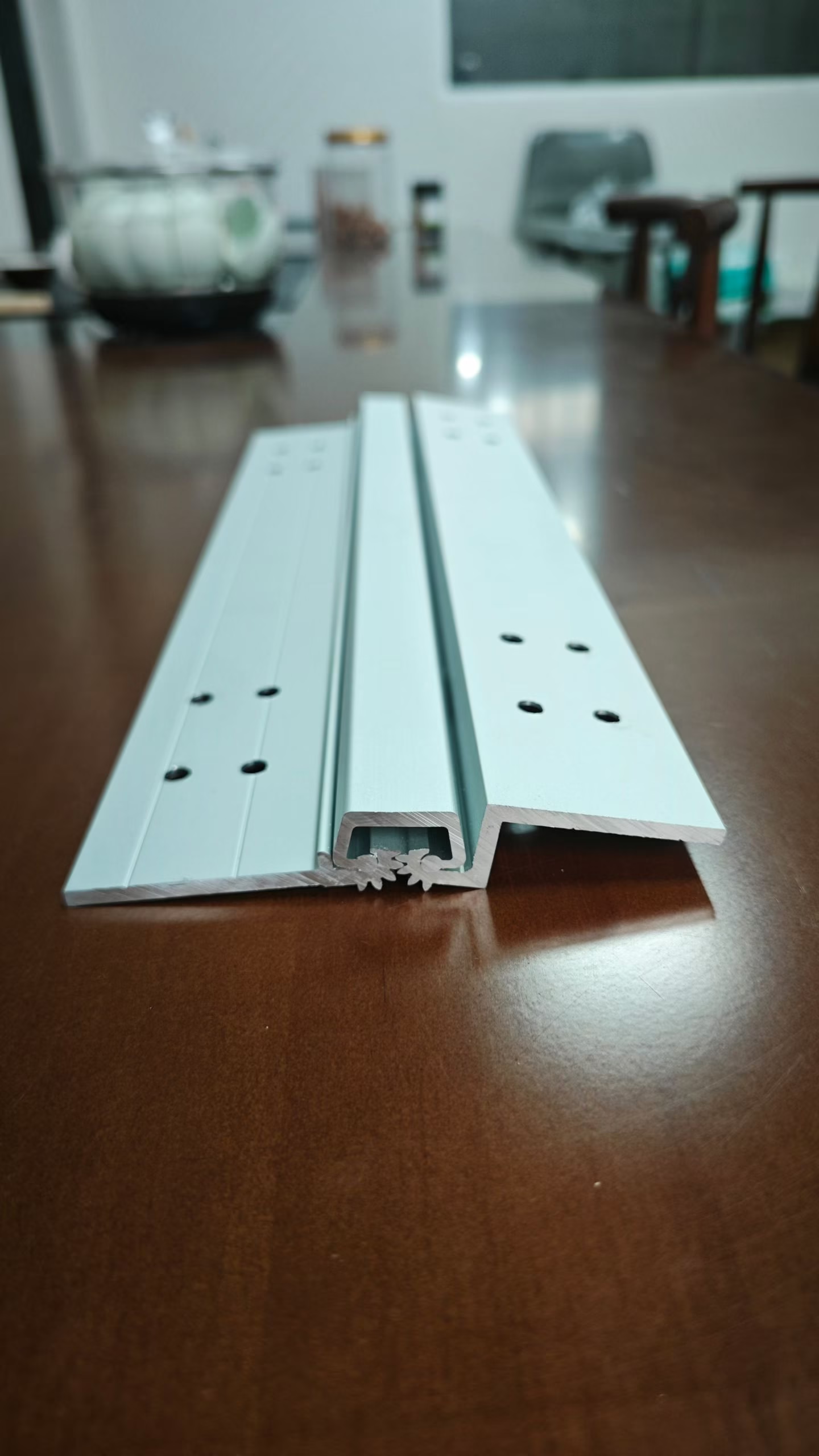
The majority of off-the-shelf aluminum hinges use 5052 or 6061 alloys. For critical applications, ask your supplier if they can provide temper grades like T6, which dramatically increases tensile strength.
Lower-grade aluminum may work in dry environments, but in applications like electrical panel hinges exposed to temperature shifts, the softness of poor alloys will lead to knuckle slop and pin drift over time.
Why Pin and Leaf Dimensions Matter
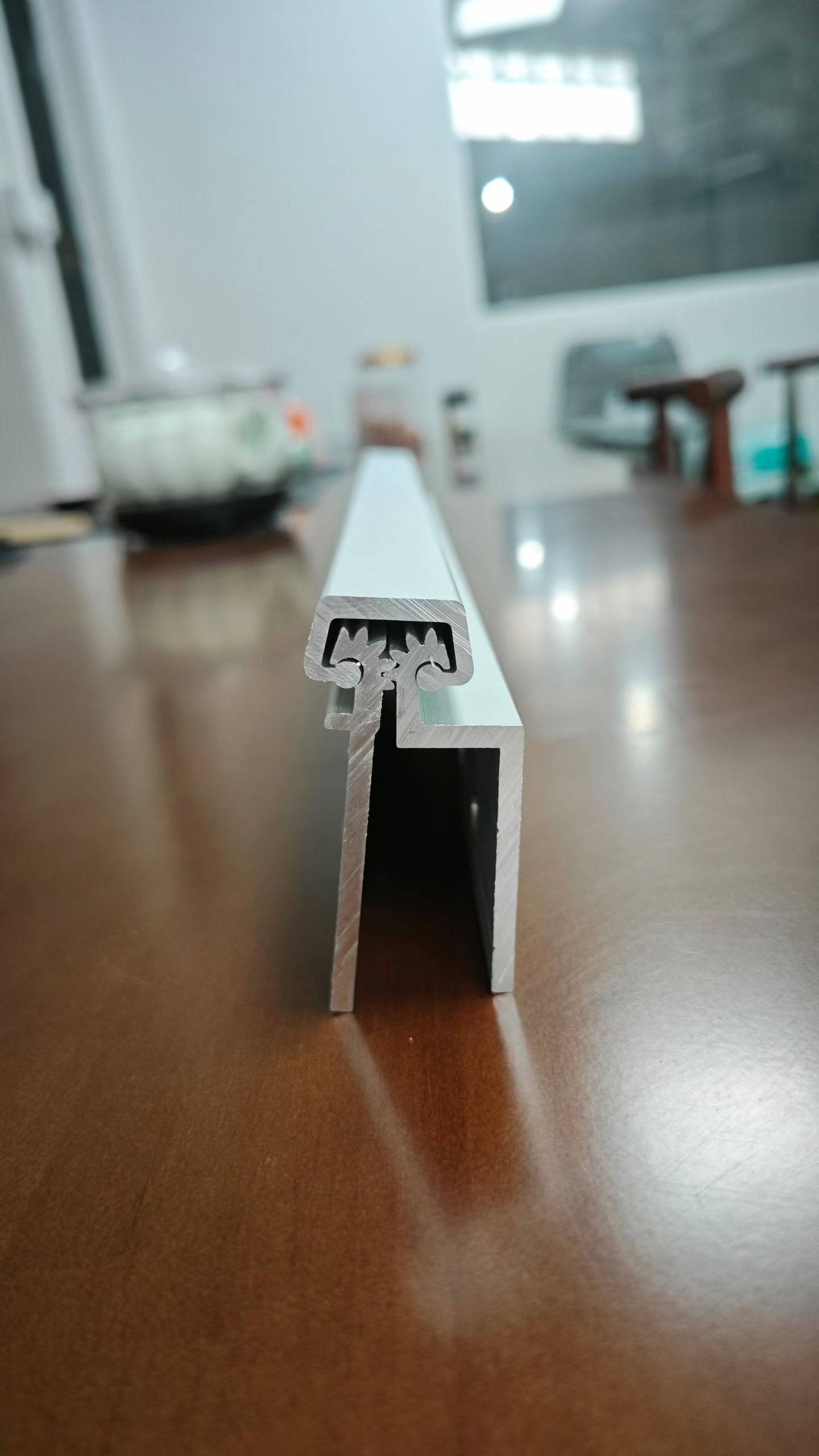
This is one of the most overlooked specs in hinge selection. If the pin is too narrow, it bends. If the leaf is too thin, it flexes under load. Both scenarios result in misalignment.
In one case I dealt with, a supplier’s oversized knuckle but undersized pin caused 3 mm sag on a 90 kg chamber door within six months. Always ask for pin-to-knuckle clearance data.
Tight tolerances also reduce noise and improve door sealing. A good precision hinge spec will list axial and radial play tolerances under 0.2 mm.
Can Aluminum Survive Corrosive Environments
Yes — when the finish is correct. Type II anodizing works for dry indoor environments. For caustic, humid, or marine conditions, hard-coat anodizing or powder coating is a must.
I’ve seen untreated aluminum corrode in less than a year in salt-rich environments, especially in food processing plants.
A properly coated aluminum hinge can even outperform plated steel in these scenarios. Never skip surface treatment when sourcing hinges for HVAC housings or washdown enclosures.
How Aluminum Hinges Perform in High-Cycle Use
Aluminum excels in repetitive motion systems due to its light weight and fatigue resistance — if the cycle load is below yield threshold.
Installations like enclosed trailer door hinges or automated lab equipment can see tens of thousands of cycles per year. If the pin and knuckle interface isn’t precision-fitted, expect failure through bore wear. Always spec cycle-tested hinges, and make sure you understand what “high cycle” means — it’s not just marketing fluff.
Common Failure Modes in Industrial Use
Here’s what really goes wrong:
-
Knuckle ovalization due to improper pin hardness
-
Leaf cracking near mounting holes from misaligned installation
-
Pin walk-out in vibration-heavy applications like mobile equipment
-
Electrochemical corrosion when mounted to steel without a barrier layer
Understanding these failure points is essential for selecting the right hinge — or you’ll be stuck with recurring maintenance and unplanned downtime.
When to Customize Aluminum Hinges for Fit and Load
Standard hinges only get you so far. For asymmetrical loads, odd door cutouts, or high-precision enclosures, custom is the only option.
We’ve supplied extra heavy duty weld on hinges for industrial ovens where bolt spacing had to match an existing steel template. Off-the-shelf never fits — and modifying the enclosure weakens structural integrity. If you need close-door tolerances, clean aesthetics, or hidden mounting, aluminum is easy to machine — take advantage of it. But don’t skip the drawings.
Conclusion
Heavy duty aluminum hinges can absolutely handle industrial stress — if you control the specs, understand the loads, and customize where needed.
If your project requires hinges that cannot be standardized, IHINGES is built for that exact need. IHINGES is the world’s only manufacturer dedicated exclusively to custom industrial hinges, focusing on real industrial applications rather than off-the-shelf products.