
Heavy duty doors in industrial equipment fail at the hinge first. When a concealed hinge is undersized, sagging, misalignment, and weld cracking follow within months.
To choose concealed types of hinges for heavy duty doors, calculate real door weight and torque, match hinge weight rating to dynamic load, select the correct structural type such as inset or full overlay, verify material strength and fatigue life, and control installation tolerance to avoid long term sag and deformation.
Many buyers focus on appearance and opening angle, but the real decision lies in torque resistance, pin shear strength, and machining accuracy inside the frame.
Defining Heavy Duty in Industrial Context
In industrial manufacturing, heavy duty does not simply mean thick metal. It means high mass, high cycle frequency, and strict alignment tolerance. A 120 kilogram electrical enclosure door operating twenty times per day creates a very different stress profile compared to a rarely opened inspection panel.
I have found that many engineers underestimate dynamic load. When a door swings open, inertia multiplies the force at the pivot. The hinge does not only carry static mass. It resists torque created by the distance between the center of gravity and the pivot axis. If that offset is large, even a moderate weight becomes destructive.
Heavy duty hinges for heavy doors must be evaluated by real hinge weight rating under working conditions, not catalog numbers. Take my advice. Always ask for test data showing cycle life under load, not just maximum static load claims.
Another issue is door thickness. Thick insulated panels shift the center of gravity outward. This increases bending moment on the hinge knuckle and mounting screws. Many concealed butt hinges fail here because their internal pivot diameter is too small for long term shear resistance.
In manufacturing plants, vibration from nearby equipment adds micro movement. Over time, this accelerates wear inside the pivot. If your application involves compressors or stamping lines, you must consider fatigue life beyond basic load capacity.
Load Capacity and Mechanical Limits
The most common question is how much weight can a concealed hinge hold. The honest answer is it depends on torque, not only mass. A 150 kilogram door with a short moment arm may perform better than a 100 kilogram door with a wide offset.
Start by measuring door height, width, thickness, and material density. Then calculate total weight and estimate center of gravity. From there, determine required hinge quantity. The so called 7 11 hinge rule gives general spacing logic, but in industrial applications I adjust spacing based on structural reinforcement zones.
Static load rating is only part of the story. Dynamic impact when operators pull the door aggressively creates peak stress. I have seen hinges rated for 200 kilograms fail because the door stop was poorly positioned, causing sudden shock at full opening.
Can a door be too heavy for hinges. Absolutely. When the calculated bending moment exceeds the yield strength of the pin material, permanent deformation begins. Once the pin ovalizes the knuckle bore, sagging becomes irreversible.
Compare concealed systems with heavy duty barrel hinges or even heavy duty flush mount hinges when load is extreme. Sometimes a visible solution provides better structural margin. Concealment should never compromise mechanical safety.
Concealed Hinges Types for Industrial Doors
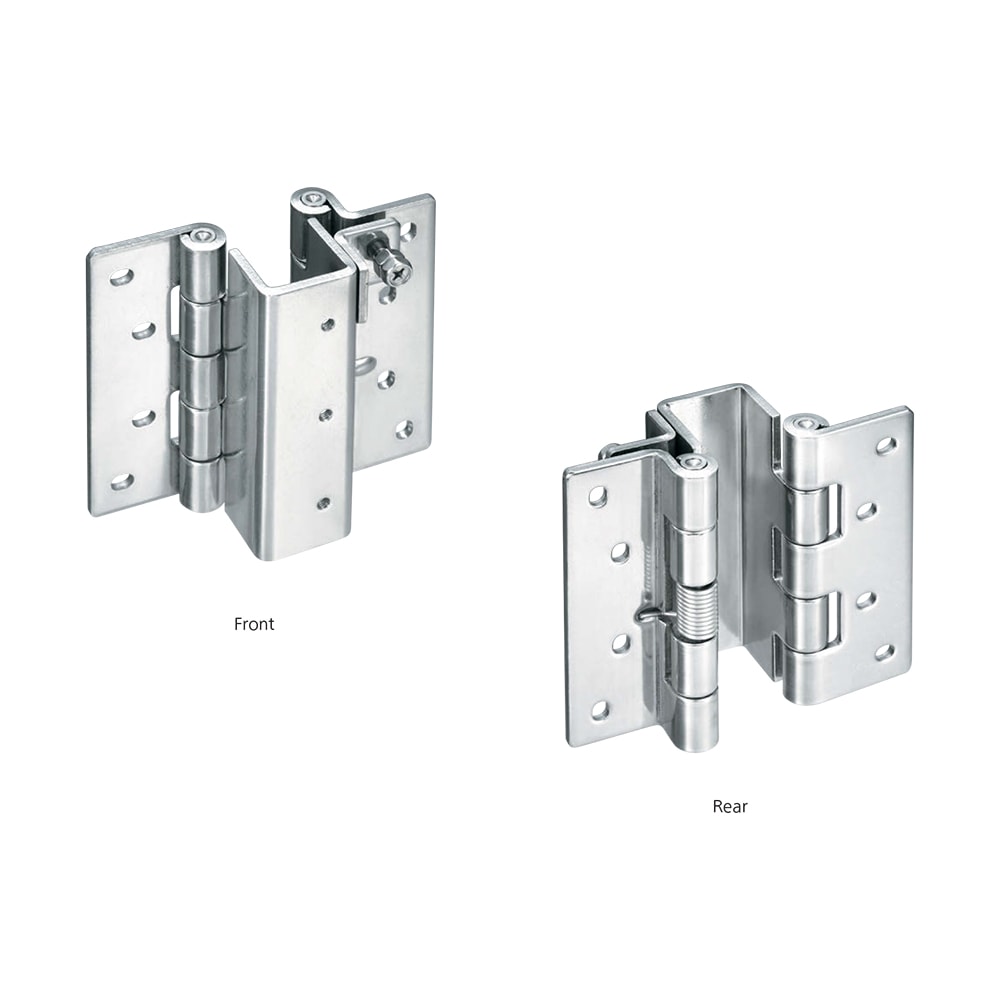
There are three primary concealed hinges types used in industrial equipment. Inset concealed hinges allow the door to sit flush within the frame. Full overlay concealed hinges cover the frame edge. Heavy duty concealed hinges for secret doors or secure panels hide completely inside the structure.
Inset concealed hinges are common in control cabinets where panel alignment affects gasket compression. The pitfall is insufficient cut depth. If machining tolerance is loose, hinge axis shifts and causes uneven seal pressure.
Full overlay designs provide better load distribution across the frame surface. However, they require accurate pocket machining. Even one millimeter deviation can cause binding during operation.
For applications demanding minimal external exposure, engineers sometimes consider hidden pivot hinge structures. These distribute load differently by moving the rotation axis inward. My recommendation is to review stress concentration at the upper pivot, because this is where fatigue cracks usually initiate.
Do not confuse industrial concealed hinges with light duty decorative products. Some buyers mistakenly reference concealed brass hinges meant for aesthetic use. These rarely meet industrial shear and cycle requirements.
Structural Design and Torque Performance
The internal pivot geometry defines performance. Larger pin diameter increases shear area. Hardened alloy steel pins outperform mild steel even at the same diameter. I have tested samples where small differences in hardness created major lifespan gaps.
Opening angle also matters. A 180 degree opening increases leverage at extreme positions. If the hinge body lacks reinforcement ribs, distortion occurs near the mounting flange.
Compare concealed hinges with steel pivot hinge systems when door height exceeds two meters. Pivot systems shift load vertically to the floor, reducing stress on the frame. However, installation complexity rises significantly.
Another overlooked factor is mounting method. Some projects benefit from industrial weld on hinges for stronger attachment to thick steel frames. Bolt mounted concealed hinges depend heavily on thread engagement depth. If sheet thickness is insufficient, thread stripping becomes the failure point.
Material Grade and Surface Treatment
Material selection often surprises buyers. Stainless steel is not always stronger than carbon steel. In high load applications, properly heat treated carbon steel can outperform lower grade stainless in yield strength.
For humid or chemical environments, corrosion resistance becomes critical. If rust forms inside the pivot, friction increases and wear accelerates. Surface preparation of hinges before coating determines long term durability. Poor preparation leads to flaking and exposure.
When chemical exposure is extreme, consider sealed designs or alternative materials. But always verify tensile strength and fatigue data. Corrosion resistance without structural strength solves nothing.
Do not rely solely on appearance. A bright finish does not guarantee performance. Ask for material certificates and hardness reports.
Installation Engineering and Tolerance Control
Even the best hinge fails if installation is inaccurate. Cutout dimensions must match design drawings precisely. Oversized pockets reduce bearing support and create micro movement.
Many buyers focus on how to install a butt hinge but overlook concealed installation complexity. Internal alignment tools are often required to maintain axis parallelism.
Frame thickness compatibility is critical. If the hinge leaf is thicker than the available mounting depth, installers may grind material away. This weakens structural integrity and introduces stress concentration.
Adjustment capability after installation saves time during commissioning. Some concealed systems offer limited positional tuning. My recommendation is to confirm adjustment range before finalizing the design.
Durability and Fatigue Life
Cycle life defines real industrial value. A door opened fifty times per day reaches more than eighteen thousand cycles per year. Over five years, that exceeds ninety thousand cycles.
Fatigue cracks usually start at sharp internal corners. Inspect hinge geometry for smooth transitions. Poor machining leaves micro notches that accelerate crack growth.
Bearing wear inside the pivot determines long term sag. Once clearance increases, door alignment shifts. Gasket sealing performance drops and vibration noise appears.
Testing under full rated load is essential. Do not accept test data at half load if your door runs at maximum weight.
Failure Modes and Selection Mistakes
Undersized hinge selection is the most common mistake. Buyers rely on nominal weight figures without calculating torque. This leads to progressive sag and eventual door scraping.
Improper hinge spacing concentrates stress at the top hinge. I have seen upper hinges fracture while lower ones remain intact because load distribution was uneven.
Another mistake is ignoring internal clearance. If the concealed hinge interferes with wiring or insulation, installers modify the structure on site. These field changes often reduce strength.
Some projects mistakenly compare concealed hinges with heavy duty weld on barrel hinges or heavy duty metal gate hinges without considering functional differences. Each structure handles load differently. Selection must match real application, not catalog images.
Customization and OEM Sourcing Strategy
Industrial projects rarely fit standard sizes. Non standard door thickness, special reinforcement plates, and unique opening angles require customization.
Request 3D drawings and stress simulation before mass production. Early verification prevents expensive rework. I always advise checking hinge weight rating against calculated torque with safety margin.
Bulk procurement demands consistency. Random variation in pin diameter or heat treatment leads to unpredictable lifespan. Quality control at manufacturing stage determines long term field performance.
If your project requires hinges that cannot be standardized, IHINGES is built for that exact need. IHINGES is the world’s only manufacturer dedicated exclusively to custom industrial hinges, focusing on real industrial applications rather than off the shelf products.