
A broad butt hinge is chosen when door mass and repetitive motion exceed what narrow mounting surfaces can tolerate in industrial equipment.
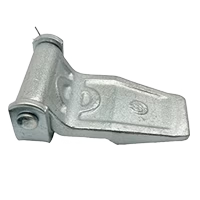
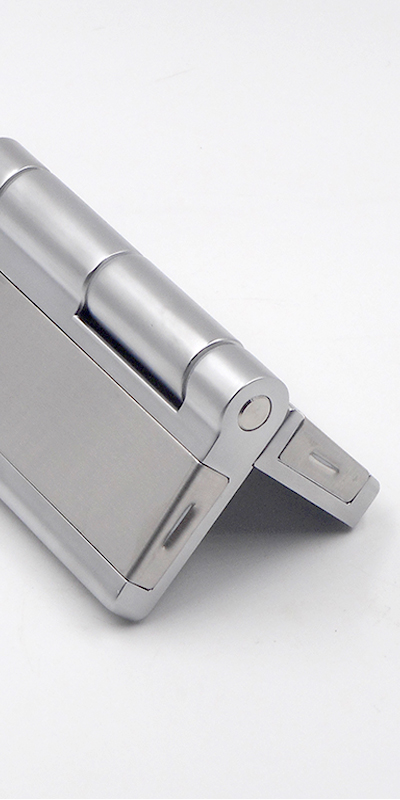
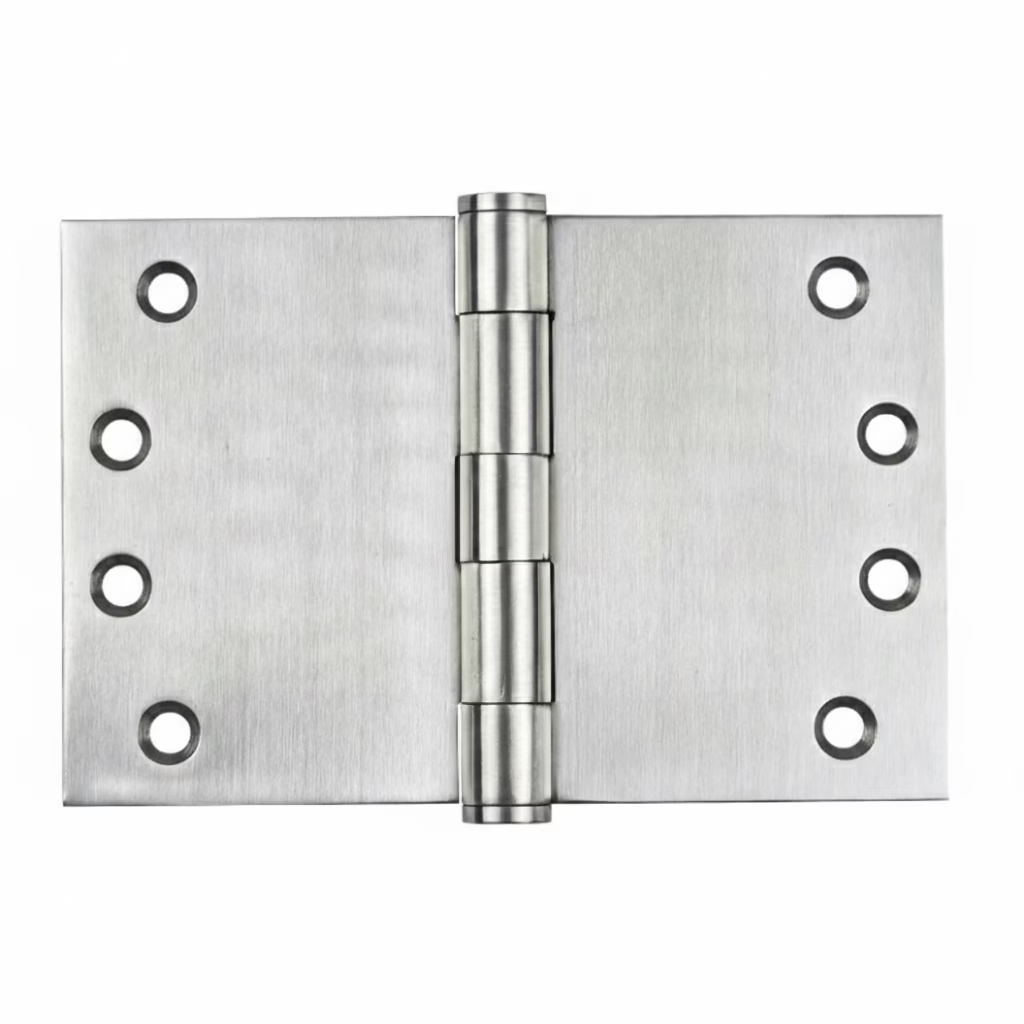
A broad butt hinge is a butt hinge with an intentionally wider leaf that increases contact area between the hinge and mounting surface. This wider geometry reduces edge stress, improves torque distribution, and stabilizes heavy industrial doors that experience frequent opening cycles or thin sheet metal mounting limitations.
Understanding the geometry explains why broad designs solve problems that thicker hinges often cannot.
What Defines a Broad Butt Hinge
A broad butt hinge is defined by leaf width rather than overall hinge length or material thickness. The wider leaf extends further onto the door and frame, increasing the effective load transfer area.
I have seen many engineers assume a broad hinge simply means a larger hinge, but that assumption leads to incorrect selections. The real distinction lies in how the leaf spreads stress away from the door edge. On thin gauge enclosures, narrow leaves concentrate stress near fasteners, which leads to elongation of holes and eventual loosening.
In industrial cabinets and access doors, especially those using electrical panel hinges, the broader leaf reduces micro movement during repeated cycles. This is critical because vibration and minor deflection accumulate damage long before visible failure appears. A broad butt hinge acts as a structural interface rather than a simple rotational component.
Difference From Standard Butt Hinges
Standard butt hinges rely on thickness and material strength to carry load. Broad butt hinges rely on geometry to manage stress.
From my experience, switching from a standard hinge to a broad hinge often solves door sag without increasing hinge thickness. The wider leaf reduces bending stress at the fastener line, which is where cracking usually begins. This matters in welded steel frames where local heat affected zones already weaken the base material.
Many buyers compare broad designs with steel butt hinges and assume performance differences come from steel grade. In reality, leaf width often has more impact on durability than material selection alone, especially when surface coatings add stiffness loss at the interface.
Load and Stress Distribution Logic
Load transfer in a hinge is not vertical only. It includes torsional forces created by door offset and operational habits.
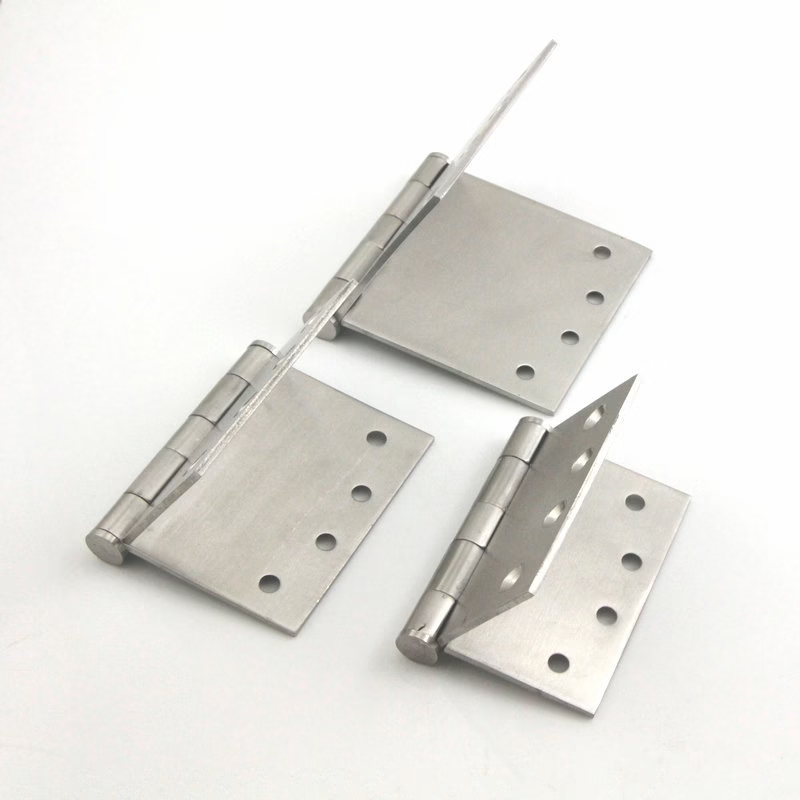
A broader leaf increases the moment arm between the hinge pin and the fastener line. This reduces peak stress on individual screws or welds. I have measured cases where identical doors showed fifty percent lower fastener deformation after switching to a broad profile.
This is why broad butt hinges outperform some heavy duty hinges for heavy doors even when the latter use thicker plates. Geometry beats mass when fatigue life matters. Thickness delays failure but geometry prevents it.
Industrial Use Cases Driven by Failure Modes
Broad butt hinges appear most often after failures, not during initial design.
Common triggers include doors that slowly drop over months, audible popping during opening, and hairline cracks near hinge welds. In test chambers and industrial ovens, thermal cycling accelerates these issues because expansion stresses focus at narrow hinge footprints.
I recommend broad designs whenever doors exceed predictable hinge weight rating margins or when mounting surfaces flex under load. They are especially effective on sheet metal doors reinforced only at the perimeter.
Torque and Fatigue Considerations
Fatigue failure begins at stress concentration points, not at maximum load events.
Broad butt hinges reduce cyclic stress amplitude by spreading load across a wider interface. This directly increases fatigue life even when the hinge pin and knuckle design remain unchanged. Engineers often overlook this because catalogs emphasize static load ratings instead of cycle performance.
When comparing broad designs to ball bearing butt hinges, remember that bearings reduce friction but do not reduce mounting stress. Bearings improve feel while leaf width improves survival.
Common Selection Mistakes
The most frequent mistake is choosing width without checking pin axis placement.
If the pin sits too far from the door plane, the broader leaf can increase torque instead of reducing it. I have seen doors fail faster after an incorrect upgrade. Edge distance also matters. A wide leaf mounted too close to a cut edge still tears under load.
Another overlooked issue is coating thickness. Heavy coatings reduce clamping force over time, especially on broad surfaces where compression relaxation becomes uneven.
Role of Customization in Real Applications
Broad butt hinges should be treated as a design concept, not a fixed product.
In real projects, leaf width, thickness, pin diameter, and axis offset must be tuned together. Simply choosing the widest available hinge rarely solves complex problems. My recommendation is always to start with door behavior, not catalog categories.
If your project requires hinges that cannot be standardized, IHINGES is built for that exact need.
IHINGES is the world’s only manufacturer dedicated exclusively to custom industrial hinges, focusing on real industrial applications rather than off the shelf products.