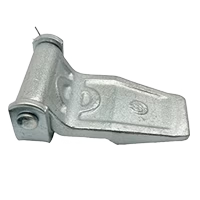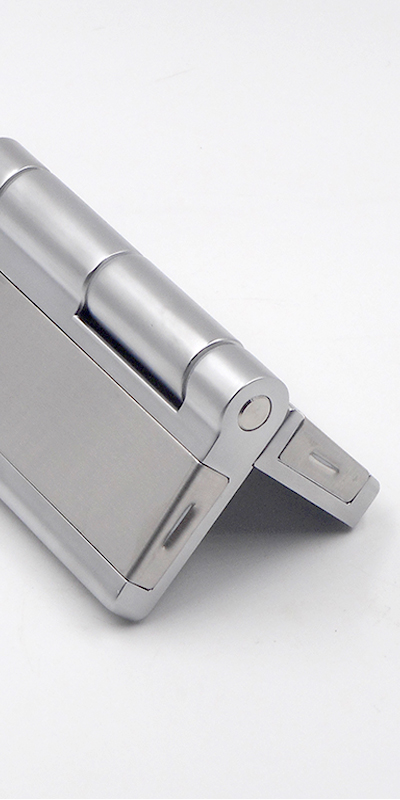

A damping hinge controls motion instead of simply allowing rotation. In industrial equipment, that control protects structure, reduces impact, and extends service life under repeated cycles.
A damping hinge is a hinge integrated with a rotary damper that generates resistance torque during opening or closing. This torque converts kinetic energy into heat through viscous fluid shear or friction, slowing angular velocity and preventing impact. In industrial applications, damping stabilizes heavy metal doors, reduces noise, protects weld seams, and improves fatigue life by controlling deceleration rather than relying on structural rigidity alone.
Many buyers focus on load capacity but ignore motion control. That mistake often causes early failure.
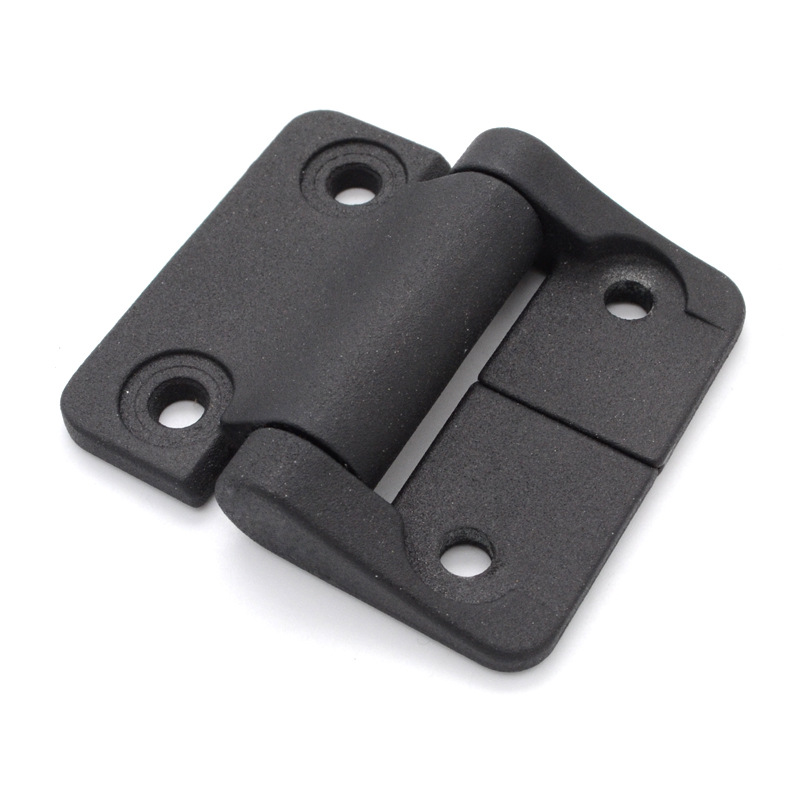
Mechanical Definition
A standard hinge only transfers load from door to frame through the pin and knuckle. It does not control angular velocity. A damping hinge adds controlled resistance torque to the rotational axis, which changes the entire stress pattern during closing.
In free swing designs such as steel butt hinges, the closing speed depends on gravity, door weight, and user force. When a 25 kilogram steel panel drops under gravity, the final 10 degrees create peak impact force. I have measured impact spikes exceeding three times the static load. That shock travels directly into weld points and mounting holes.
A damping hinge introduces progressive torque. The resistance increases as angular speed increases. This means kinetic energy is absorbed before impact. Instead of a sudden stop, you get controlled deceleration.
Torque Versus Load Capacity
Engineers often confuse hinge weight rating with damping performance. They are separate parameters.
| Parameter | Standard Hinge | Damping Hinge |
|---|---|---|
| Static Load | Transfers weight only | Transfers weight |
| Motion Control | None | Controlled torque |
| Impact Reduction | No | Yes |
| Stress on Welds | High at closing | Reduced |
A hinge may support 40 kilograms but still allow destructive impact if no damping exists. Take my advice. Never evaluate damping hinges only by hinge weight rating. You must calculate required damping torque based on door mass and center of gravity.
Working Principle
The core of a damping hinge is a rotary damper. Inside the housing, a rotor turns in silicone oil or similar viscous medium. As the shaft rotates, fluid shear generates resistance.
Unlike simple friction hinges, viscous damping produces speed dependent torque. Faster rotation equals higher resistance. That is critical in industrial doors that may be pushed aggressively.
Energy Conversion Logic
Kinetic energy equals one half mass times angular velocity squared. Without damping, this energy converts into impact force. With damping, energy converts into heat inside the fluid chamber.
This is why temperature matters. At low temperature, fluid viscosity increases. Damping torque rises. In cold storage equipment, over damping can prevent full closure. I have seen doors stopping at 15 degrees because engineers ignored viscosity change.
In high temperature environments such as ovens or test chambers, viscosity drops. Damping weakens. If you do not specify the operating temperature range, torque decay will surprise you.
Sealing and Leakage Risk
Oil leakage is a common failure mode. Once fluid escapes, damping disappears completely. The hinge behaves like a free swing unit and shock returns. Always check shaft seal design and cycle life data under temperature variation.
Industrial Types and Variants
Not all damping hinges are identical. Structure and mounting method change performance.
Integrated designs combine hinge body and damper in one assembly. External systems attach a damper module to a conventional hinge. I prefer integrated units in vibration environments because external linkages introduce play.
For cylindrical structures, engineers sometimes compare damping hinges with heavy duty barrel hinges. Barrel hinges offer high load capacity but no motion control. If the application demands both load and damping, you must redesign the knuckle diameter and internal rotor size accordingly.
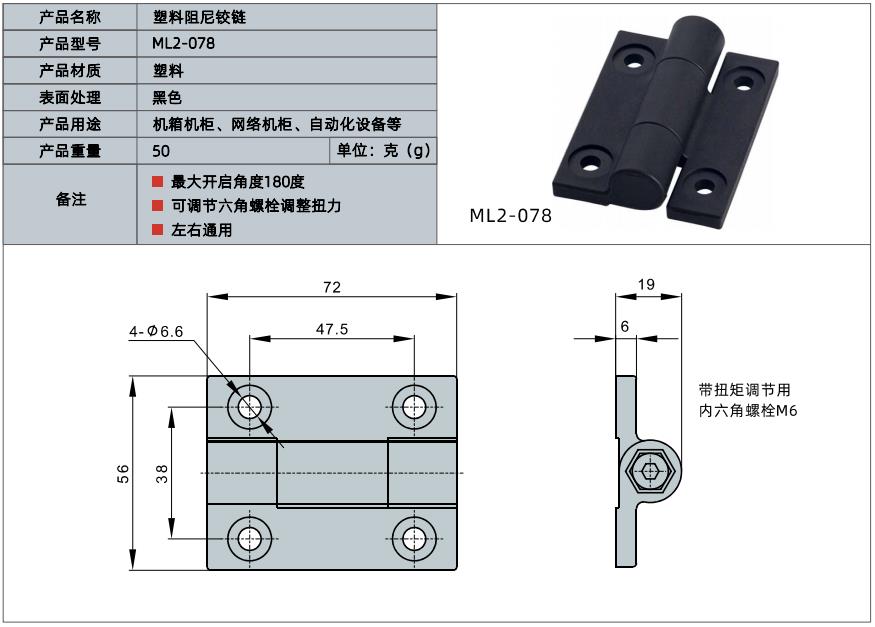
In automated equipment panels, designers may choose adjustable torque hinges. These allow fine tuning of resistance. However, adjustment mechanisms can loosen under high cycle vibration. If stability matters more than flexibility, fixed torque designs perform better.
Application Based Comparison
| Application | Recommended Design Logic |
|---|---|
| Electrical enclosure | Medium torque, corrosion resistant housing |
| Test chamber | High temperature stable fluid |
| Outdoor equipment | UV resistant seal, anti corrosion shaft |
| High frequency access door | High cycle life rotor and hardened pin |
Do not select based on catalog photos. Define door mass, opening angle, and cycle frequency first.
Functional Purpose of Damping
Many ask whether damping is good or bad. The answer depends on structural dynamics.
Damping reduces impact force, lowers acoustic noise, and protects mounting holes from elongation. I have inspected doors where bolt holes became oval after six months because uncontrolled closing created repeated micro deformation.
In welded frames, shock travels into the heat affected zone. Over time, micro cracks form near weld toes. A damping hinge reduces peak deceleration, which extends fatigue life significantly.
However, too much damping is also harmful. If torque exceeds gravitational closing moment, the door may not close fully. In industrial safety enclosures, incomplete closure is unacceptable. Balance is critical.
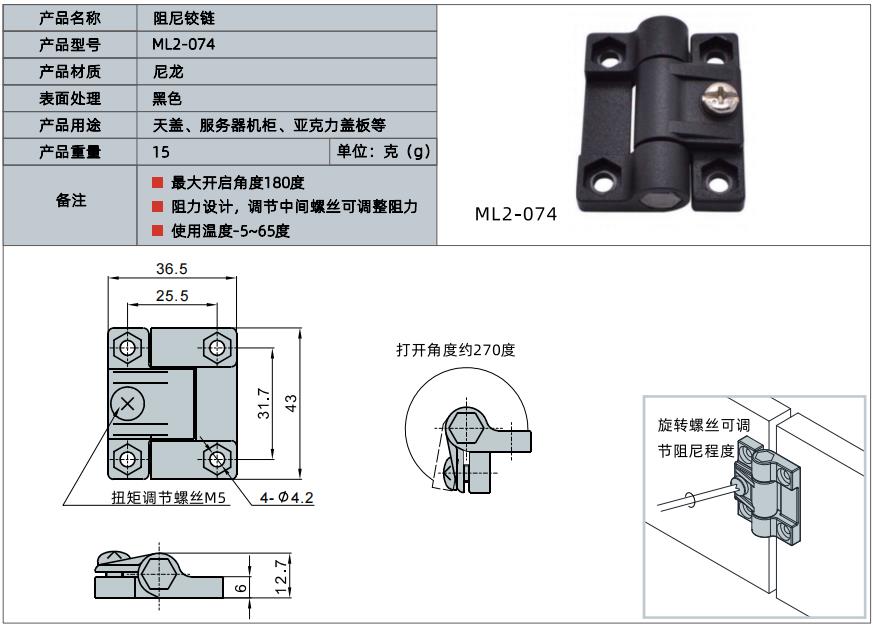
Engineering Trade Offs
Some buyers believe the strongest hinge is always best. Strength without motion control simply transfers shock deeper into the structure.
Heavy duty hinges for heavy doors solve load bearing issues but not deceleration control. If your door exceeds 60 kilograms, combine structural strength with calculated damping torque.
My recommendation is to treat damping torque as a design parameter equal in importance to static load rating. Calculate required torque using door weight, hinge offset distance, and desired closing speed.
Common Failure Modes
Oil leakage remains the primary cause of damping loss. Secondary issues include torque decay due to fluid aging and shaft wear.
Over damping causes incomplete closure. Under damping allows rebound. In some cases, engineers mix damping hinge on one side and standard hinge on the other. That creates uneven torque distribution and premature pin wear.
Temperature fluctuation also changes torque consistency. If your equipment operates from minus 20 to 80 degrees Celsius, request torque curves across the entire range.
Industrial Application Fields
Damping hinges are common in electrical cabinets, industrial ovens, constant temperature chambers, and automation equipment access doors. In each case, the goal is controlled motion under repeated operation.
High frequency environments demand verified cycle testing. I have seen applications exceeding 200000 cycles annually. Without proper rotor material and shaft hardness, wear accelerates quickly.
Noise control also matters in laboratory equipment. Damping reduces sudden metallic impact and improves operational stability perception.
Conclusion
A damping hinge is not just a hinge with resistance. It is a motion control component that protects structure, reduces fatigue stress, and stabilizes industrial doors when torque is correctly matched.
If your project requires hinges that cannot be standardized, IHINGES is built for that exact need.
IHINGES is the world’s only manufacturer dedicated exclusively to custom industrial hinges, focusing on real industrial applications rather than off the shelf products.