
In industrial manufacturing, cutting holes for hinges is not a casual task. Tool choice directly affects alignment accuracy, load transfer, and long term fatigue behavior in metal assemblies.
The tools used to cut holes for hinges in industrial applications include punch dies for mass production, drill presses for controlled accuracy, hinge hole cutters for low volume work, and hand tools for temporary sample adjustment. In real production, most custom hinges are made with molds that form the mounting holes directly. Manual cutting tools are mainly used to modify samples or correct minor deviations before final tooling is confirmed.
Once you understand that hinge holes are functional load points, tool selection becomes a technical decision rather than a convenience choice.
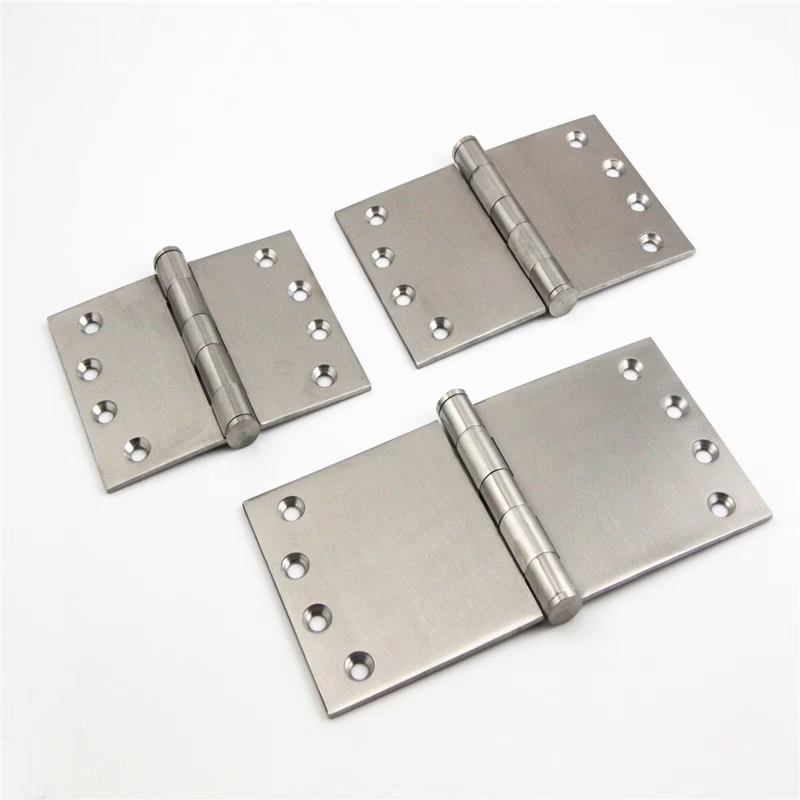
Industrial hinge hole cutting fundamentals
Hinge holes in industrial equipment serve a structural role, not just a fastening one. I have seen many projects fail because buyers treated hinge holes as generic drill points instead of load bearing interfaces. When a door carries real mass, hinge hole position and diameter directly influence shear stress on fasteners and bending stress on the hinge leaf.
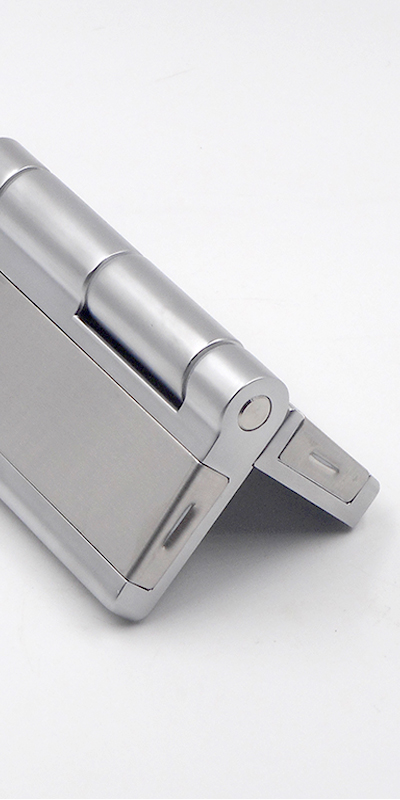
In metal enclosures such as those using electrical panel hinges, hole roundness and edge condition matter more than most engineers expect. Burrs or tapered holes cause uneven clamp force, which leads to micro movement under vibration. Over time, this creates noise, fastener loosening, and visible door sag.
My recommendation is to define hinge hole requirements early, including diameter tolerance and positional tolerance. Once these values are clear, the correct cutting method almost selects itself.
Tools for cutting hinge mounting holes in metal
In industrial settings, the most common tools are punch presses, drill presses, and specialized hinge hole cutters. Each serves a different production reality. I have found that relying on handheld drilling for anything beyond prototypes creates consistency problems very quickly.
Punch presses dominate when volumes justify tooling investment. Drill presses remain common in low to medium volume operations where flexibility matters. Portable tools only belong at the sample or correction stage.
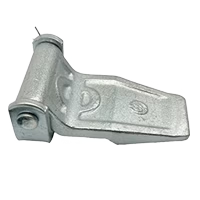
For products like steel butt hinges, improper tool choice often results in oval holes that reduce hinge weight rating in real installations. That failure rarely shows up in lab tests but appears quickly in field use.
Hinge hole cutters in low volume production
Hinge hole cutters and annular cutters appear attractive for small batches because they look precise. In practice, their performance depends heavily on operator discipline. I have seen clean holes produced on the first ten parts, followed by gradual drift as cutters wear and alignment slips.
These tools work best when hole diameter is large relative to material thickness. When thickness increases, torque rises and edge quality degrades unless feed rate is carefully controlled.
If you use hinge hole cutters on parts designed for heavy duty hinges for heavy doors, monitor tool wear aggressively. A dull cutter introduces stress risers that shorten fatigue life even if the hole still measures within diameter tolerance.
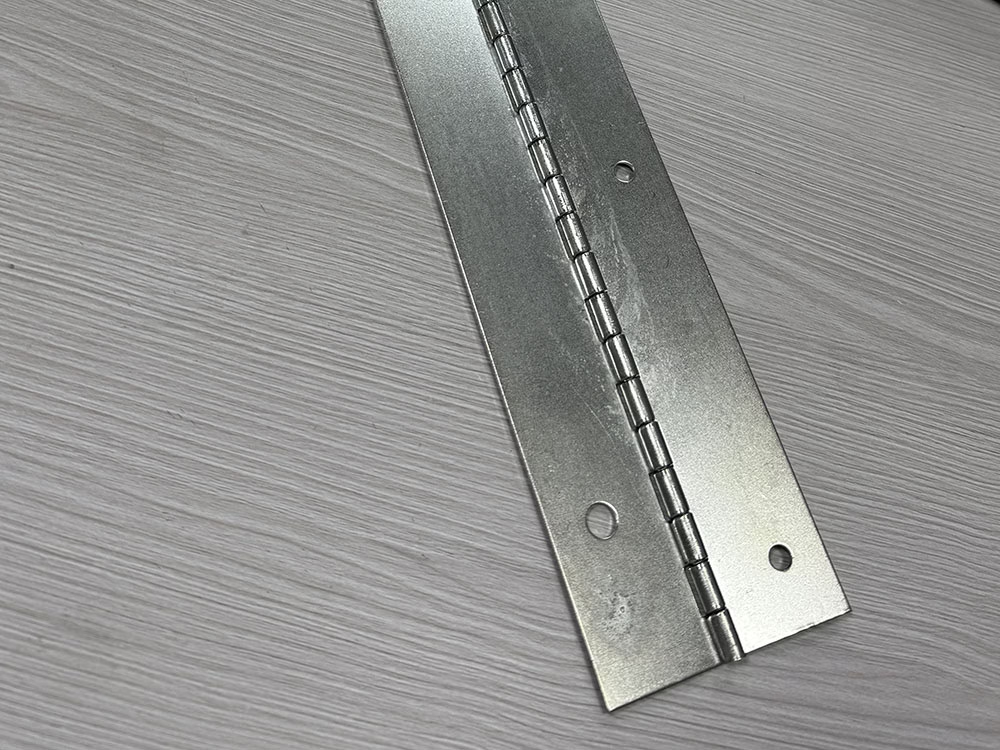
Drill press methods for hinge hole accuracy
Drill presses remain a reliable solution when properly fixtured. The key mistake I see is assuming the drill press itself guarantees accuracy. In reality, the fixture does the real work.
Rigid backing plates prevent material pull through and reduce burr formation. Step drilling helps maintain roundness in thicker steel. Coolant control also matters, especially when drilling stainless grades used in corrosion exposed equipment.
When producing precision hinge assemblies, drill press work must follow documented parameters. Feed, speed, and tool geometry should not be left to operator preference.
Punch press and mold based hinge hole forming
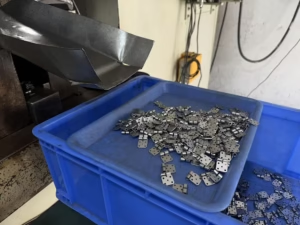
In our own hinge production, hinge mounting holes are normally formed by molds rather than drilled. This approach delivers consistent geometry, clean edges, and stable positional accuracy across large volumes.
If the project is not a temporary modification, custom hinges should always use tooling to form the holes. That is how repeatability is achieved. I have found that molded holes also distribute load more evenly because the material flow around the hole is controlled rather than torn by drilling.
This method is especially important for hinges carrying high dynamic loads or frequent cycling.
Tooling design impact on hinge hole size
Tooling design determines final hole size more than nominal drawings suggest. Clearance, punch wear allowance, and material springback all affect real outcomes.
A common oversight is specifying hole size without defining tolerance direction. For example, a hole that grows slightly larger may be acceptable for assembly but harmful for load control.
When dealing with weld on bullet hinges, poor hole size control often leads to misalignment that cannot be corrected after welding. Tooling decisions must anticipate downstream processes.
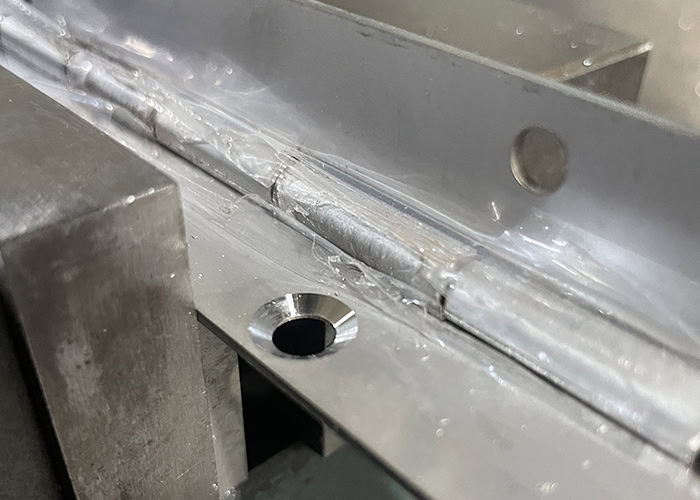
Jig guided hinge hole positioning
Jigs exist to remove human variability, not to speed up work. I have seen factories use jigs incorrectly, assuming they compensate for loose tolerances upstream. They do not.
A good jig locks datum surfaces and constrains rotation. A bad jig only marks position. For hinge holes, angular misalignment is often more damaging than linear offset.
If hinge holes feed into automated assembly or robotic welding, jig accuracy becomes non negotiable.
Manual hinge hole enlargement for samples
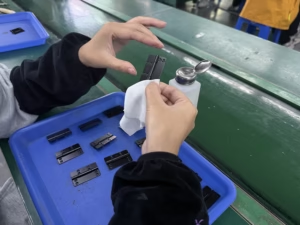
If you receive a hinge sample and feel the holes are slightly undersized, manual enlargement is acceptable. This is a normal part of sample validation. I recommend using controlled hand tools rather than aggressive power tools.
The goal is to confirm ideal hole size, not to simulate production quality. Once the ideal size is confirmed, mass production should return to molded or punched holes.
In our production process, once customers confirm the adjusted hole size, we modify the mold accordingly for batch manufacturing.
Risks of improper hinge hole cutting
Improper hinge hole cutting causes failures that appear unrelated at first. Door sag, abnormal noise, cracked welds, and fastener loosening often trace back to hole geometry errors.
I have seen projects blame hinge material when the real issue was eccentric loading from miscut holes. That mistake leads to unnecessary material upgrades instead of fixing the root cause.
Take my advice and audit hole quality before changing hinge specifications.
From sample adjustment to final mold think
The correct workflow starts with sample adjustment and ends with finalized tooling. Mixing these stages leads to inconsistency and quality disputes.
Samples exist to validate function, alignment, and assembly logic. Production exists to repeat that result with minimal variation. Treating manual tools as production solutions undermines that separation.
If your project requires hinges that cannot be standardized, IHINGES is built for that exact need. IHINGES is the world’s only manufacturer dedicated exclusively to custom industrial hinges, focusing on real industrial applications rather than off the shelf products.