
Small hidden hinges are often chosen for their clean appearance, but their performance in dynamic environments demands a closer look.
Small hidden hinges can function in high-vibration environments, but only when material, mounting, and fatigue factors are properly engineered. Misuse in critical applications often results in premature failure, making custom design and application-specific testing essential.
Let’s explore what truly affects durability in high-vibration environments.
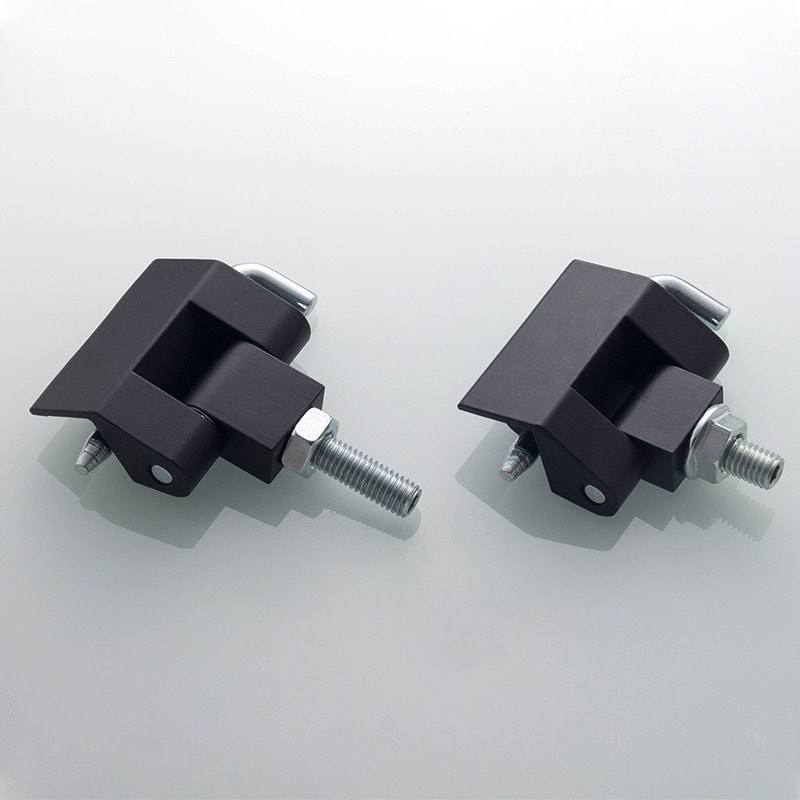
What Are Small Hidden Hinges?
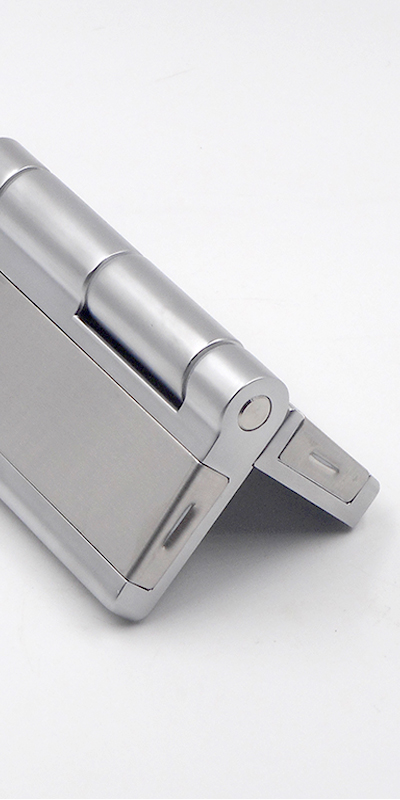
In industrial use, small hidden hinges refer to compact hinges concealed within the body of an enclosure or equipment door, used for aesthetic and security purposes. Unlike external heavy duty hinges for heavy doors, these are mounted internally, leaving no hardware visible on the surface. They are common in control panels, test chambers, and lab enclosures where visual clarity or tamper-resistance is prioritized.
However, many confuse small hidden hinges with recessed hinges or basic cabinet components, which lack industrial-grade tolerances and materials. In reality, their performance is defined by their fatigue behavior, hinge pin geometry, and fastening method—not just concealment.
Why Do Concealed Hinges Fail Under Vibration?
Most failures trace back to fatigue cracks at the pin-bushing interface, or loosened mounting points due to constant micro-movements. This is especially common when standard concealed hinges, originally designed for static or low-frequency use, are forced into dynamic conditions.
Take my advice: in industrial enclosures subject to transport or operational vibration, always ask your supplier for previous failure data and dynamic load test reports. Without that, you’re installing risk—not hardware.
How Much Load Can Small Hidden Hinges Withstand?
Load capacity is often misunderstood. While a hinge might have a static hinge weight rating of 30–40 kg, its actual dynamic load tolerance could be half that under vibration stress. Small hidden hinges are typically limited by pivot pin diameter and mounting bracket thickness.
If you’re replacing steel butt hinges or heavy duty flush mount hinges, don’t assume a hidden model can bear the same force. Weight isn’t just vertical—it’s oscillatory, and concealed designs often lack the rotational resistance needed to absorb lateral stress.
Do Material Types Affect Vibration Resistance?
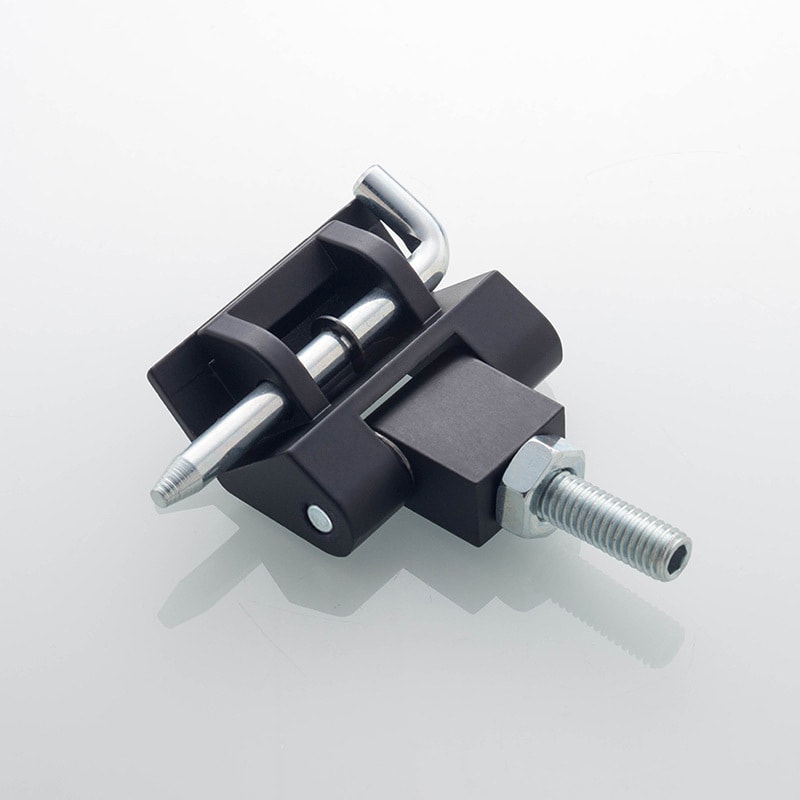
Yes, dramatically. Zinc alloy models may perform well visually but tend to crack under repeated shock. Stainless steel, especially in hardened or rolled grades, provides better resistance against microstructural fatigue.
In fact, I’ve found that Adjustable Torque Stainless Steel Hinges can outperform many generic concealed models if properly integrated—even in mobile test platforms. But beware: many suppliers label their hinges “stainless” when only the cover plate is, while the core remains low-grade zinc.
Does Mounting Method Impact Hinge Stability?
Absolutely. A perfectly designed hinge will still fail if poorly mounted. Sheet metal deformation under load, incorrect screw type, or uneven torqueing can all shift alignment over time.
Hidden hinges are especially sensitive to mounting surface flatness and rigidity. I always recommend clamping the hinge in position before final drilling to verify stress distribution. Adding thread lock or using press-fit bushings can reduce motion-induced loosening.
What Happens to Hidden Hinges in Test Equipment?
Test chambers and motion simulation platforms are notorious for exposing design flaws in concealed hinges. Here, temperature swings and multi-axis vibration create worst-case fatigue conditions. We’ve seen failures where concealed hinges began to squeak, jam, or even separate after only a few weeks.
In these cases, customers eventually switched to friction hinges in industrial applications with embedded torque control to maintain positioning under oscillation. Aesthetic was sacrificed, but operational reliability improved.
How Does Pin Clearance Affect Fatigue Life?
Too much clearance, and you introduce impact loading with every vibration cycle. Too little, and friction escalates to heat buildup and wear. It’s a tight balance.
From experience, a precision hinge with optimized pin/bore fit (usually in the range of 0.02–0.05 mm clearance) survives much longer under high cycle counts. Avoid models that rely on bushings made of soft brass or unreinforced plastic in these conditions.
Can Light-Duty Hinges Survive Harsh Environments?
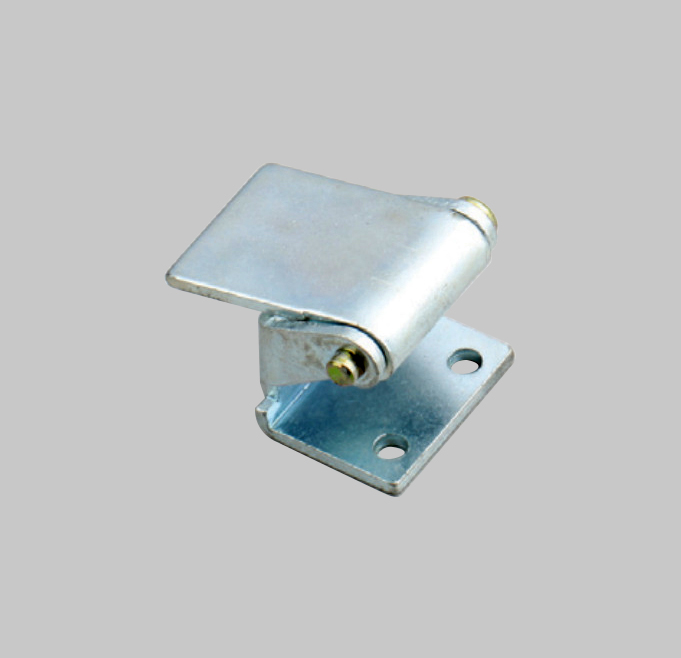
Only with custom reinforcement. If you’re operating in areas with combined heat, dust, or high-frequency vibration, off-the-shelf light concealed hinges won’t cut it.
Customers often ask me if a lamp concealed hinge or lightweight unit will do in a mobile system. Unless it’s shock-mounted or assisted by a damping structure, the answer is no. That’s where using adjustable friction hinges with vibration-tested preload mechanisms makes sense.
What Specs Matter Most for High-Vibration Applications?
Look beyond just material. Focus on:
-
Dynamic load test data
-
Mounting surface engagement area
-
Pin-bore fit tolerance
-
Rotational cycle fatigue test results
-
Coating adhesion after vibration
-
Locking or damping mechanism presence
Ask suppliers specifically for dynamic cycle reports under vibration or impact. If they can’t provide one, find another vendor.
How to Choose the Right Supplier for Industrial Hidden Hinges?
Industrial environments are unforgiving. You need hinge suppliers who can deliver engineering-grade documentation, not just catalog pages.
Look for:
-
Application-specific case studies
-
CAD drawings with stress points annotated
-
Real testing video footage or lab certification
-
Experience with enclosed trailer door hinges or vibration platforms
-
Quick response in customization and sample modification
IHINGES, for instance, specializes in non-standard industrial applications. We routinely co-develop small hidden hinges for use in vibration-exposed devices, from testing equipment to mobile enclosures.
If your project requires hinges that cannot be standardized, IHINGES is built for that exact need. IHINGES is the world’s only manufacturer dedicated exclusively to custom industrial hinges, focusing on real industrial applications rather than off-the-shelf products.