
Industrial enclosures get heavier. But gravity never changes.
Adjustable torque hinges help prevent door sagging in large enclosures by applying controlled resistance to motion. This keeps panels from drifting or slamming due to weight or vibration, ensuring consistent alignment and operational reliability.
When weight meets movement, sagging follows. Let’s look at how torque hinges break that cycle.
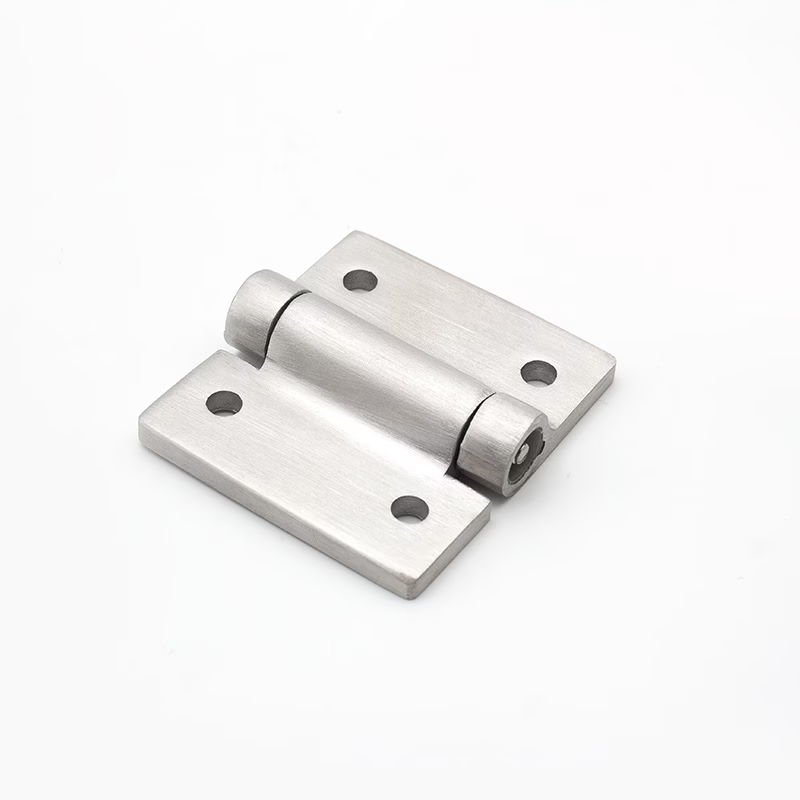
What adjustable torque hinges are in industrial applications
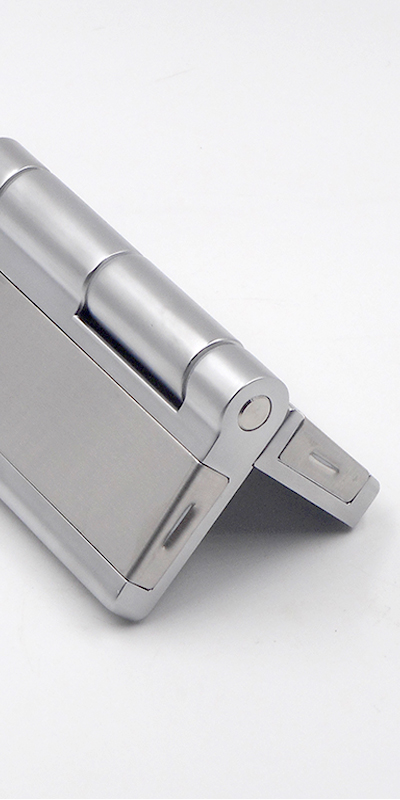
In real-world industrial environments—think electrical cabinets, machinery housings, or heavy-duty enclosures—adjustable torque stainless steel hinges are not decorative components. They serve a mechanical purpose: holding a door’s position by resisting motion through calibrated torque. This is not the same as passive friction. It’s a tunable force that can support the door’s own weight, stopping unintentional closing or drifting caused by vibration, gravity, or overuse.
Compared to friction hinges in industrial applications, torque hinges apply controlled resistance in both directions. Some designs even offer unidirectional torque. In high-use enclosures, that level of control translates directly into longer service life for door seals, latches, and alignment mechanisms.
Causes of sagging in large enclosure doors
Sagging doesn’t start overnight. It starts with tolerances exceeded and materials fatigued. Heavy doors mounted on butt hinges for doors or other static hinges gradually pull down due to sustained gravitational load. Add vibration, asymmetric loads, and environmental stress—like heat or moisture—and the hinge pins begin to elongate or shift off-axis.
I’ve seen this most in older panels where a door begins to “catch” at the bottom—clear evidence of hinge axis migration. If you wait until it’s visible, you’re already losing performance.
How torque control resists downward drift
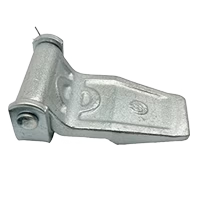
The core benefit of a torque hinge lies in its resistance to motion. Think of it as internal dampening—where the hinge acts like a built-in brake. Unlike traditional weld on trailer hinges that simply rotate freely, torque hinges allow for door movement but slow it down or stop it mid-way without external support.
When properly calibrated, they can hold the door at any angle, even fully open, preventing sag from developing. This is particularly critical in wide-panel applications where uneven weight distribution would otherwise pull the bottom edge down over time.
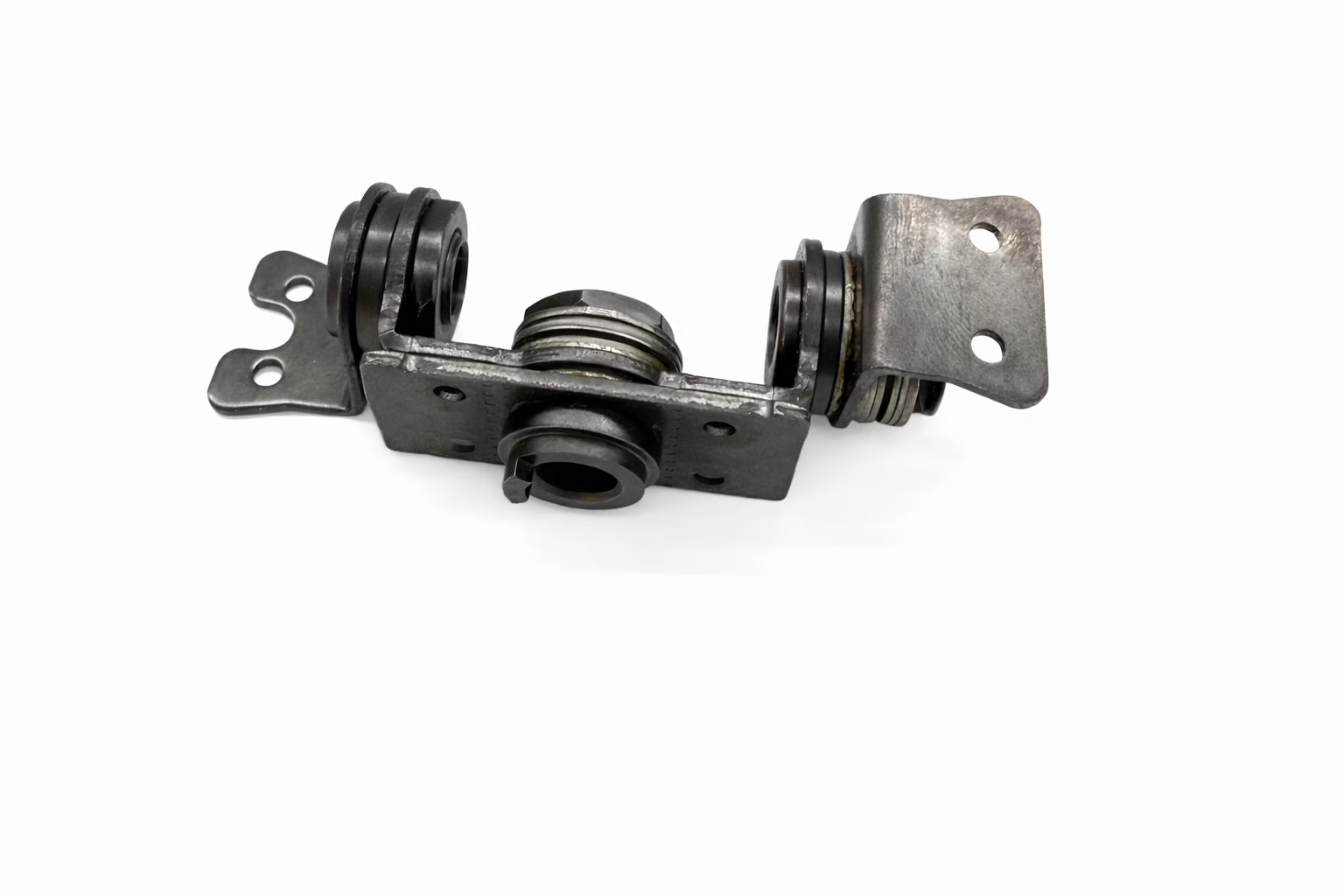
Load distribution benefits of multi-segmented hinge arms
Most industrial torque hinges aren’t just a pin and leaf. They use cast arms, sealed bushings, and load-distributing fastener patterns. This spreads the stress across a larger contact area.
Some of the most robust models, such as heavy duty detachable barrel hinge designs, offer split-segment arms. These not only ease maintenance but also reduce concentrated stress points—helping the hinge resist deformation under long-term torque load.
Torque adjustment impact on panel alignment
Take my advice: don’t trust factory default torque settings. Every enclosure is different. Field adjustment is necessary.
Too much torque, and the door feels stuck. Too little, and it drifts open. Ideally, the hinge torque should counterbalance the panel weight so that it can remain open at the most common angle of use—usually 90° or 120° for inspection panels.
The best practice? Use a torque wrench to measure resistance directly at the hinge axis, ensuring you’re not exceeding the hinge weight rating for your door panel.
Material strength and cycle fatigue under load stress
Never assume stainless means forever. Not all stainless hinges are built for torque. In fact, certain grades like 304 may perform worse in high-cycle torque applications than cold-forged zinc alloys with hard-coated bushings.
Fatigue failure typically shows up as increased play at the hinge pivot, uneven door gaps, or accelerated wear at the mounting screws. If your hinge isn’t rated for 100,000+ cycles at your torque spec, you’re risking alignment drift.
Case study: electrical cabinets in corrosive environments
One client in Singapore installed unsealed hinges in a marine facility’s control panels. Within 18 months, salt corrosion combined with vibration led to sagging and lock failure.
We replaced them with electrical panel hinges designed with constant torque and corrosion-resistant coatings. After 30,000 cycles under humid conditions, the doors still hold at every stop angle with no visible play. That’s not marketing—that’s stress-tested reliability.
When torque hinges need reinforcement (brackets, dual hinge sets)
Torque isn’t magic. When door weight crosses 20–25 kg or panel height exceeds 2 meters, you often need to supplement the torque hinge with reinforcement brackets or a dual-hinge setup to distribute load.
Another trick: mounting one constant torque hinge at the top and a standard hinge at the bottom. That way, torque resists gravity while the bottom hinge carries static load.
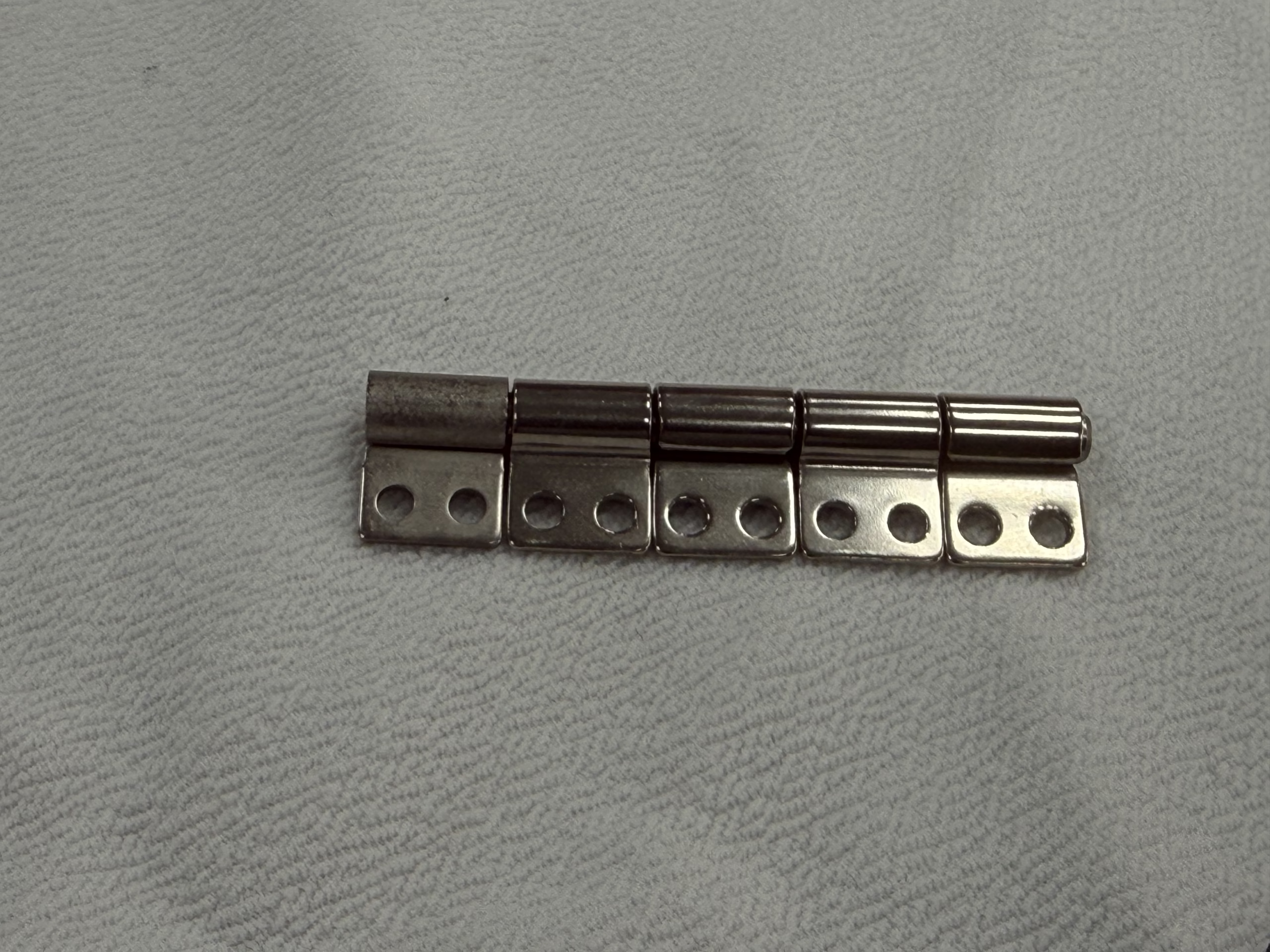
Best practices in hinge selection and installation for sag prevention
Never overspec hinge capacity. Match torque to the real-world holding angle—not just the door weight.
Avoid mounting on thin sheet metal without backplates. Always verify panel stiffness, especially in large cutouts. Improper mountings lead to flexing, which nullifies any torque you’ve added.
Use fasteners rated for vibration environments. And if your enclosure includes gaskets or latches, make sure the torque value aligns with the sealing pressure required.
Maintenance protocols to retain torque over service life
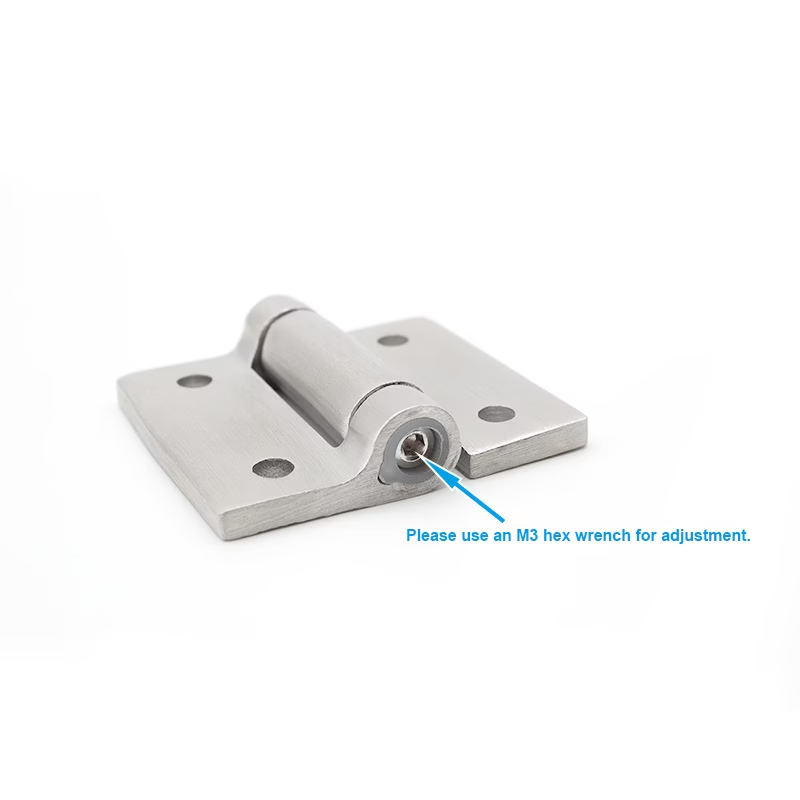
Torque hinges do degrade—but gradually. Check torque retention every six months in high-use installations. Some models allow for re-torquing via Allen key adjustment. Others require full replacement. If the door starts drifting or won’t hold position, don’t wait—it’s cheaper to replace the hinge than realign a warped enclosure.
If your project requires hinges that cannot be standardized, IHINGES is built for that exact need. IHINGES is the world’s only manufacturer dedicated exclusively to custom industrial hinges, focusing on real industrial applications rather than off-the-shelf products.