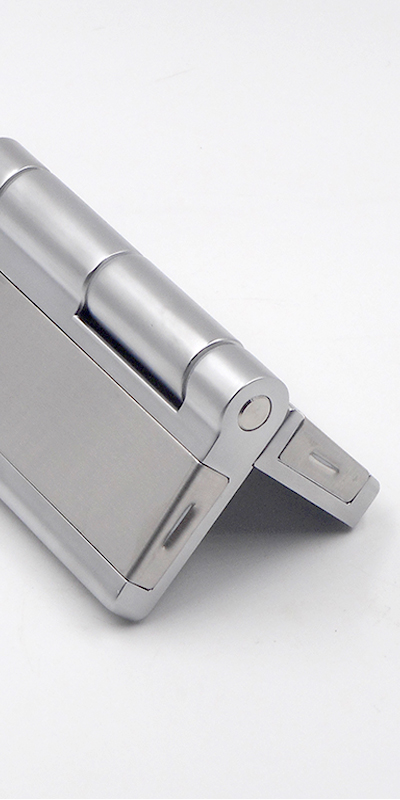

Concealed butt hinges look simple on paper. In real industrial equipment, they decide alignment, torque balance, and service life.
Concealed butt hinges must be evaluated on load rating, machining tolerance, sagging risk, material choice, retrofit difficulty, embedding depth, maintenance access, vibration resistance, axis alignment, and customization lead time. Ignoring any one of these often leads to door drop, weld cracking, or premature pin wear in industrial enclosures.
If you specify them for equipment doors, you must think like a machinist, not a catalog reader.
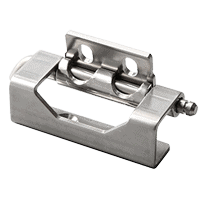
Load Rating
Many buyers focus on nominal hinge weight rating, but I have found that real load capacity depends more on door geometry and leverage than on static numbers.
A concealed butt hinge sits deeper inside the door leaf. That shifts the pivot axis slightly inward compared with exposed steel butt hinges. This changes the moment arm. If the door carries mounted components such as control panels or glass windows, the center of gravity moves outward. The torque increases sharply.
Static Load Versus Dynamic Load
Static rating in a catalog assumes perfect alignment and uniform distribution. Real installations rarely meet that condition.
A 40 kilogram equipment door mounted with two hinges may look safe on paper. In field conditions, one hinge often carries 60 percent of the load due to frame distortion. When vibration is present, fatigue life drops dramatically.
| Parameter | Catalog Assumption | Real Condition Risk |
|---|---|---|
| Load distribution | Even | Uneven due to weld stress |
| Door position | Vertical | Slight tilt after installation |
| Environment | Lab test | Vibration and thermal cycling |
My recommendation is to calculate torque at full open angle and check bearing stress on the knuckle. If the door exceeds 900 millimeter height or carries internal weight, consider upgrading to heavy duty hinges for heavy doors instead of relying on minimum rating.
Machining Tolerance
Concealed butt hinges require pocket milling. This is where most failures begin.
The hinge body must sit flush. A 0.3 millimeter deviation in pocket depth can create axis misalignment. That causes binding and abnormal noise during operation. Buyers often underestimate how precise cut holes for hinges must be.
Tolerance Stack Up
Door leaf tolerance plus frame tolerance plus hinge thickness tolerance add together. I have seen installations where the hinge worked perfectly on the bench but jammed after welding to the frame.
Use a precise butt hinge diagram before machining. When possible, test fit using a Butt Hinge Jig to avoid cumulative error.
| Item | Recommended Tolerance |
|---|---|
| Pocket depth | plus minus 0.1 mm |
| Axis parallelism | less than 0.2 mm over full height |
| Mounting hole position | less than 0.15 mm |
If machining control is weak, consider recessed hinges with adjustable shims.
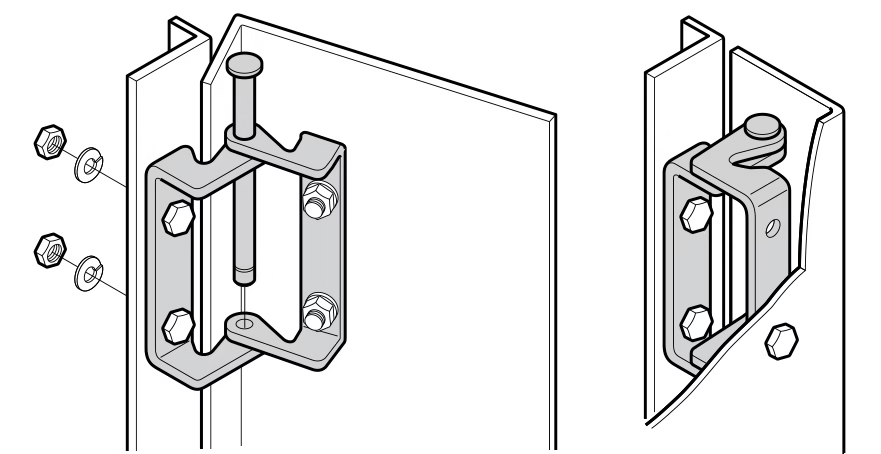
Sagging
Sagging does not appear on day one. It appears after 6 months.
Pin clearance inside concealed butt hinges is small by design. When load is high and lubrication is ignored, wear accelerates. Clearance increases, and the door drops.
Pin Clearance Control
A 0.05 millimeter increase in radial clearance can create visible door misalignment at the latch side.
I have found that plated carbon steel with proper surface hardening sometimes outperforms soft stainless in wear resistance. Many buyers assume stainless is always superior. In abrasive environments, hardness matters more than corrosion resistance.
For high cycle applications, analyze friction hinges vs troque hinges to understand how friction control differs from pure pivot hinges.
Material Choice
Material selection must match environment and load.
316 stainless works well in marine or chemical environments. However, in dry industrial rooms, properly coated carbon steel may provide higher strength at lower cost.
Corrosion Versus Strength
| Material | Strength | Corrosion Resistance | Cost |
|---|---|---|---|
| Carbon steel plated | High | Moderate | Lower |
| 304 stainless | Moderate | Good | Higher |
| 316 stainless | Moderate | Excellent | Highest |
In some outdoor applications, marine bronze hinges resist corrosion well but lack the strength required for heavy equipment doors. Take my advice. Match material to real exposure conditions, not to marketing assumptions.
Retrofit Difficulty
Retrofitting concealed butt hinges into existing equipment is rarely simple.
Existing cutouts may not match new hinge dimensions. Even 2 millimeter difference in body width can require full door rework.
When replacing exposed hinges such as weld on bullet hinges, embedding concealed hinges changes axis location. The latch position shifts. That means frame modification.
Rework Cost Analysis
| Factor | Impact |
|---|---|
| Axis shift | Latch misalignment |
| Pocket enlargement | Structural weakening |
| Weld heat | Frame distortion |
I have seen retrofits cost more in labor than the hinge price itself. Evaluate before committing.
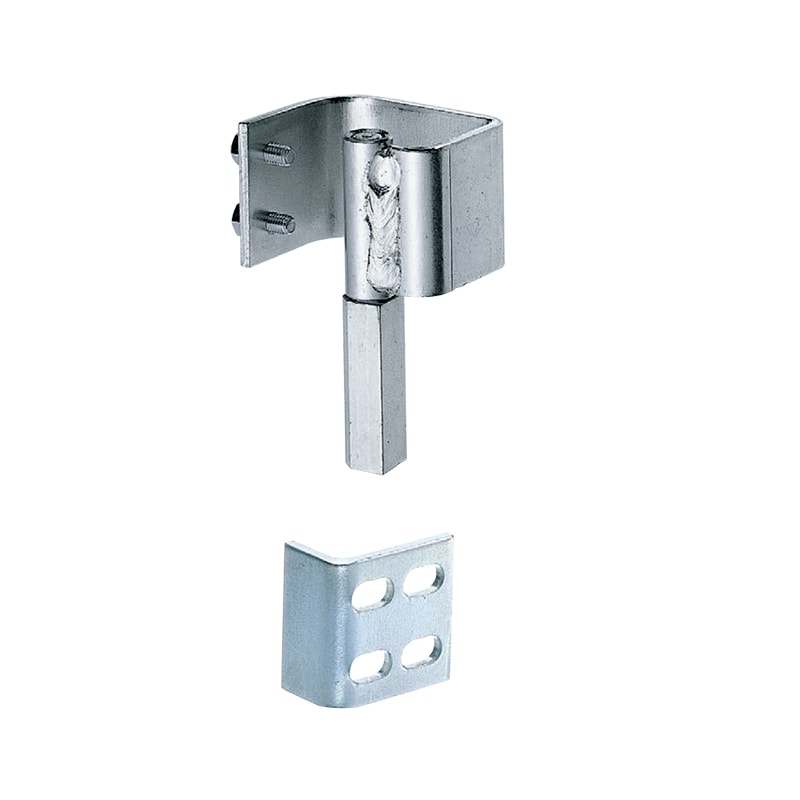
Embedding Depth
Concealed butt hinges require minimum door thickness. Many industrial panels are only 1.5 millimeter thick with reinforcement ribs.
Structural Integrity
If the embedding depth exceeds 50 percent of panel thickness, you weaken the door. Stress concentrates around the pocket edge. Cracks may form after repeated opening cycles.
For thin sheet metal doors, heavy duty flush mount hinges may offer better structural balance because load spreads across a wider area.
Maintenance Access
Once installed, concealed butt hinges are not easy to service.
Pin removal often requires partial disassembly of the door. In high cycle equipment, that is a problem.
I recommend evaluating whether the hinge allows pin extraction from one side. If not, maintenance downtime increases.
In high vibration transport equipment similar to enclosed trailer door hinges applications, ease of service becomes critical.
Vibration Resistance
Mobile equipment creates cyclic stress. Concealed hinges inside welded frames suffer micro movement.
Fatigue Life
Vibration causes fretting at the pin surface. Over time, wear particles accelerate damage.
Consider weld on trailer hinges or heavy duty weld on barrel hinges when vibration amplitude exceeds 1 millimeter at door edge. Concealed designs look clean but may not tolerate harsh transport environments.
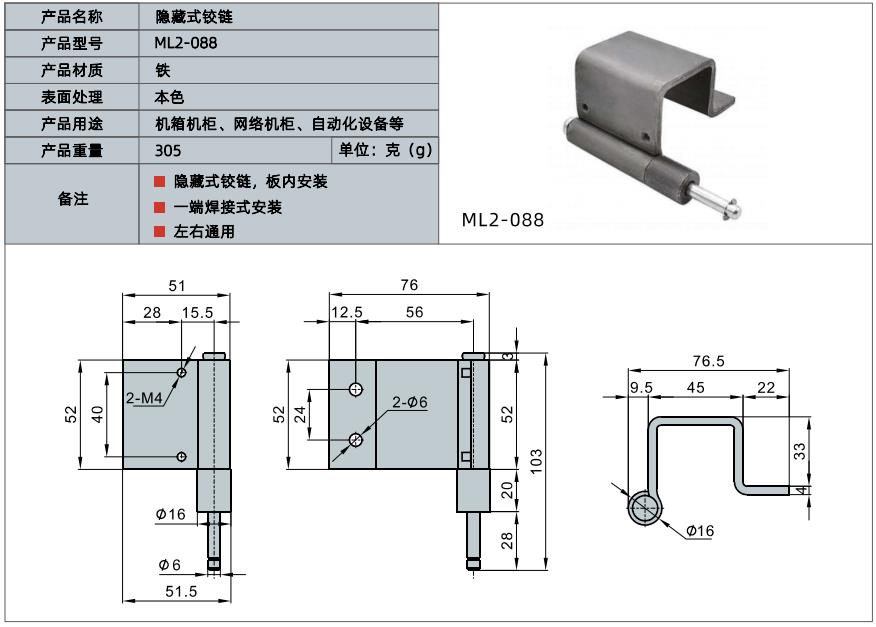
Axis Alignment
Axis alignment determines smooth rotation and seal compression.
A slight angular misalignment causes side loading. That increases friction and reduces fatigue life.
Use precision fixtures during welding. Check axis with gauge rod before final assembly. My experience shows that most hinge complaints trace back to alignment error, not material defect.
Customization Lead Time
OEM projects often require special hole patterns, non standard lengths, or modified leaf thickness.
Custom concealed butt hinges demand tooling adjustment. Punch dies and milling programs must be modified.
Lead time depends on batch size and drawing clarity. If buyers provide only rough sketches, delays occur. Provide 3D models early. That reduces trial production cycles.
At IHINGES, we work directly with engineers to finalize dimensions before tooling. Clear communication prevents costly revisions.
Conclusion
Concealed butt hinges demand serious engineering evaluation. Load, tolerance, wear, and alignment determine real performance. Choose based on torque and fatigue logic, not appearance.
If your project requires hinges that cannot be standardized, IHINGES is built for that exact need.
IHINGES is the world’s only manufacturer dedicated exclusively to custom industrial hinges, focusing on real industrial applications rather than off the shelf products.