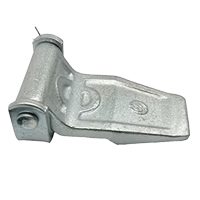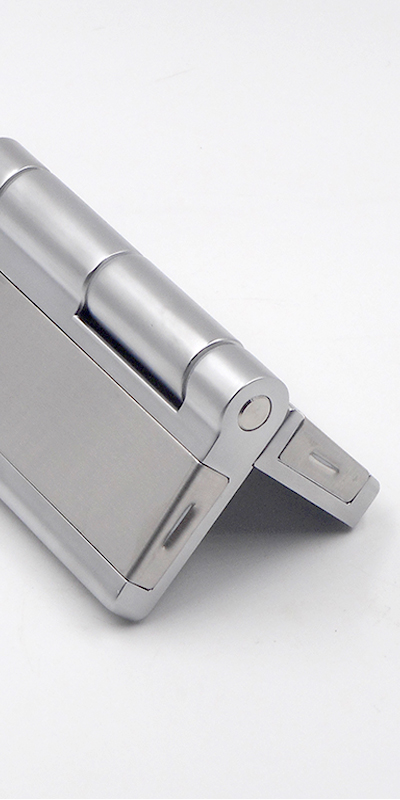

A damped hinge improves motion safety in industrial doors. It reduces impact and protects nearby components.
A damped hinge controls door movement through resistance so closing speed stays manageable under repeated use. This helps reduce shock at end travel and improves operator confidence during service access.
Use practical specifications. Avoid vague wording.
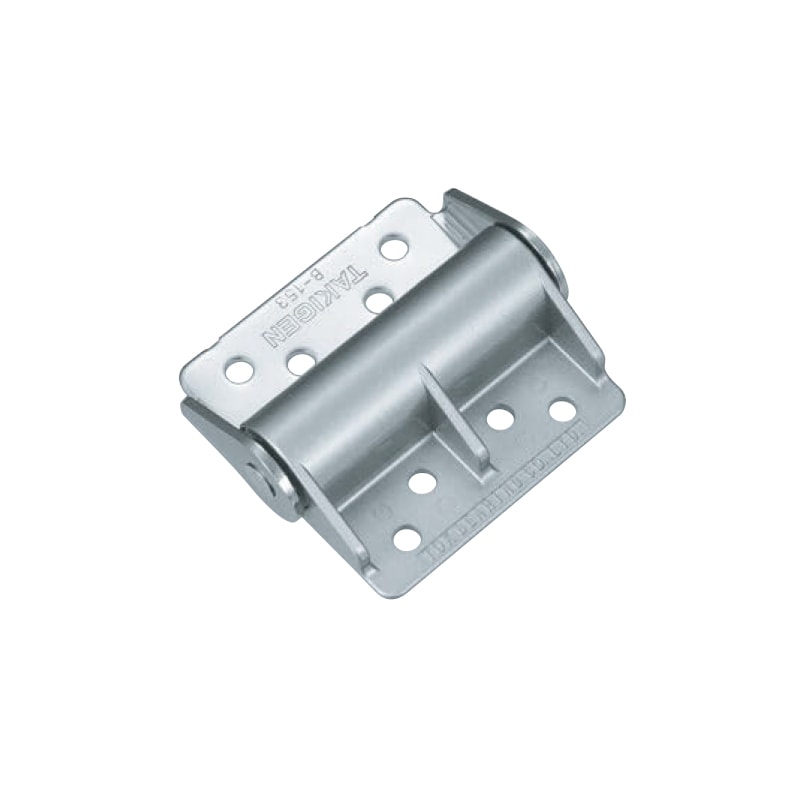
What Is a damped hinge
A damped hinge is a hinge that adds controlled resistance during rotation to smooth movement and lower closing impact. In industrial equipment doors, this function reduces vibration transfer and protects enclosure edges, latches, and connected cables.
The term is often used loosely in daily language, so buyers should define what behavior is actually required. If the project needs measurable performance, the requirement must go beyond a generic statement that the hinge feels smooth.
How It Works
A damped hinge creates resistance through internal friction interfaces, controlled media, or a combined mechanism that dissipates motion energy. As the door rotates, resistance counters speed rise and helps the panel approach end position with better control.
Actual behavior depends on resistance profile, breakaway feel, and consistency across temperature and cycle count. For this reason, sample evaluation should measure torque through angle points instead of relying only on hand feel.
Where It Is Used in Industry
Industrial buyers use this hinge type on equipment access doors, control box covers, inspection flaps, and safety guard panels. These locations need smoother motion because repeated operation can otherwise cause impact wear and user complaints.
When panel size grows, basic capacity references such as Hinge Weight Rating help with early screening. Final selection still requires motion testing with real door geometry and target user effort.
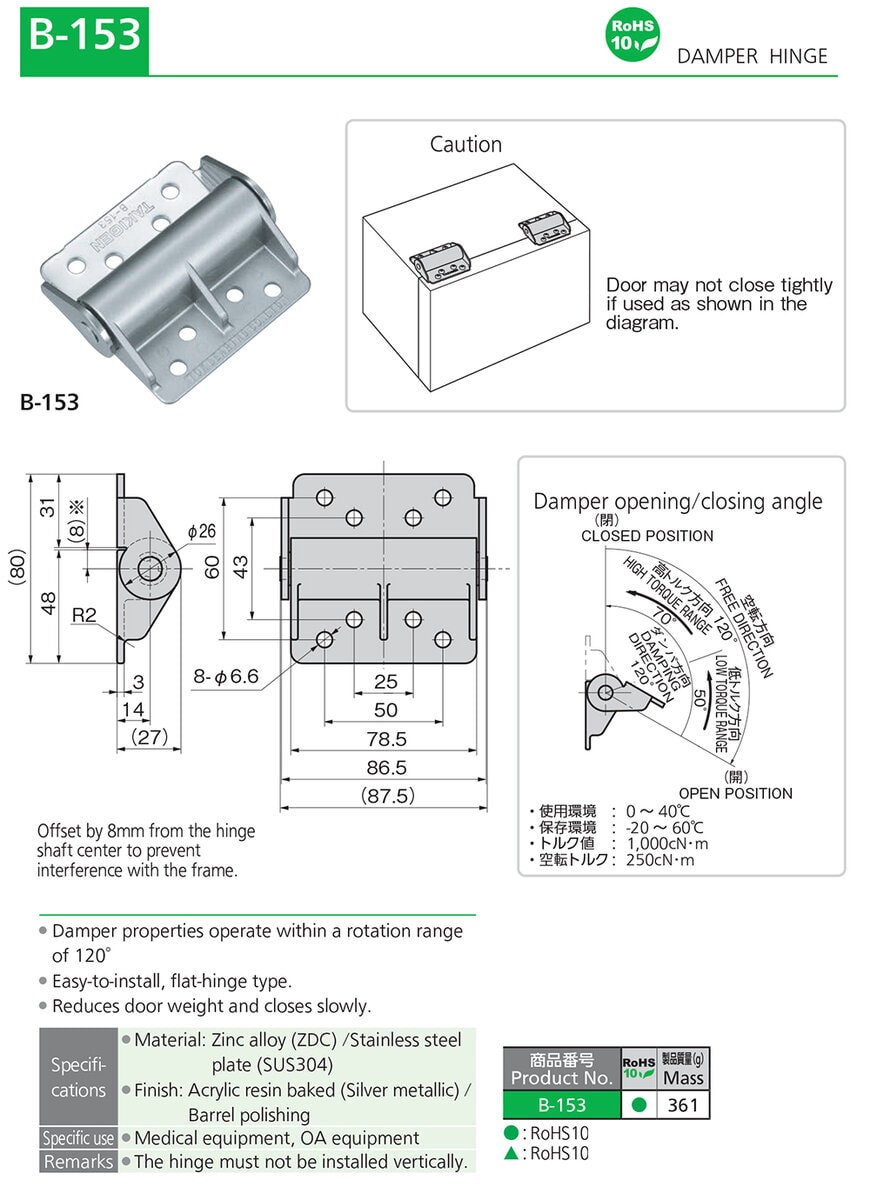
How to Specify It Correctly
Your key point is critical for custom projects. Buyers must distinguish friction hinge language from torque hinge language before asking for quotation and sampling.
A friction hinge usually describes a broad resistance or damping function without strict numeric targets, which is common in everyday use scenarios. A torque hinge is the industrial term that requires explicit values, including target torque range and switching cycle life, so design intent can be verified objectively.
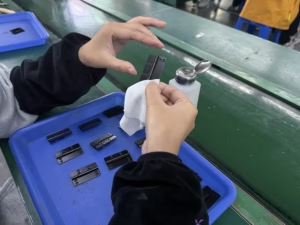
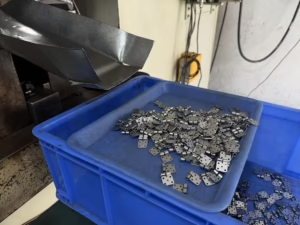
If you need a customized hinge with concrete requirements, provide at least torque specification, life target, and environment conditions to the manufacturer. Before shipment, require two test reports that verify torque and life results, and also require a material report for traceable quality control.
For broader angle holding comparison, teams can review What is a torque hinge and Constant Torque Hinges to align terminology before final purchase terms.
Common Failure Modes
The most frequent issue is closing behavior drift after repeated cycles, where motion becomes too fast or too inconsistent for safe operation. Root causes often include wear progression, contamination ingress, wrong torque target, or mismatch between hinge behavior and actual door moment.
Another common issue is high initial effort followed by unstable movement across travel. This can come from poor mounting alignment, bracket flex, or incorrect specification that ignored real use frequency and temperature exposure.
damped hinge Versus Torque Hinge
These two terms can overlap in conversation, but they should not be mixed in technical purchasing documents. If the requirement is qualitative comfort only, friction based wording may be acceptable, but if production acceptance depends on measurable performance then torque and cycle criteria must be written clearly.
This distinction reduces supplier misunderstanding and improves incoming quality consistency. It also makes pre shipment inspection practical because pass fail standards are defined in advance.
Why IHINGES
IHINGES supports OEM programs that need repeatable industrial hinge performance with clear engineering targets. The team can assist with parameter matching, sample validation planning, and production control based on torque, life, and material requirements.
A precise specification process is the fastest way to get stable motion quality in volume production. Clear reports before shipment protect both delivery schedule and field reliability.
Conclusion
A damped hinge can deliver safer and more consistent industrial door motion when requirements are measurable and verified. Define torque, life, and material evidence early so suppliers can deliver predictable quality.