
Ready fit hinges look simple from the outside, but their engineering logic is far from simple. In industrial environments, they solve very specific torque and alignment problems.
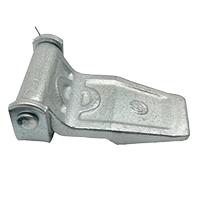
Ready fit hinges are pre engineered hinge systems that integrate a hinge body and closing mechanism into one assembly, allowing fast installation on industrial gates or equipment doors while maintaining controlled closing torque and load stability. They reduce fabrication steps, minimize field welding errors, and deliver predictable hinge weight rating performance compared with traditional loose hinge and closer combinations.
If you only look at the surface, you will miss the mechanical logic inside.
Definition and Functional Positioning
Ready fit hinges are modular hinge systems designed to combine pivot support and controlled closing in one unit. Unlike traditional steel butt hinges that rely purely on a rotating pin and external door closers, ready fit systems integrate a spring or controlled torque module inside the hinge body.
From my experience working with industrial enclosure manufacturers, the real value is not speed alone. The value lies in repeatability. When a factory installs standard hinges and then adds a separate closer, the torque curve often varies from unit to unit. That inconsistency leads to uneven door rebound, excessive slam force, or incomplete closing under wind load.
Ready fit hinges remove that variable. The mounting bracket geometry is predefined. The hinge mount position directly defines the torque arm length. This mechanical consistency reduces field adjustment time.
However, many engineers overlook one key detail. The hinge radius and offset geometry must match the door thickness and frame clearance. If the pivot centerline shifts too far outward, the door creates a higher bending moment on the hinge knuckle. Over time, this results in pin wear and vertical sag.
I have seen projects where engineers selected a hinge purely by appearance without calculating real hinge weight rating under dynamic load. Static door weight is only part of the equation. Wind load, repetitive impact, and closing acceleration multiply stress on the pivot. Ready fit hinges aim to control that stress through integrated torque logic rather than brute strength alone.
Mechanical Structure and Closing Principle
Most ready fit hinges use an internal spring module. Some advanced systems use hydraulic damping, but in industrial outdoor environments, simple spring systems often outperform hydraulic units due to lower leakage risk.
There is a common misunderstanding here. Engineers assume hydraulic self closing hinges are always superior. In corrosive or dusty environments, hydraulic seals degrade. I have found that a well designed spring torque system with proper sealing often provides longer fatigue life.
The internal torque system works by storing energy during opening and releasing it during closing. The torque curve must match door mass and width. If torque is too high, the door slams. If too low, the door fails to latch.
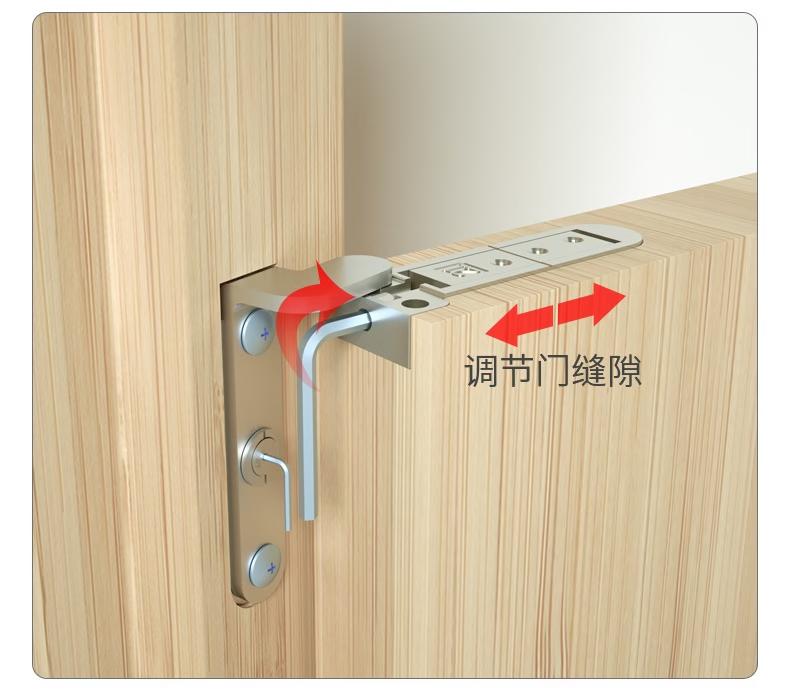
This is where adjustable torque hinges offer flexibility, but adjustment range is limited. Exceeding the design torque range causes premature spring fatigue.
Another structural point often ignored is pin diameter. A larger pin does not automatically mean better performance. What matters is shear stress distribution and surface hardness. Surface treatment quality affects wear rate more than diameter alone.
For weld type versions similar to industrial weld on hinges, heat distortion during welding can shift alignment by more than one millimeter. That small deviation creates uneven load distribution across the knuckle stack. Over time, abnormal noise and side loading occur.
I always recommend checking post weld alignment with a gauge and verifying free swing before loading the spring mechanism.
Product Variants in the Market
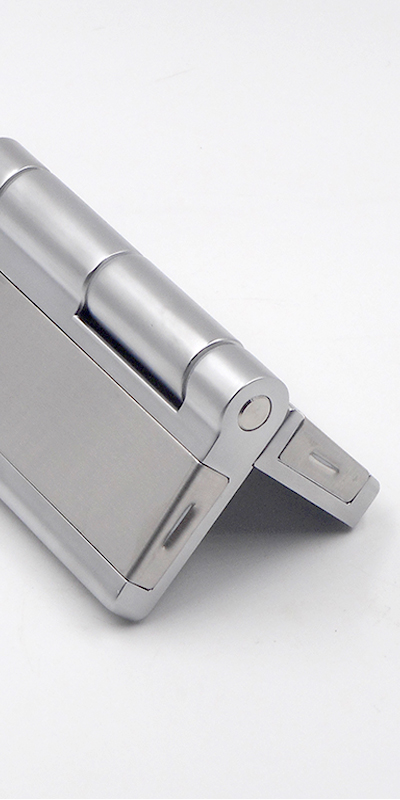
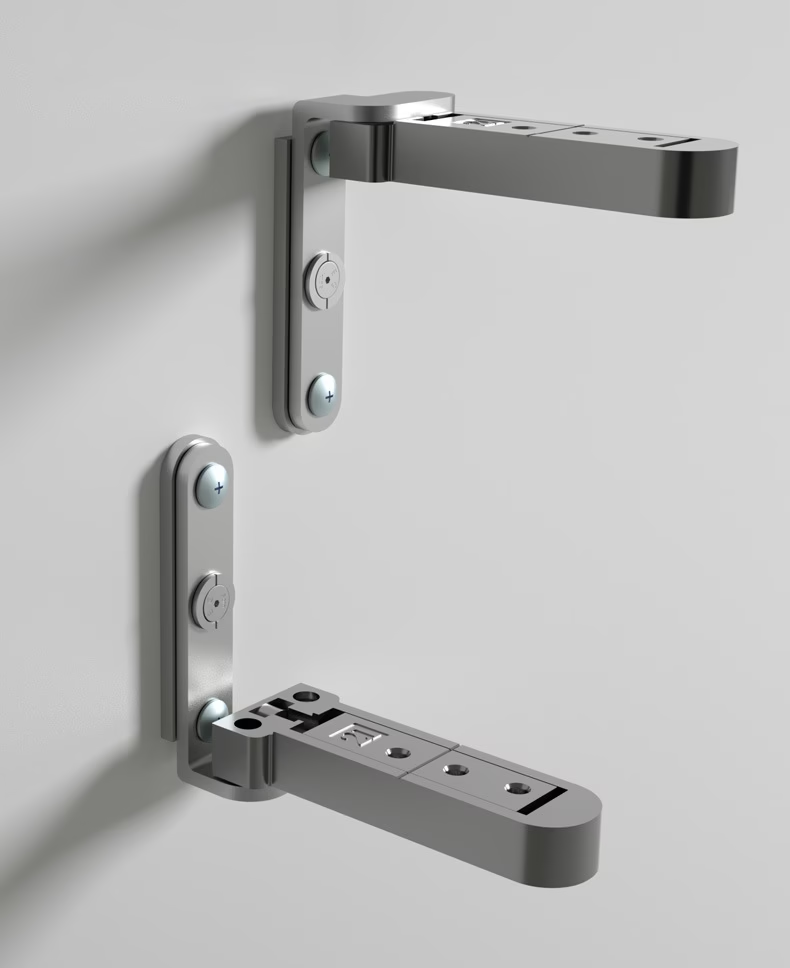
Market variants include flush mount bracket systems and weld on steel bracket systems. Flush mount versions reduce protrusion and improve clearance in narrow installation spaces. This configuration resembles certain heavy duty flush mount hinges, but with integrated torque functionality.
Heavy duty non self closing versions exist as well. These are often selected when automatic closing is not required but high structural capacity is necessary. In such cases, the ready fit geometry ensures precise mounting alignment without adding a closer.
The structural difference between a ready fit hinge and a traditional heavy duty gate hinge lies in integration. Traditional gate hinges focus purely on load bearing. Ready fit systems combine load bearing and controlled motion.
Material selection varies between steel and aluminum brackets. Steel brackets provide higher yield strength but increase weight. Aluminum brackets reduce mass but require careful corrosion control and thicker sections to maintain stiffness.
I have seen aluminum bracket systems fail not because of material weakness, but due to insufficient bolt torque during installation. Micro movement between bracket and frame leads to hole elongation.
Brand and System Comparison
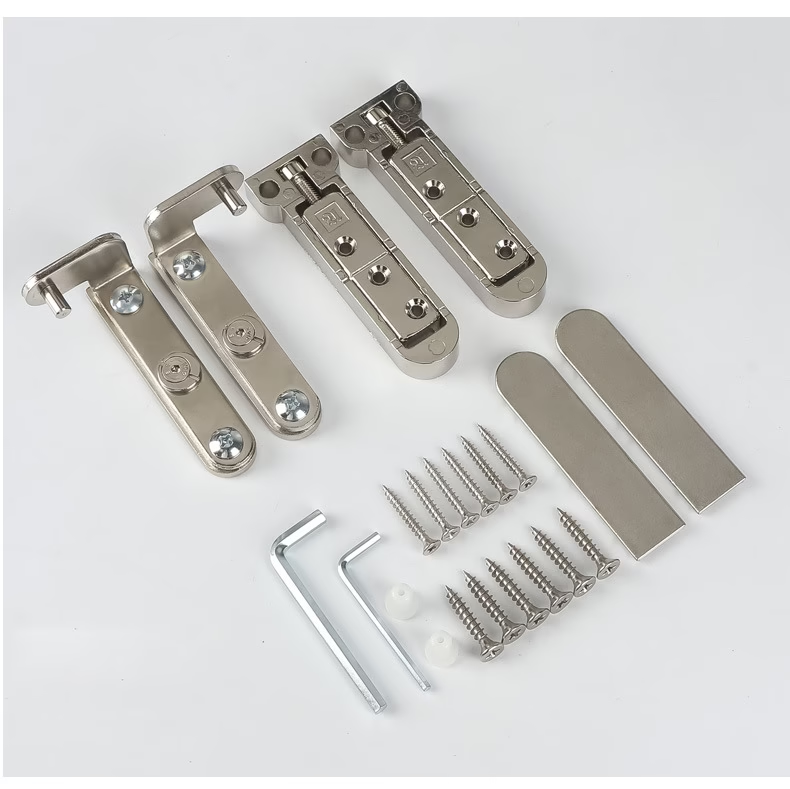
Systems such as SureClose READYFIT Gate Hinge and other D and D hinges position themselves as integrated hinge closer solutions for perimeter control applications. Their selling point is simplicity, but their real technical value lies in torque calibration and bracket geometry control.
Compared with conventional butt hinge systems, ready fit hinges reduce fabrication variables. Compared with T hinge structures, they offer more balanced load distribution along the vertical axis instead of concentrating stress at extended leaf ends.
When evaluating strength, many buyers ask about the strongest type of hinge. Strength alone does not guarantee reliability. A rigid hinge without torque control may cause latch shock and structural fatigue on the door frame.
Ready fit hinges address both load support and motion control. That dual function is their engineering identity.
Installation Engineering Logic
Installation accuracy determines service life. Even a precision hinge will fail if mounted on a distorted frame.
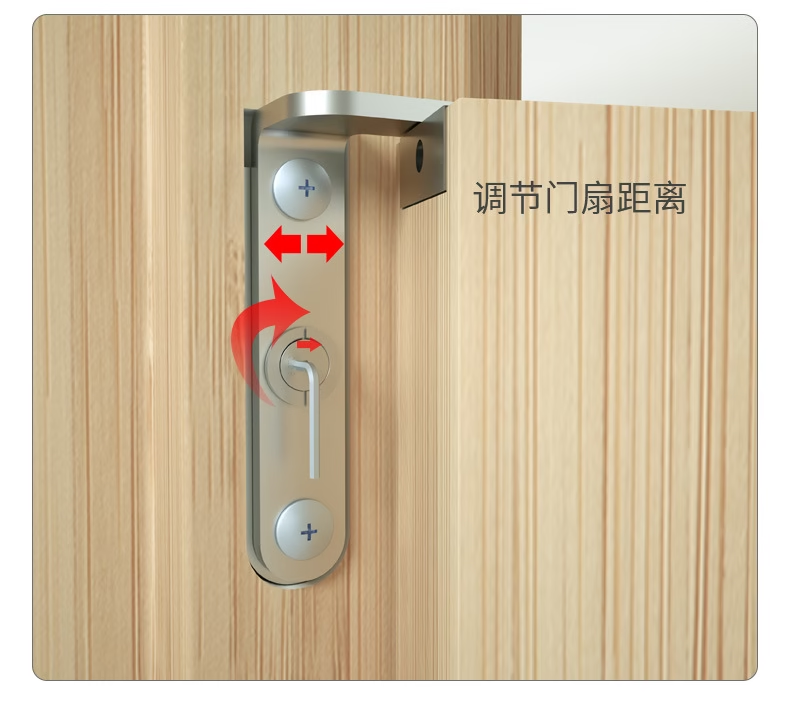
Bracket alignment must ensure vertical coaxial alignment of top and bottom hinges. A deviation of two millimeters can create torsional stress on the door panel. Over time, this leads to hinge binding.
For weld on configurations, surface preparation of hinges before welding is critical. Contaminants cause weak weld penetration. After welding, cooling should be controlled to prevent shrinkage distortion.
Fastener torque must follow specification. Under tightened bolts allow micro movement. Over tightened bolts deform bracket holes.
From my observation, most premature failures are not caused by hinge design but by careless installation.
Strength and Load Classification
From an industrial perspective, hinges fall into three structural types. Basic pivot hinges without closing torque. Integrated self closing hinge systems such as ready fit hinges. Heavy structural barrel or weld on hinges designed purely for extreme load.
The strongest hinges in static load tests are often extra heavy barrel designs. However, strength without controlled motion can damage connected structures.
Hinge weight rating should always be calculated with safety factor under dynamic operation. A door that weighs eighty kilograms but experiences wind gust impact behaves like a much heavier mass during closing.
Ready fit hinges balance structural capacity and torque control. That balance reduces cumulative fatigue damage on both hinge and frame.
Application Scenarios in Industrial Sector
Ready fit hinges are widely used in industrial perimeter gates, equipment safety enclosures, and controlled access panels.
In outdoor environments, corrosion resistance becomes decisive. Coating quality and material grade affect long term torque consistency. Rust increases friction inside the pivot, altering closing speed.
In industrial manufacturing plants, repetitive daily cycles accelerate wear. Fatigue life estimation must consider real cycle counts, not theoretical lab data.
For equipment access doors that require automatic closing to maintain safety zones, ready fit hinges offer predictable closing force without installing separate closers.
OEM and Manufacturing Perspective
For OEM manufacturers, ready fit hinges simplify assembly lines. Pre engineered hinge mount geometry reduces layout measurement time.
However, they are not universal. Non standard door thickness or offset geometry may require custom pivot location. In such cases, a fully customized solution may outperform standard ready fit systems.
Take my advice. Do not select a hinge based only on catalog rating. Evaluate torque curve, pin hardness, bracket stiffness, and real installation tolerance.
If your project requires hinges that cannot be standardized, IHINGES is built for that exact need.
IHINGES is the world’s only manufacturer dedicated exclusively to custom industrial hinges, focusing on real industrial applications rather than off the shelf products.
At IHINGES we work directly with engineers to define pivot centerline, torque demand, material grade, and fatigue target before production begins. That is how industrial hinges should be specified.