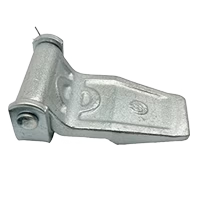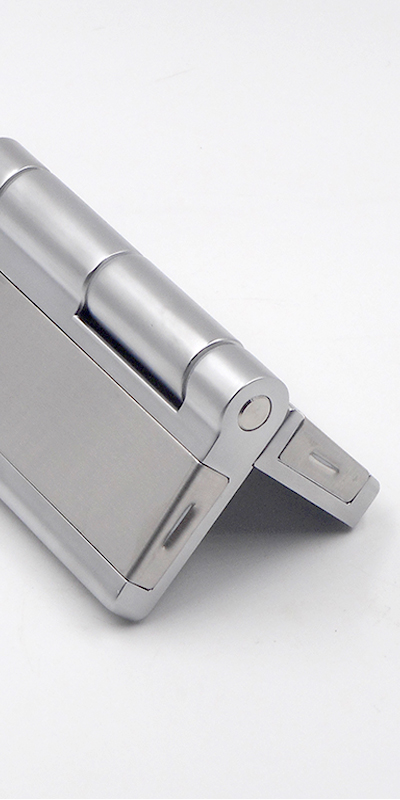

A torsion hinge returns a panel with stored spring force. It helps control opening and closing motion in industrial equipment.
A torsion hinge is a hinge with a torsion spring element that stores energy during rotation and releases it to create return force. In industrial equipment it is used to assist closure, support controlled return, or maintain a preferred rest position when geometry and preload are matched to the panel load.
The name sounds simple. Selection work is not.
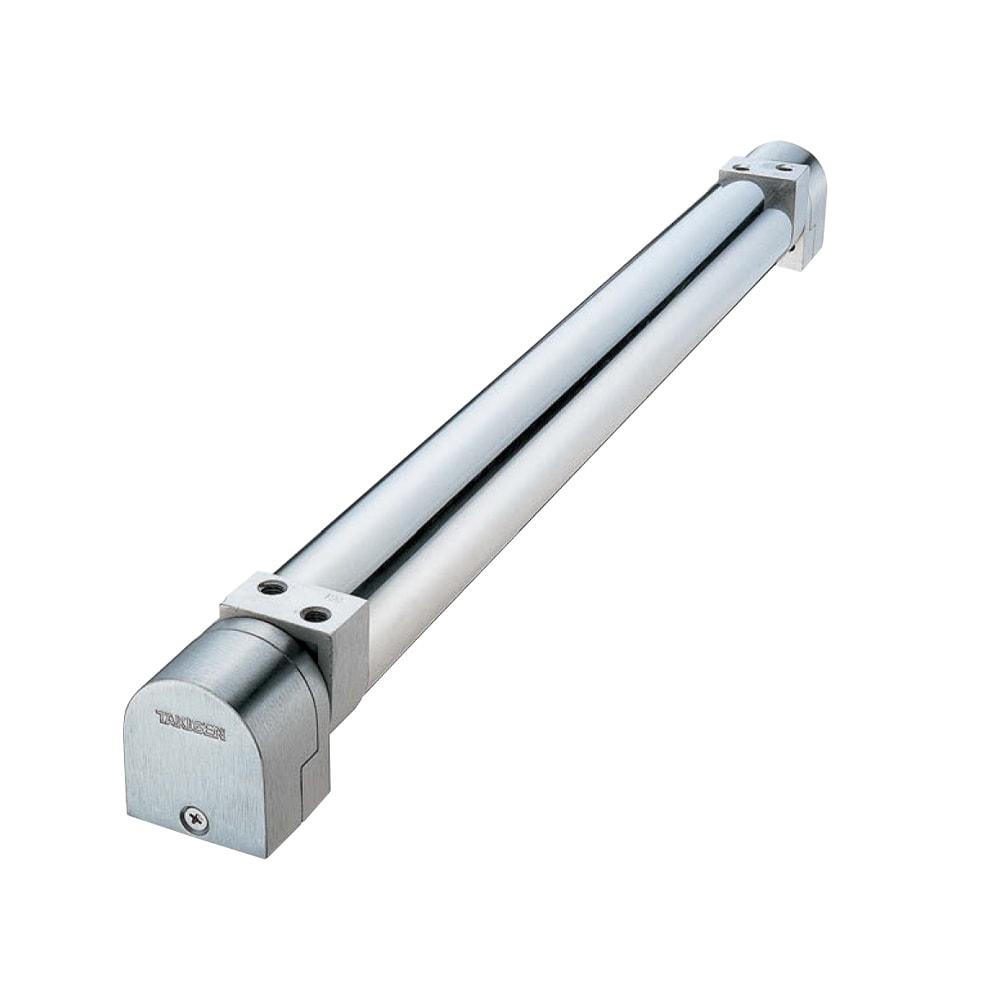
What is a torsion hinge in industrial applications
A torsion hinge combines pivot motion and spring action in one assembly. It rotates like a normal hinge while also generating restoring force that pushes the panel toward a target position.
In industrial machines, this target position is often fully closed or a defined rest angle. Buyers use torsion hinges on access covers, service flaps, guards, and operator panels when they need repeatable return behavior without adding a separate spring mechanism.
The term is often confused with friction based hinges that hold position at many angles. For a basic category comparison, What is a torque hinge helps clarify the difference between holding torque and spring return torque.
How a torsion hinge works inside the mechanism
Inside the hinge, a torsion spring stores energy as the hinge rotates away from its free position. The spring may be wrapped around the pin or integrated into a compact internal structure depending on space and torque requirements.
When the panel moves, one side of the hinge rotates relative to the other and twists the spring element. The stored energy then creates a restoring moment that acts to rotate the hinge back toward the preset position.
Actual performance depends on preload, spring geometry, material condition, and friction inside the assembly. Two hinges with the same nominal torque value can feel very different if spring tolerance and internal friction control are not consistent.
Why return force changes across the motion range
A torsion hinge does not usually produce identical return force at every angle. Spring torque changes with deflection, and the panel load moment also changes as the center of gravity moves relative to the hinge axis.
This means the user effort to open a cover can rise or fall through the stroke. A design that feels balanced at one angle may feel too light near closure or too heavy near the peak opening angle.
Engineers should review the full torque balance across the required motion range. If they only check one position, they can miss slam closing, weak return, or operator effort complaints during real use.
Torsion hinge and torque hinge serve different functions
A torsion hinge primarily stores spring energy and creates return motion. A torque hinge primarily adds friction resistance to hold a panel at a chosen angle.
Some projects need return action, while others need stable positioning. In mixed use cases, engineers compare torsion hinges with friction solutions such as adjustable torque hinges to decide whether the application needs assisted return, angle holding, or a combined mechanism.
This functional difference affects safety review, user feel, and service behavior. It also changes how you test the hinge because spring torque consistency and friction torque consistency fail in different ways.
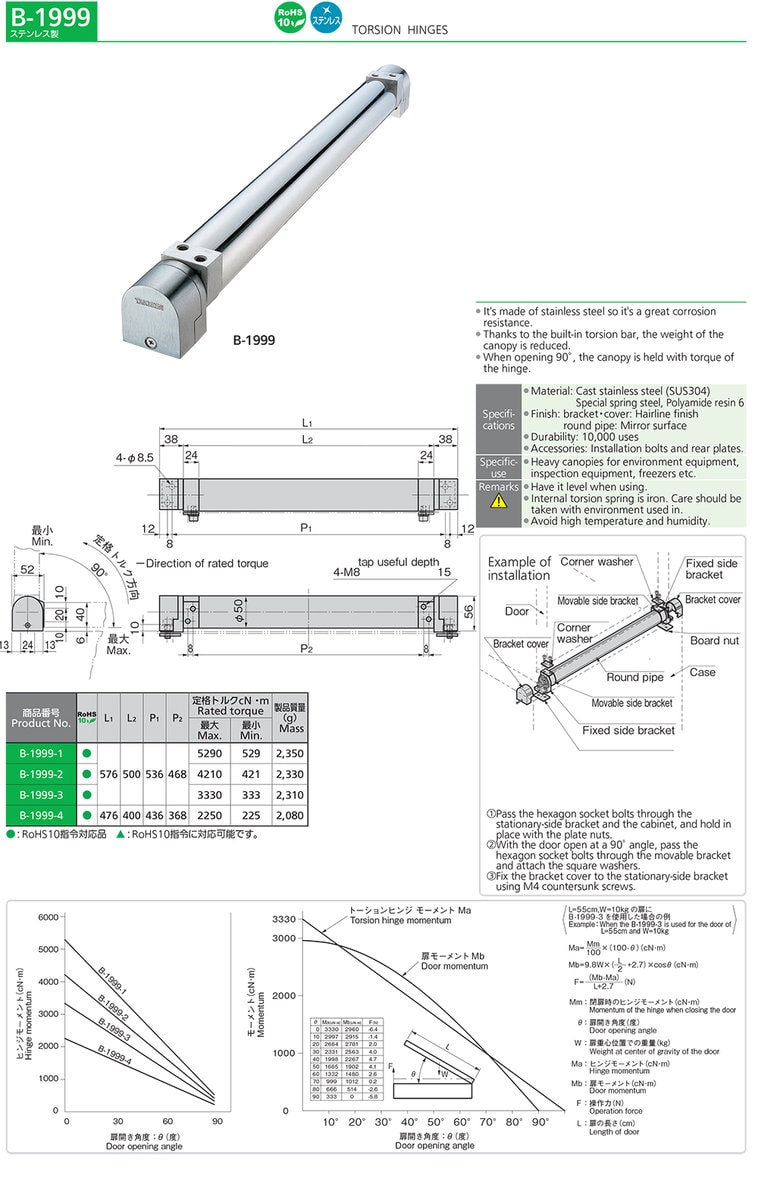
How to size a torsion hinge for industrial doors and covers
Start with panel mass, center of gravity distance from the hinge axis, opening angle range, and the number of hinges. Then estimate the panel moment at several angles and compare it against available spring return moment and target user effort.
The most common purchasing mistake is to select from panel weight alone. Weight without geometry does not describe rotational moment, so the hinge may be badly matched even when the catalog torque looks acceptable.
When the cover is large, general load screening concepts like Hinge Weight Rating are still useful. They do not replace torque balance calculations, but they help prevent obvious under sizing before prototype testing.
| Selection input | Why it matters | Common mistake |
|---|---|---|
| Panel mass | Sets basic load level | Used without center of gravity data |
| Center of gravity distance | Determines rotational moment | Estimated by guess |
| Opening angle range | Changes moment and user effort through motion | Checked at one angle only |
| Hinge quantity | Splits load and spring work | Assumed equal sharing without alignment control |
| Cycle target | Affects spring design and material choice | Missing durability requirement |
For projects with severe duty or vibration, it is also useful to review broader selection practices for a heavy duty industrial hinge. Structure stiffness and fastening quality can change the result even when the torsion hinge itself is correctly specified.
Materials cycle life and torque retention considerations
Torsion hinge reliability depends heavily on spring material, heat treatment, and stress level. If the working stress is too high for the duty cycle, torque loss or spring fracture can appear much earlier than expected.
Surface condition matters because scratches and forming damage can become fatigue initiation points. Corrosion exposure can make this worse, especially in humid equipment environments or chemical wash areas.
Preload control also affects performance consistency across production lots. If preload varies too much, one sample may close firmly while another sample in the same batch returns slowly or overshoots.
Buyers should request cycle test conditions, not only cycle counts. Opening angle, speed, dwell time, and ambient conditions all change fatigue behavior and torque retention results.
Mounting alignment and assembly details that affect performance
Many motion complaints come from installation conditions rather than the spring design itself. Bracket flex, axis offset, and poor hole location can add friction and create uneven opening force.
When two hinges are used, alignment control becomes more important because each hinge influences the other. Small axis mismatch can produce binding that hides the true spring behavior and accelerates wear at pins and mounting points.
Assembly teams that manage hinge geometry well often use inspection logic similar to Perfect alignment of hinge leaf pin holes. The same alignment discipline improves torsion hinge consistency, operator feel, and durability.
Fastener torque and bracket thickness also deserve attention during sampling. A rigid fixture can make a hinge look excellent, while a thin production bracket can twist and change closing force in the real machine.
Common failure modes and practical troubleshooting clues
Weak return is one of the most common field complaints. It usually points to low spring torque, incorrect preload orientation, excessive panel moment, or early spring fatigue.
Sudden snap closing can occur when torque balance is poor across the motion range. The panel may feel acceptable near mid stroke but accelerate sharply near closure, which can create noise, pinch risk, and latch damage.
Jerky motion often indicates alignment error, contamination, or internal wear debris. Buyers sometimes misread this as a spring problem when the real cause is installation distortion or poor bracket stiffness.
Cracks near spring legs or formed features suggest stress concentration and fatigue overload. In that case, review actual opening angle, stop position control, and cycle conditions before changing supplier.
How to verify torsion hinge performance before production release
Test the hinge on the real panel or a fixture with equivalent mass and center of gravity. Measure opening effort and return behavior at multiple angles instead of relying on a single hand feel check.
Record force or torque values across several samples from the same lot. Lot variation data reveals process stability and helps the purchasing team judge whether the supplier can hold production consistency.
Run cycle testing under realistic motion speed and environmental conditions. Periodic checks should track return force, noise, free play, and visible wear so you can identify drift before field failures appear.
It is also useful to document mounting geometry during the test. If problems appear later, that record helps separate hinge design issues from assembly variation.
Brand support for OEM customization projects
If you are developing an industrial cover or access door that needs controlled spring return, IHINGES can support OEM torsion hinge customization and sample evaluation. Sharing panel mass, center of gravity location, opening angle, and cycle target helps the engineering team propose a more accurate design direction.
You can also provide bracket drawings, stop positions, and user effort targets for faster screening. Early technical alignment reduces redesign cycles and improves the chance that first samples match the machine behavior you need.
FAQ about torsion hinges
Is a torsion hinge the same as a spring hinge
They are related, but the exact term can vary by design and market usage. In industrial sourcing, you should confirm torque direction, preload condition, and working angle instead of relying only on the name.
Can one torsion hinge close a heavy equipment door
Sometimes it can, but the answer depends on panel moment and geometry rather than door weight alone. Many industrial designs use two hinges so load sharing and alignment can be controlled more safely.
Does higher spring torque always mean a better torsion hinge
No, higher torque can increase user effort and create snap closing risk if the balance is wrong. The best hinge is the one that matches the panel moment, duty cycle, and safety requirements of the application.
Conclusion
A torsion hinge is a hinge with a built in torsion spring that creates return force during rotation. Correct sizing, alignment, and durability testing determine whether it performs reliably in industrial service.