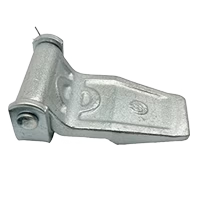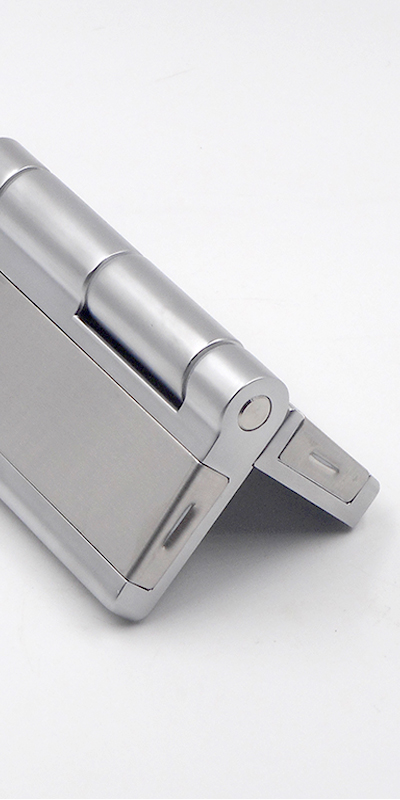

A small torque hinge holds panels or doors at any angle without extra support hardware. This compact component delivers controlled motion through internal friction making it ideal for tight enclosures and handheld devices where gas struts or mechanical stays cannot fit.
Unlike standard pivot hinges that swing freely a small torque hinge uses engineered resistance to maintain position. The friction mechanism allows one handed adjustment while preventing unwanted movement from vibration or accidental contact. Industrial designers specify these components in medical equipment consumer electronics control cabinets and automotive interiors where precise panel positioning improves operator safety and workflow efficiency.
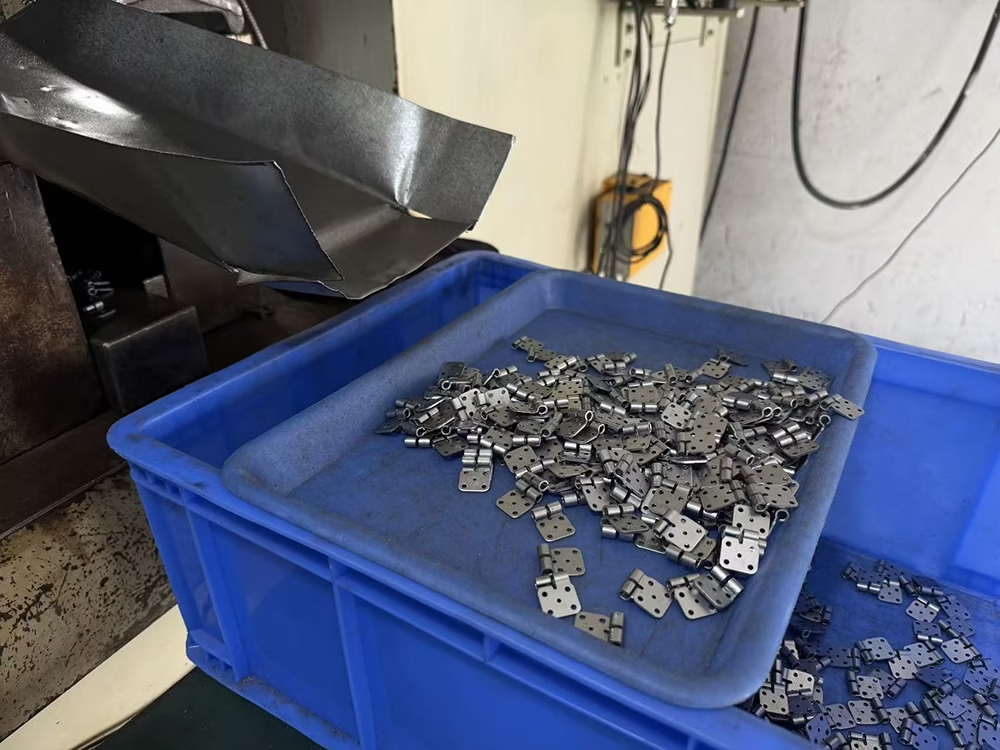
What Is a Small Torque Hinge
The core function relies on internal friction between rotating elements. When force is applied the hinge resists motion and holds position when released. This differs fundamentally from standard butt hinges or piano hinges that provide no resistance and require external stops gas springs or support chains to hold a door open. If your team needs background on torque hinge fundamentals you can review what is a torque hinge for detailed technical context.
Small torque hinges typically range from micro miniature sizes under 3mm outer diameter to compact models around 25mm to 40mm in width. Torque ratings generally span from 0.1 Nm for lightweight panels up to 3.4 Nm for heavier industrial doors. The torque value represents the rotational force required to move the hinge and must match your specific application load.
Common industrial applications include medical device access panels test equipment enclosure doors laptop and tablet screen mounts display brackets on automation machinery and storage compartment covers in vehicle interiors. Any application requiring a panel to stay open at a specific angle without additional supporting hardware can benefit from a properly specified torque hinge.
Why Industrial Designers Choose Torque Control
Adding a small torque hinge eliminates gas struts support chains mechanical stays and external stops. This reduces part count assembly time and overall system cost while creating a cleaner appearance with fewer exposed components. In space constrained equipment the ability to remove support hardware can enable smaller enclosure designs or leave room for other components.
Precise panel positioning improves operator experience. A technician servicing a control cabinet can set the door at the ideal angle for visibility while keeping both hands free for work. Medical equipment operators can position display screens or instrument trays exactly where needed without worrying about drift from vibration or accidental bumps.
The space saving advantage matters most in handheld devices and compact enclosures. A miniature torque hinge requires only a few millimeters of mounting depth compared to gas struts that need several centimeters of stroke length plus mounting space. This allows slimmer product profiles and more flexible internal packaging.
Calculate the Torque Value You Need
Correct torque specification prevents two common failure modes. Too little torque and the door will not hold position especially when vibration or slight inclination is present. Too much torque makes the door difficult to open requiring excessive force that can strain mounting points and create poor user experience.
Start by measuring the actual door or panel weight in kilograms or pounds. Do not rely on CAD software estimates which often overlook added components like handles latches windows or insulation. A door that weighs 2.5kg on paper might reach 3.5kg in reality after hardware installation.
Next find the center of gravity distance from the hinge axis. Place the door on a flat edge and balance it to locate the center point. Measure from this point to the hinge pin center. For a symmetrical door the center of gravity sits at half the door width. If the door has an attached handle or window at the top the center of gravity shifts upward and the distance increases.
Apply the torque formula. Required torque equals door weight multiplied by center of gravity distance. For example a 3kg door with 150mm center of gravity distance requires 0.45 Nm of torque calculated as 3 kg times 0.15 m equals 0.45 kgm which converts to approximately 4.4 Nm. This simplified calculation provides a baseline but real world selection requires additional considerations.
Add a safety margin of 30 to 50 percent above the calculated value. This accounts for dynamic loads temperature effects and material variation. Select a hinge with adjustable torque if your application has uncertain load conditions or potential design changes during development. Engineers comparing adjustable torque hinges often value this flexibility for prototyping and field optimization.
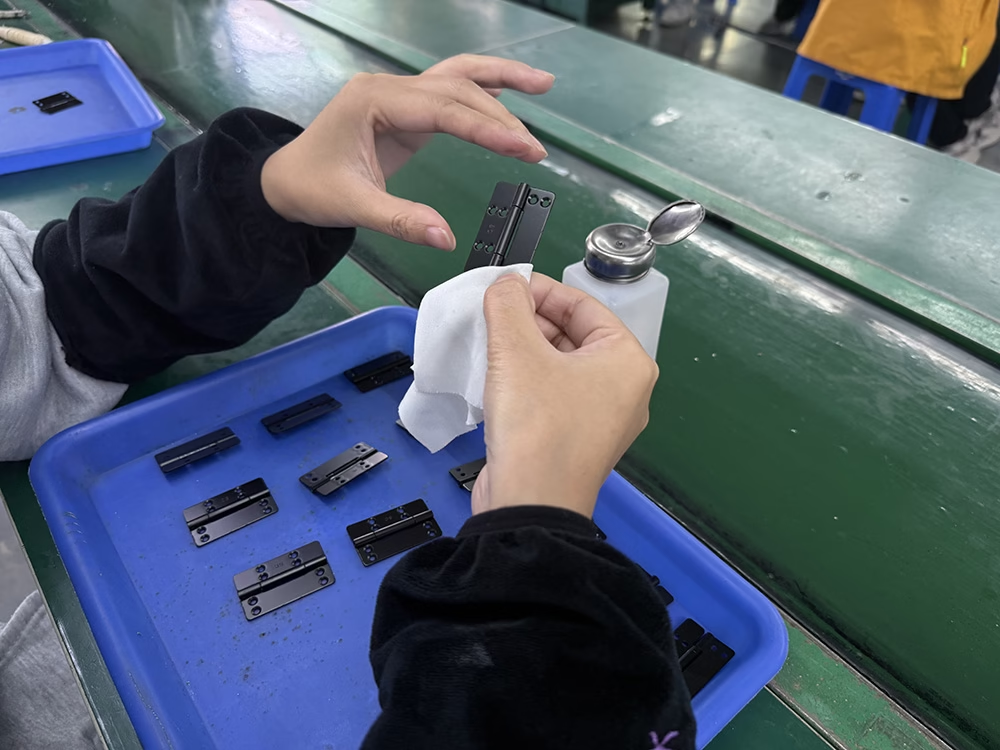
Select the Correct Size and Mounting Style
Small torque hinges come in surface mount configurations where the hinge body sits outside the door and frame and concealed versions that mount inside flush with surfaces. Surface mount types install easily with screws through visible wings and work well when appearance is not critical or when the hinge adds visual design intent. Buyers weighing surface mount versus industrial concealed hinges should consider maintenance access and cleaning requirements alongside appearance.
Miniature dimensions start around 2.5mm outer diameter for the smallest friction hinges used in handheld electronics and medical instruments. These micro versions typically use press fit or adhesive mounting rather than screws. Compact sizes around 25mm to 40mm wing width serve most industrial enclosure applications and provide sufficient strength for panels up to several kilograms.
Mounting hole patterns vary between manufacturers. Most small torque hinges use two to four screw holes per wing with screw sizes from M2 to M4 depending on load. Verify thread engagement depth especially in thin sheet metal where self tapping screws may not provide sufficient pull out strength. Threaded inserts or rivet nuts can reinforce mounting points in thin materials.
Sheet metal thickness affects hinge selection. Some torque hinges require minimum material thickness to support mounting screws without deformation. Wings on compact hinges typically measure 1mm to 2mm thick and can distribute load across the mounting surface. Check that your door and frame material can handle the fastener torque during assembly without warping or stripping.
Choose Material Based on Environment
Material selection directly affects product life in harsh environments. Stainless steel particularly 304 and 316 grades provides excellent corrosion resistance for medical equipment food processing machinery marine applications and outdoor enclosures. Stainless costs more than other options but prevents rust staining surface contamination and premature failure in humid or corrosive conditions.
Zinc alloy delivers high strength at moderate cost making it the most common choice for general industrial equipment. The material accepts various surface finishes including chrome plating powder coating and black oxide for visual matching. Zinc alloys perform well in dry indoor environments but may corrode in marine washdown or high humidity applications without protective coating.
Plastic hinges made from POM acetal or similar materials serve lightweight applications where noise reduction matters. The inherent damping in plastic eliminates squeak and rattle that can occur with metal on metal friction. Plastic works well for consumer electronics small access panels and any application where quiet operation ranks above extreme durability.
| Material | Corrosion Resistance | Strength | Cost | Typical Applications |
|---|---|---|---|---|
| Stainless Steel 304 | Good | High | High | Medical equipment food processing indoor enclosures |
| Stainless Steel 316 | Excellent | High | Very High | Marine outdoor washdown environments |
| Zinc Alloy | Fair with coating | High | Medium | General industrial control cabinets automation equipment |
| POM Plastic | Excellent | Medium | Low | Consumer electronics small access panels noise sensitive devices |
Consider operating temperature range. Plastic hinges lose strength at elevated temperatures and may become brittle in cold environments. Metal options maintain consistent performance across wider temperature swings but can experience torque variation as internal lubricants thin out in heat or thicken in cold. Request temperature versus torque data from suppliers if your equipment operates outside standard room temperature range.
Understand Cycle Life and Durability
Cycle life rating indicates how many open close operations a torque hinge can withstand while maintaining specified torque. Standard ratings for small torque hinges range from 20000 cycles for light duty models up to 50000 cycles for premium industrial versions. Medical device applications often require 100000 cycles or more due to frequent access during daily use.
Torque tolerance shift occurs over product lifetime as internal friction surfaces wear. A hinge specified at 1.0 Nm might deliver 0.8 Nm after 20000 cycles still within the typical 20 percent tolerance band found in quality industrial hinges. Cheap alternatives can drift beyond 50 percent causing doors to drop unexpectedly creating safety hazards and user frustration.
Request test data from suppliers showing torque retention over cycle life. A competent manufacturer provides graphs plotting torque versus cycle count and confirms testing under realistic load conditions. Ask whether testing followed industry standards such as ASTM or ISO protocols or if the supplier uses proprietary methods that may not reflect real field performance. When evaluating Constant Torque Hinges always request long term torque retention data.
Match life rating to your access frequency. A control cabinet door opened once per week for maintenance sees only 50 cycles per year making a 20000 cycle hinge adequate for decades of service. A medical equipment access panel opened dozens of times daily requires 50000 cycle or higher rating to achieve reasonable service life before failure. Always factor in worst case usage patterns not average or best case estimates.
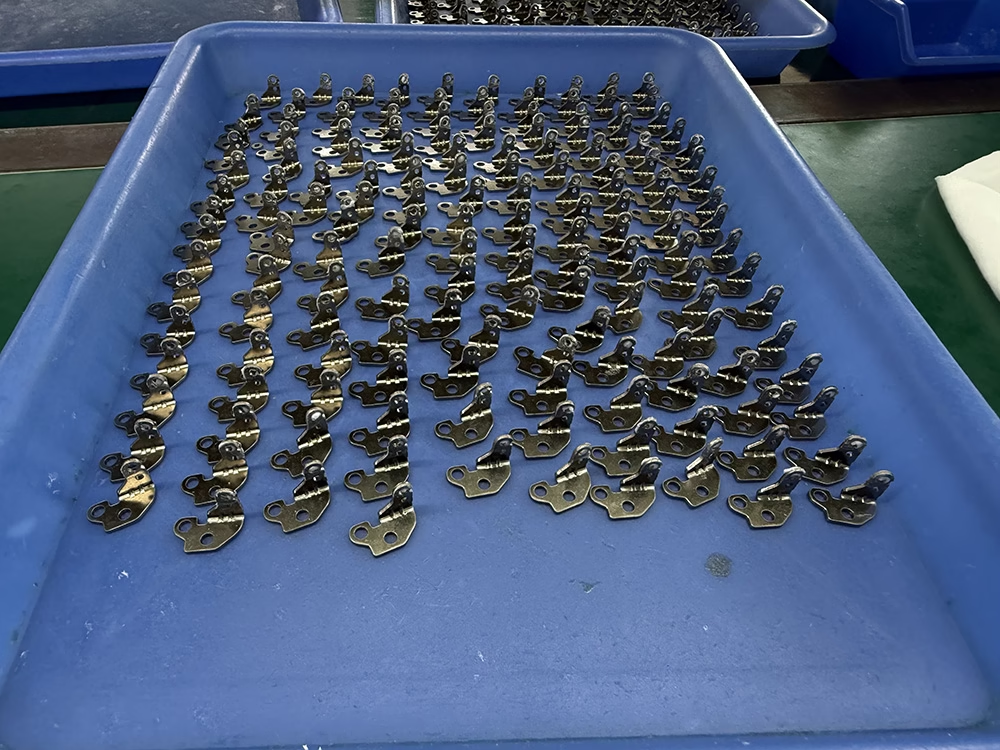
Application Specific Selection Criteria
Medical equipment demands more than basic function. Hinges must withstand frequent cleaning with harsh disinfectants that can degrade certain plastics and surface finishes. Cleanroom compatibility requires materials that do not outgas particles or use lubricants that could contaminate sensitive processes. Stainless steel with medical grade certification provides the safest choice for hospital equipment pharmaceutical machinery and laboratory instruments.
Consumer electronics prioritize slim profiles and silent operation. Laptop and tablet hinges must measure only a few millimeters thick while maintaining precise torque throughout thousands of openings and closes. Noise levels matter significantly in quiet environments. Metal hinges can develop squeak over time while properly engineered plastic or polymer damped versions maintain silent operation throughout product life.
Industrial control enclosures face different challenges. Doors may be opened and closed multiple times per shift requiring robust cycle life. Enclosures often house heavy components mounted to the door such as interface panels indicator lights or switches which shift the center of gravity and increase effective weight. Torque specification must account for these added components not just the base door weight.
Automotive interior applications introduce temperature extremes from winter cold to summer heat inside closed vehicles. Vibration from vehicle motion can cause doors with insufficient torque to drift open during transit. Materials must resist automotive fluids cleaners and UV exposure. Testing should confirm performance across the full automotive temperature range typically minus 40 to plus 85 degrees Celsius.
Common Selection Mistakes to Avoid
Underspecifying torque ranks as the most frequent error. Engineers calculate based on door weight alone then discover during prototype testing that the door will not hold position when vibration is present or when the enclosure is slightly inclined. I have seen projects delay by months while engineers source higher torque hinges and redesign mounting patterns because initial samples failed during field testing.
Overlooking center of gravity shift causes similar problems. Adding a handle window lock or even paint and graphics can move the center of gravity several centimeters outward significantly increasing required torque. Always measure center of gravity on a fully assembled prototype not on a bare door panel. If production door weight varies due to material tolerances or optional features specify the highest expected weight when selecting torque.
Material mismatch leads to premature corrosion failure. Zinc alloy hinges work fine in climate controlled factories but fail within months in marine environments or food processing plants with daily washdown. Stainless costs more upfront but prevents warranty claims field failures and reputation damage from corroded hardware. Never assume that powder coating or plating will fully protect base material in aggressive environments.
Designing insufficient space allowance creates assembly problems. A hinge specified during concept phase might measure 25mm tall but the production version includes mounting hardware that requires 30mm clearance. Sheet metal tolerances can cause interference when doors close. Always design clearance for worst case tolerance stack up and confirm fit with actual production parts not just CAD models.
How to Evaluate a Small Torque Hinge Supplier
Torque test data transparency separates capable manufacturers from assemblers trading on low price. Request complete test reports showing torque versus cycle life torque tolerance across temperature range and verification testing on your specific door weight and geometry. A supplier who cannot provide this data likely does not perform rigorous quality control or may not understand the technical requirements of industrial applications.
Sample validation before mass production commitment protects against costly mistakes. Order samples in the exact specification you plan to purchase and test them in your actual application under real operating conditions. Open and close the door hundreds of times to check for torque decay unusual noise or binding. Measure temperature effects if your equipment operates in hot or cold environments. Test with worst case door loading including all mounted components.
Custom modification capability becomes important when off the shelf hinges do not fit your design. Some manufacturers can adjust torque values modify mounting hole patterns change materials or adjust dimensions within certain ranges. A supplier who understands torque engineering can often suggest alternatives that function better than your initial specification while keeping tooling costs reasonable.
Technical drawing communication quality predicts how smoothly production will run. Send your assembly drawings and ask the supplier to confirm fit and provide feedback on potential issues. A competent supplier will catch tolerance problems mounting conflicts and torque mismatches before you receive parts. Poor communication leads to incorrect parts delivered delays while errors are corrected and unexpected engineering changes after production has started.
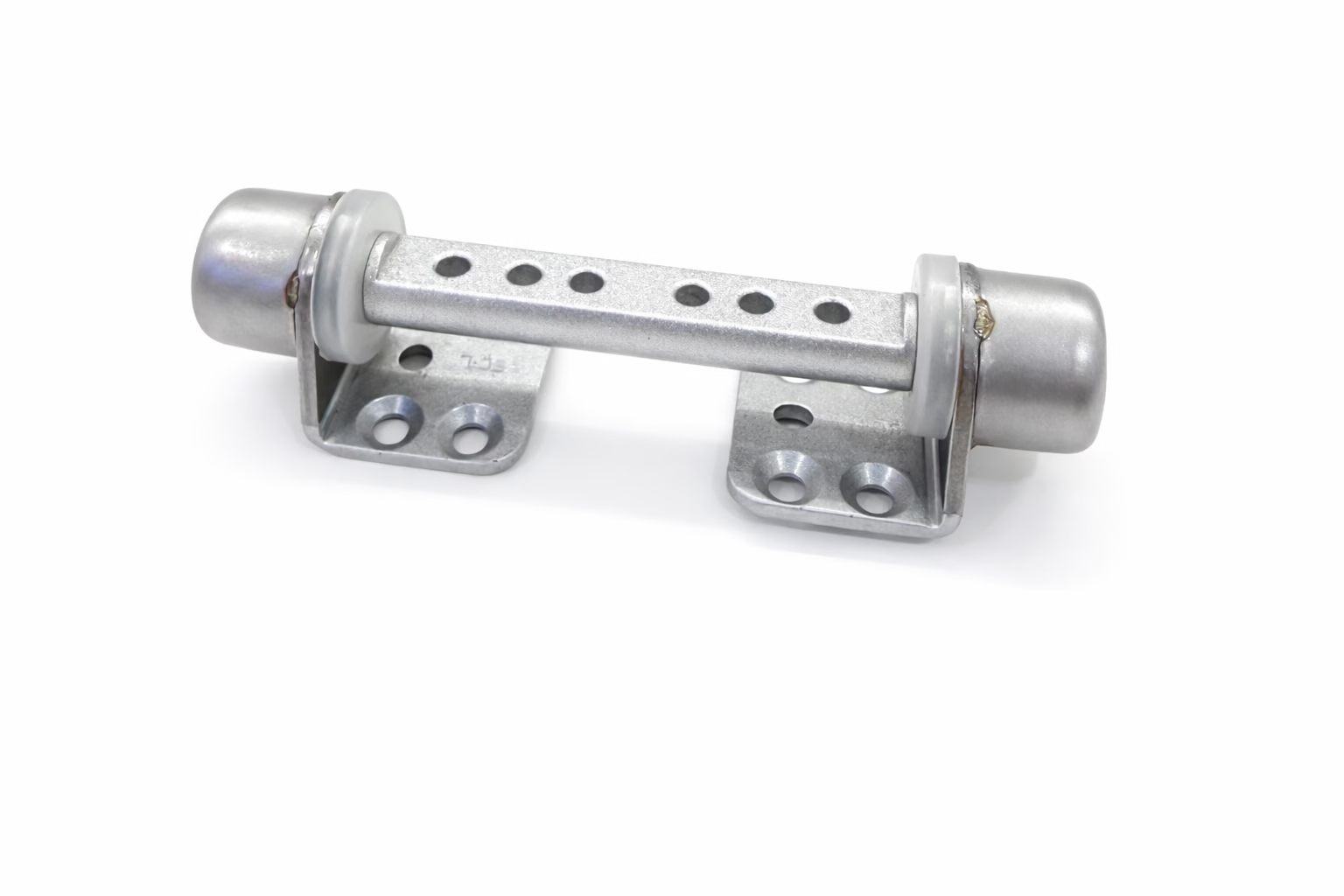
Final Selection Checklist for Industrial Buyers
Confirm torque rating with 30 to 50 percent safety margin above calculated requirement. Verify material compatibility with operating environment including temperature range humidity cleaning chemicals and exposure to corrosive substances. Check that mounting style matches your design constraints whether surface mount or concealed installation. Validate that dimensions fit within available space including allowance for manufacturing tolerances and assembly tools.
Request cycle life test data matching your expected usage frequency. Confirm that torque tolerance remains within acceptable limits over the specified life. Evaluate supplier technical support capability including custom modification options and response time to engineering questions. Order samples for validation before committing to volume production.
I have found that investing time in proper specification and supplier qualification prevents most field failures. A small torque hinge seems like a minor component but when it fails the entire equipment function is compromised. Choose quality over lowest price verify calculations with real prototypes and partner with suppliers who understand industrial applications not just hardware distribution.
At IHINGES we specialize in custom industrial hinge manufacturing with 3D design support and technical engineering communication. We help equipment makers select the correct torque specification material and mounting configuration for reliable long term performance in demanding industrial environments. Contact [email protected] for torque hinge specification support sample evaluation or custom dimension requirements.